
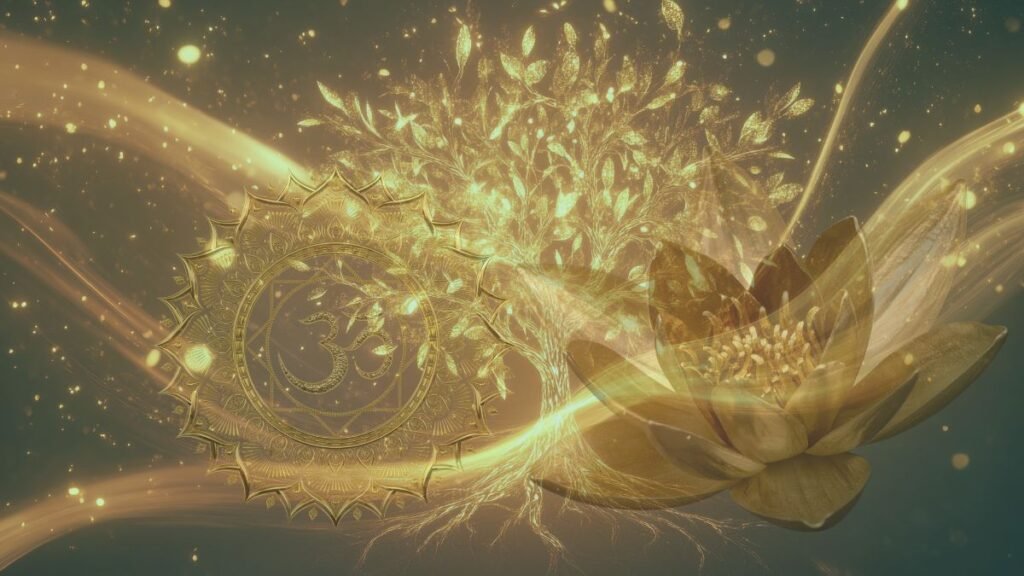
Why Yoga Uses Symbols
Yoga symbols are more than decoration. They hold deep meanings that connect our inner and outer worlds. In yoga, a symbol is like a doorway to awareness. It reminds us of values such as peace, balance, and truth.
Each image, shape, or sound carries energy that helps calm the mind and guide the spirit. When we understand what these symbols mean, our practice becomes more mindful and personal. They remind us that yoga is not only about movement but also about the connection between body, breath, and consciousness.
Let’s explore some of the most common yoga symbols and learn what they represent in daily life and practice.
1. Om (Aum): The Sound of the Universe
Meaning: Om is the most sacred sound in yoga. It represents the vibration of creation itself, the sound that connects all beings. It is often called the sound of the universe.
Symbol: The Om symbol has three curves, one semicircle, and a dot. Each curve shows a state of awareness. The large curve at the bottom represents the waking state, the middle curve stands for dreaming, and the upper curve represents deep sleep. The dot at the top is pure consciousness, where everything becomes still and peaceful.
Use in yoga: Chanting Om before or after class helps quiet the mind and prepare for meditation. The sound brings a feeling of unity and grounding.
Modern meaning: Om is a reminder that we are part of something bigger. Through our breath and awareness, we stay connected to the world around us.
2. Lotus Flower: Growth Through Stillness
Meaning: The lotus flower is a powerful symbol of purity and spiritual growth. It blooms beautifully even in muddy water. This shows that we can rise above difficulties and still stay pure at heart.
Connection to yoga: In yoga, the lotus reminds us that inner peace and beauty come from patience and discipline. Just like the flower that waits to bloom, we learn to trust our own process.
Symbolism in poses: Padmasana, or Lotus Pose, is one of yoga’s most well-known postures. Sitting in this pose encourages calm focus and balance, both physically and mentally.
Lesson: The lotus teaches that even in hard times, we can grow with grace. Our challenges help us open our hearts and reach higher levels of understanding.

3. Mandala: The Circle of Wholeness
Meaning: The word “Mandala” means “circle” in Sanskrit. It represents the idea of wholeness and the never-ending cycle of life.
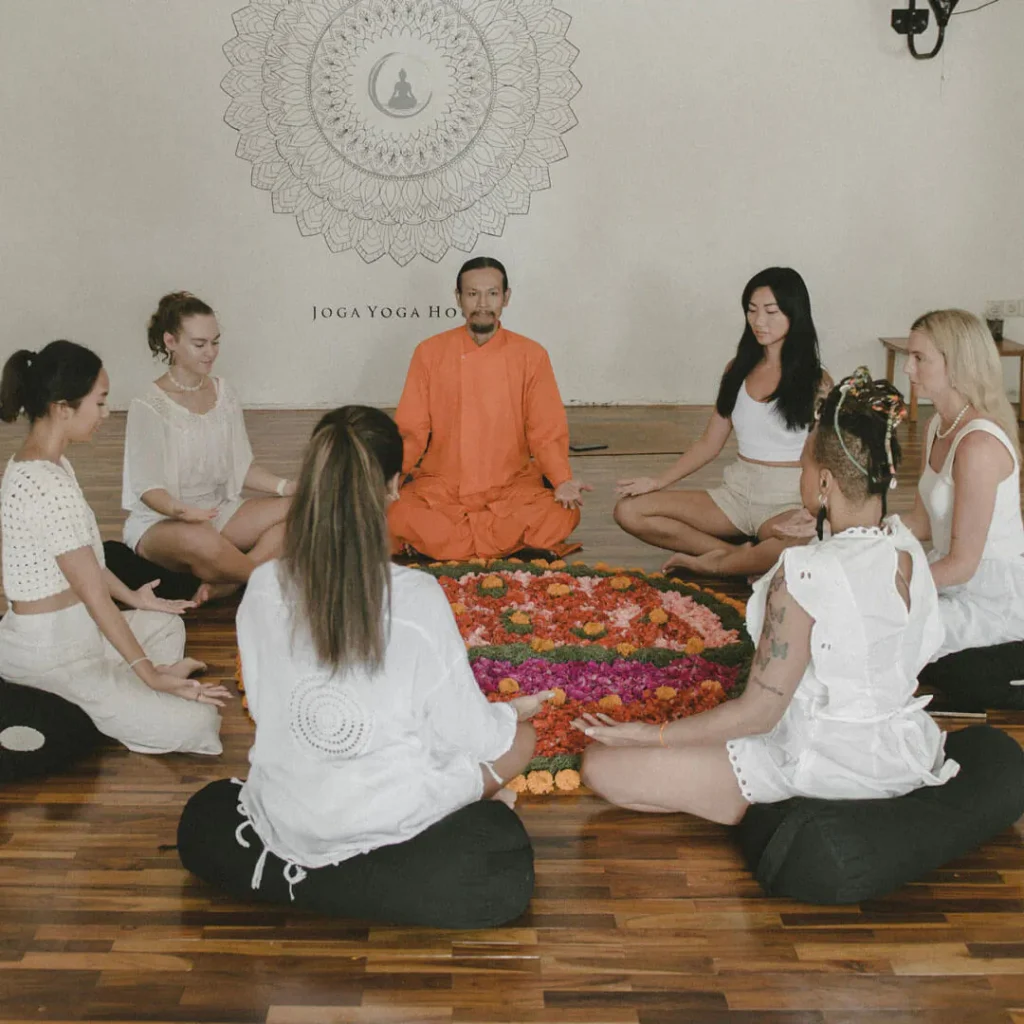
Use: Mandalas are found in art, temples, and meditation practices. They are often made with colorful patterns or sand designs. In meditation, focusing on a mandala can bring peace and concentration.
In practice: Many people draw or color mandalas as a mindful activity. This creative process helps quiet the mind and release stress.
Connection to yoga: The mandala represents unity between mind, body, and spirit. It reminds us that balance and harmony come from within.
4. Hamsa Hand: Protection and Compassion
Meaning: The Hamsa Hand is a symbol of protection, strength, and kindness. The open palm is believed to keep away negative energy and bring peace.
Symbol details: The Hamsa often includes an eye in the center, which stands for awareness, truth, and intuition. It reminds us to see the world with clarity and compassion.
Symbol of kindness: The Hamsa teaches us to act with love and patience, no matter the situation. It represents the value of Ahimsa, or nonviolence, in yoga philosophy.
Connection to yoga: The Hamsa encourages us to protect our peace and share it with others. Practicing yoga with awareness and compassion helps us bring this symbol to life every day.
5. Chakra Symbols: Energy Centers of the Body
In yoga, chakras are energy centers that run along the spine from the base to the top of the head. Each chakra has its own color, symbol, and vibration. Together, they shape how we feel, think, and connect to others. When one chakra is out of balance, it can affect both the body and the mind.
Here are the seven main chakras and what they represent:
- Root (Muladhara): Stability and safety. Its color is red, and its symbol is a square. It grounds you and gives you a sense of belonging.
- Sacral (Svadhisthana): Flow and creativity. Its color is orange, and it is often shown as a lotus. It helps with joy and emotional expression.
- Solar Plexus (Manipura): Confidence and strength. The color is yellow, and its shape is a triangle. It is linked to willpower and self-esteem.
- Heart (Anahata): Love and compassion. The color is green, and its symbol is a hexagram. It connects kindness to courage.
- Throat (Vishuddha): Truth and communication. The color is blue, and its symbol is a circle. It helps you speak with honesty and clarity.
- Third Eye (Ajna): Wisdom and intuition. The color is indigo, and the symbol looks like an eye. It guides inner vision and understanding.
- Crown (Sahasrara): Spiritual connection. Its color is violet, and its symbol is a thousand-petaled lotus. It represents unity with the universe.
Connection to yoga: When these chakras are balanced, your energy flows freely, bringing harmony to your body and emotions. Poses, breathwork, and meditation all help clear and align these energy centers.
6. Sri Yantra: The Symbol of Divine Balance
Meaning: The Sri Yantra is made of interlocking triangles that show the balance between masculine and feminine energy. The upward triangles represent strength and focus, while the downward ones represent love and openness.
Use and setting: The Sri Yantra is often seen in temples, art, or meditation spaces. It is used to deepen focus, balance the mind, and open awareness to the divine within.
Symbol of balance: It reminds us that both stillness and action are needed for harmony in life. Like the breath, it expands and contracts, yet stays centered.
How to use: Sit quietly and gaze softly at the Sri Yantra before meditation. Let your mind settle into its symmetry to find balance and calm.
7. Dharma Wheel (Dharmachakra): The Path to Awakening
Meaning: The Dharma Wheel, or Dharmachakra, is one of the oldest symbols in yoga and Buddhism. It represents the turning of wisdom and the journey toward enlightenment.
Each spoke of the wheel stands for a step on the Eightfold Path, right view, thought, speech, action, livelihood, effort, mindfulness, and concentration.
Symbol of right living: The wheel teaches that life is always moving and that awareness keeps it steady. When we live with kindness and mindfulness, our “wheel” turns smoothly.
Connection to yoga: In yoga, the Dharma Wheel reminds us to live truthfully and follow a path of self-growth and service to others.
Modern meaning: Life has challenges, but with steady awareness, we can keep balance and peace through change.
8. Ganesha: Remover of Obstacles
Symbol: Ganesha is the elephant-headed deity known as the remover of obstacles. He is the god of beginnings, wisdom, and success.
Meaning: Ganesha stands for strength, patience, and understanding. His large ears remind us to listen more. His calm face shows peace in the middle of challenges.
In yoga: Ganesha reminds students and teachers to stay grounded and confident, even when the path is not easy. He teaches us to trust the process of learning.
Common use: Many yoga studios keep a small Ganesha statue or image near the front of the room. Chanting or meditating on his name before practice is believed to bring clarity and courage.
9. Tree of Life: Growth, Connection, and Roots
Meaning: The Tree of Life is a symbol of connection between heaven and earth. Its roots go deep while its branches reach high, showing harmony between grounding and growth.
Symbol of wisdom: It represents family, wisdom, and personal development. The roots remind us to stay connected to our values, while the branches encourage us to reach for new experiences.
In yoga: Tree Pose, or Vrikshasana, mirrors this symbol. It helps improve focus and balance while teaching patience and stillness.
Lesson: Like a tree, we grow upward only when we are grounded. The Tree of Life reminds us that true strength comes from steady roots and an open heart.

Other Common Symbols in Yoga
Yoga is full of smaller, yet powerful symbols that hold deep meaning for practice and daily life. Each one reminds us of a key value in the yoga path.
Namaste: This gesture is done by placing the palms together at the heart and bowing slightly. It means “the light in me honors the light in you.” It is a symbol of respect, unity, and peace between all beings.
Anjali Mudra: This hand position is similar to Namaste and represents gratitude and prayer. It centers the mind and brings awareness to the heart before or after practice.
Trishula (Trident): The trident is the symbol of Lord Shiva. It represents time. The past, present, and future, and reminds us that awareness stays steady even as life changes.
Spiral: The spiral is a symbol of evolution and awareness. It shows the journey of life as a continuous flow of learning and growth. It also reflects how energy moves within the body during yoga and meditation.
How to Use Yoga Symbols in Daily Life
Yoga symbols are not just for art or decoration. They can become part of your mindfulness practice and personal growth.
Meditation: Focus on one symbol during meditation. Gaze softly at it or imagine it in your mind. This helps calm thoughts and deepen focus.
Journaling: Choose a symbol that matches your mood or goal for the day. Reflect on what it means and how you can live its message.
Teaching: Yoga teachers can include a symbol’s meaning in their class theme or opening talk. It adds depth and helps students connect to the lesson on a heart level.
Home practice: Place yoga symbols around your home or wear them as jewelry. They act as gentle reminders to stay balanced, peaceful, and aware through the day.
Yoga Symbols and Their Role in Joga Yoga Bali
At Joga Yoga Bali, symbols are not just something you see on the walls or in books. They are part of everyday learning and practice. The program blends ancient meaning with modern understanding so students connect deeply with the roots of yoga, not only through movement but through awareness, philosophy, and service.
During the 200-hour Yoga Teacher Training, students explore the sound of Om to understand vibration, breath, and inner stillness. They take part in Mandala meditations that strengthen focus and creativity, and learn about the chakra system as part of energy anatomy to see how emotions and awareness move through the body.
The training also covers:
- Traditional Yoga Practices: Asana, pranayama, kriya, chanting, and meditation — including learning directly from a monk.
- Philosophy and Ethics: Study of the Yoga Sutras, Bhagavad Gita, and yogic lifestyle concepts like karma, dharma, and ahimsa (nonviolence).
- Anatomy and Physiology: Explore both the physical and energetic body, including nadis and chakras, to understand how yoga brings balance to body and mind.
- Teaching Methodology: Learn to demonstrate, observe, assist, and teach with clarity and compassion.
- Practicum: Practice teaching real classes, receive feedback, and even continue gaining experience in our Bali studio after graduation.
Through reflection, journaling, and discussion, students learn how yoga symbols such as Om, the Lotus, and the Tree of Life can become tools for awareness, healing, and connection in their own lives and teaching.
Join Joga Yoga’s Teacher Training in Bali to explore the deeper meanings behind yoga’s sacred symbols and gain the skills to share them with authenticity and confidence. This immersive experience helps you live the essence of yoga, on and off the mat.
Conclusion: Living the Meaning Behind the Symbols
Yoga symbols remind us that yoga is much more than movement. They carry lessons of peace, love, balance, and awareness that guide us through every part of life.
When we live by these values, yoga becomes a way of being, not just a practice on the mat. Each symbol, whether Om, the Lotus, or the Tree of Life, offers a simple message: everything we need for harmony is already within us.