

Written by Joseph Berridge, Founder of Joga Yoga
Asana yoga is the practice of physical postures (asanas) that form the foundation of modern yoga. The word asana means “seat” or “posture” in Sanskrit, and it is the third of the eight limbs of yoga. Asana practice is central to Hatha and Vinyasa yoga and prepares the body for breathwork and meditation.
What does asana mean?
Asana comes from the Sanskrit root ās, “to sit down,” and it means “seat.” The word first described the seated positions used for breathwork and meditation. In the Yoga Sutras, Patanjali describes asana as a posture that is steady and comfortable, a line usually quoted as sthira sukham asanam.
Hatha yoga later widened the meaning to include standing, balancing, twisting, inverted and reclining positions. Today, asana is simply the Sanskrit word for a yoga pose. It is also why so many pose names end in “-asana,” such as Tadasana (Mountain Pose) or Balasana (Child’s Pose). Our list of yoga Sanskrit terms covers the common ones.
Asana in the eight limbs of yoga
Asana is the third of the eight limbs of yoga set out in Patanjali’s Yoga Sutras, a text usually dated to around the 2nd to 4th century CE. The eight limbs, in order, are:
- Yama, ethical conduct toward others
- Niyama, personal observances
- Asana, posture
- Pranayama, breath control
- Pratyahara, withdrawal of the senses
- Dharana, concentration
- Dhyana, meditation
- Samadhi, absorption
In this system, asana is preparation. A body that can sit still and at ease makes pranayama and meditation easier. The first two limbs are covered in our guide to the yamas and niyamas, and the full path is in our guide to the eight limbs of yoga.
What is the difference between asana and yoga?
Yoga is the whole practice, including ethics, breathwork and meditation. Asana is one part of it, the physical postures. “Asana yoga” is not a separate style. It is a common way of saying “the posture side of yoga.”
Most modern styles are built around asanas but use them differently:
| Style | How it uses asanas |
|---|---|
| Hatha | Poses held for several breaths at a slower pace, often with breathwork before or after. |
| Vinyasa | Poses linked together in a flowing sequence, with each movement matched to an inhale or exhale. |
| Ashtanga | A fixed series of poses practised in the same order every time. |
| Yin | Mostly seated and reclining poses held passively for several minutes. |
For more styles, see our overview of types of yoga.
Types of yoga asanas
There is no single official list of asana types. Teachers usually group poses by the shape of the body or the direction the spine moves. The table shows the groupings you will hear most often in a class, with common examples.
| Type | What the body does | Examples |
|---|---|---|
| Standing | Feet on the floor, building leg strength and stability | Mountain (Tadasana), Warrior II (Virabhadrasana II), Triangle (Trikonasana) |
| Balancing | Weight on one foot or a small base | Tree (Vrksasana), Half Moon (Ardha Chandrasana) |
| Seated | Sitting upright, the original meaning of asana | Easy Pose (Sukhasana), Lotus (Padmasana), Staff (Dandasana) |
| Forward bends | Folding forward from the hips | Standing Forward Fold (Uttanasana), Seated Forward Bend (Paschimottanasana) |
| Backbends | Arching the spine backward | Cobra (Bhujangasana), Camel (Ustrasana), Wheel (Urdhva Dhanurasana) |
| Twists | Rotating the spine | Half Lord of the Fishes (Ardha Matsyendrasana) |
| Inversions | Head below the heart | Downward Dog (Adho Mukha Svanasana), Headstand (Salamba Sirsasana) |
| Arm balances | Body weight carried on the hands | Crow (Bakasana), Firefly (Tittibhasana) |
| Reclining and resting | Lying on the back or front, or resting on the knees | Child’s Pose (Balasana), Corpse Pose (Savasana) |
Some lists merge these into seven groups and some split them further. The labels matter less than knowing what each pose asks of your body.
How many asanas are there?
The medieval hatha yoga texts give a traditional number of 84. The Goraksha Sataka, from around the 10th or 11th century, and the 15th-century Hatha Yoga Pradipika both refer to 84 asanas, while the 17th-century Hatha Ratnavali gives a different list of 84. The Wikipedia entry on asana summarises these sources.
Modern yoga has many more. In the 20th century, teachers such as Krishnamacharya, Yogendra and Kuvalayananda combined traditional postures with methods from physical exercise. Most of the standing sequences taught in studios today come from that period, not from the older texts.
How to start an asana practice
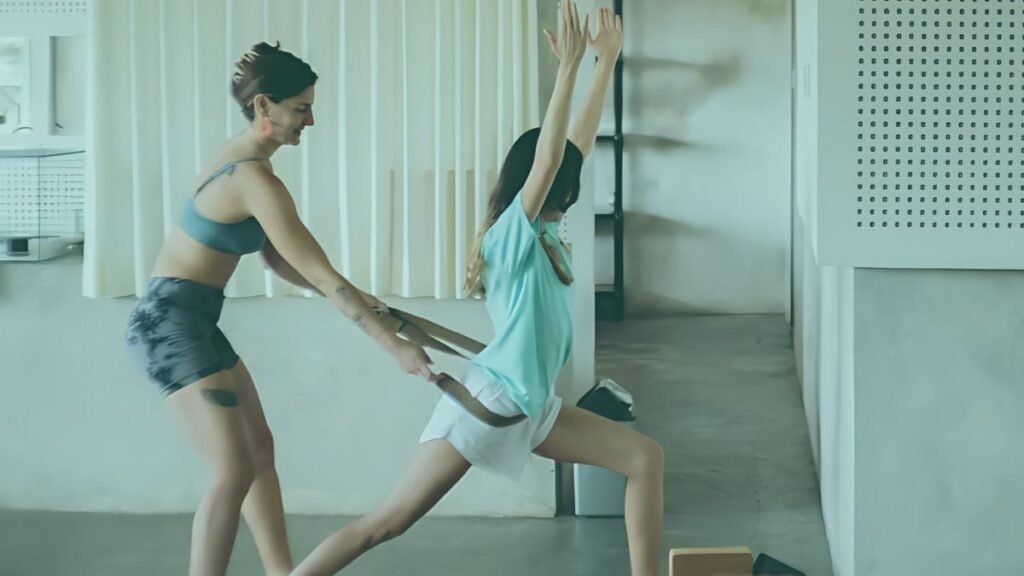
Start with a handful of basic poses and practise them often. Ten to twenty minutes a few times a week is enough to learn the shapes and how your breath moves in them. A class or a teacher helps more at this stage than a long list of poses, because alignment is hard to judge on your own.
Our beginner yoga guide has a first routine with step-by-step instructions. The sun salutation is a good next sequence, since it links several standing poses and forward bends with the breath. If you want a longer-term goal, our list of the most difficult yoga poses covers advanced asanas and how to prepare for them.
Stop any pose that causes sharp pain. If you have an injury or a health condition, speak to your doctor or physiotherapist before starting, and tell your teacher before class.
Frequently asked questions
What is asana yoga?
Asana yoga is the practice of physical yoga postures. Asana means “seat” or “posture” in Sanskrit, and it is the third of the eight limbs of yoga described by Patanjali.
Is asana yoga the same as hatha yoga?
No. Hatha yoga is a tradition that combines asanas with breathwork and other practices. Asana is the posture part, and it appears in hatha, vinyasa, Ashtanga, Yin and most other modern styles.
What does the word asana mean in Sanskrit?
It means “seat,” from the root ās, “to sit down.” It originally referred to seated meditation postures and later came to mean any yoga pose.
What are advanced asanas?
Advanced asanas need a high level of strength, balance and flexibility. Examples include Handstand (Adho Mukha Vrksasana), Wheel (Urdhva Dhanurasana) and Firefly (Tittibhasana). Build up to them gradually with a teacher.
Learn asana properly in Bali
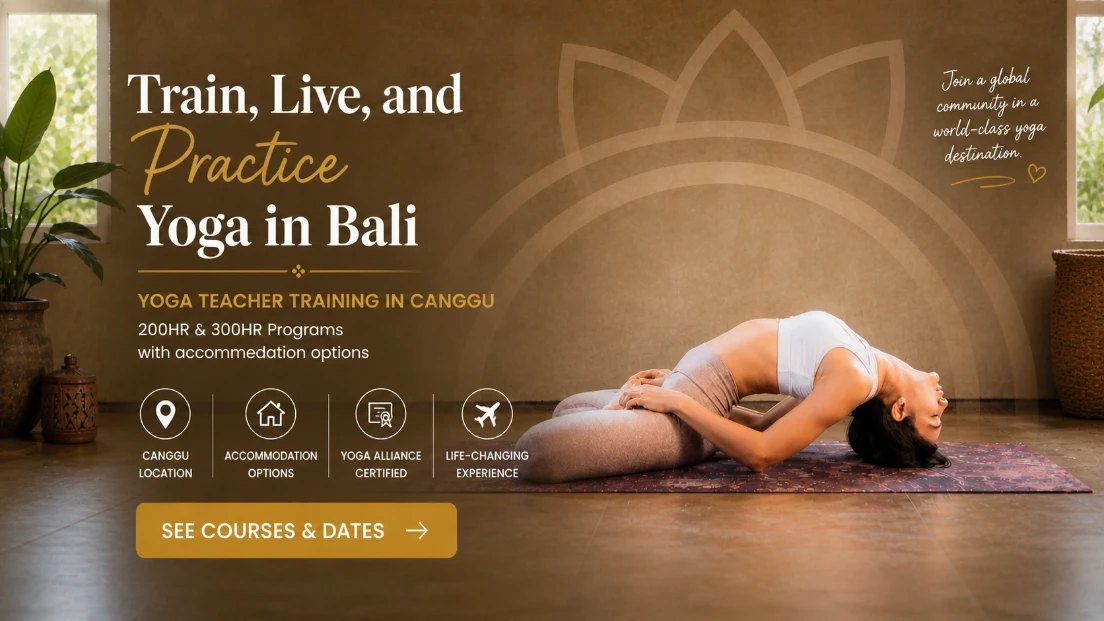
Asana is one part of Joga Yoga’s 200-hour teacher training in Canggu, alongside pranayama, philosophy, anatomy and teaching methodology. Daily practice covers Hatha and Vinyasa, with Yin in the evening.
Register for teacher training