


Yoga is much bigger than poses. In the classical eight-limbed path described in the Yoga Sutras, the first work is not handstands or deep backbends. It is how you live.
That is where the yamas and niyamas come in. They are the ethical foundation of yoga, and they matter whether you are brand new to practice, teaching classes, or considering a teacher training.

What are the yamas and niyamas in simple terms?
The yamas and niyamas are 10 ethical principles from the Yoga Sutras that guide how you live, think, and act. Yamas focus on how you treat others, while niyamas focus on how you manage yourself, making them the foundation of yoga practice beyond physical poses.
What are the yamas and niyamas?
The yamas and niyamas are yoga’s ethical foundations. In Patanjali’s eight-limbed path, the yamas guide how you relate to others, and the niyamas guide how you relate to yourself, which is why they come before posture practice.
According to Britannica, yama means restraint and niyama means discipline or observance. Yoga Journal also frames them as the first two limbs of yoga, before asana, pranayama, and meditation.
A simple way to remember them is this:
- Yamas are the “how not to create unnecessary harm” principles.
- Niyamas are the “how to live with more clarity and integrity” principles.
If you want the wider philosophical context, Joga’s guide to the eight limbs of yoga helps place them inside the broader path.
What are the five yamas?
The five yamas are practical restraints that help reduce harm, ego, and excess. They are not rules for perfect people. They are everyday checks on how you speak, act, consume, compete, and use your energy.
Ahimsa means non-harming. In real life, that can look like kinder self-talk, less reactive speech, and not forcing your body into a pose just because your ego wants the photo.
Satya means truthfulness. This is not brutal honesty for sport. It is honest speech that is clear, responsible, and not used as a weapon.
Asteya means non-stealing. Beyond taking objects, it can mean not stealing time, attention, credit, or energy. Showing up late, interrupting constantly, or copying someone’s work all fit here.
Brahmacharya is often translated traditionally as continence, but many modern teachers apply it more broadly as wise use of energy. It asks: where is your attention going, and is it supporting the life you actually want?
Aparigraha means non-grasping or non-possessiveness. It is the practice of loosening your grip, whether that grip is on objects, praise, control, outcomes, or an old version of yourself.
A concise academic-style summary from NC State’s yoga program lists the same five as the core yamas in Patanjali’s system.
What are the five niyamas?
The five niyamas are personal observances that build clarity, steadiness, and self-awareness. If the yamas help clean up your relationship with the outside world, the niyamas help clean up your relationship with your own habits.
Saucha means cleanliness or purity. This can include your body, your environment, your input, and your mental clutter. Sometimes saucha is a clean room. Sometimes it is logging off.
Santosha means contentment. It does not mean passivity. It means learning not to base your peace on getting every little thing your way.
Tapas means disciplined effort. It is the heat that comes from steady practice, especially when consistency would be easier to avoid. Tapas is what gets you back on the mat when motivation has quietly left the building.
Svadhyaya means self-study. This includes reflection, observing your patterns, and studying teachings that help you understand yourself more clearly.
Ishvara Pranidhana means surrender to something larger than the ego. Depending on your worldview, that may mean devotion to God, trust in life, service to truth, or humility before something bigger than personal control.
Together, the niyamas make yoga less performative and more honest. They shift the practice from “How do I look?” to “What am I learning?”
How can you practice yamas and niyamas in daily life?
You practice the yamas and niyamas by making them concrete. Pick one principle, attach it to a real situation, and repeat it long enough that it changes behavior, not just vocabulary.
Try this practical approach:
- Practice ahimsa by noticing one harsh sentence you say to yourself and replacing it with something more accurate and less cruel.
- Practice satya by saying what you actually have capacity for instead of agreeing to everything and quietly resenting it later.
- Practice asteya by arriving on time, giving proper credit, and not draining conversations back toward yourself every five minutes.
- Practice santosha by pausing before the next purchase, next comparison, or next “I’ll be happy when…” thought.
- Practice tapas by keeping one small promise to yourself every day, even when it is boring.
- Practice svadhyaya by journaling after practice and asking, “What pattern showed up again?”
- Practice aparigraha by letting one thing be enough for today.
The point is not to master all ten principles overnight. The point is to become more awake to the pattern you are living inside.
Why do yamas and niyamas matter in yoga teacher training?
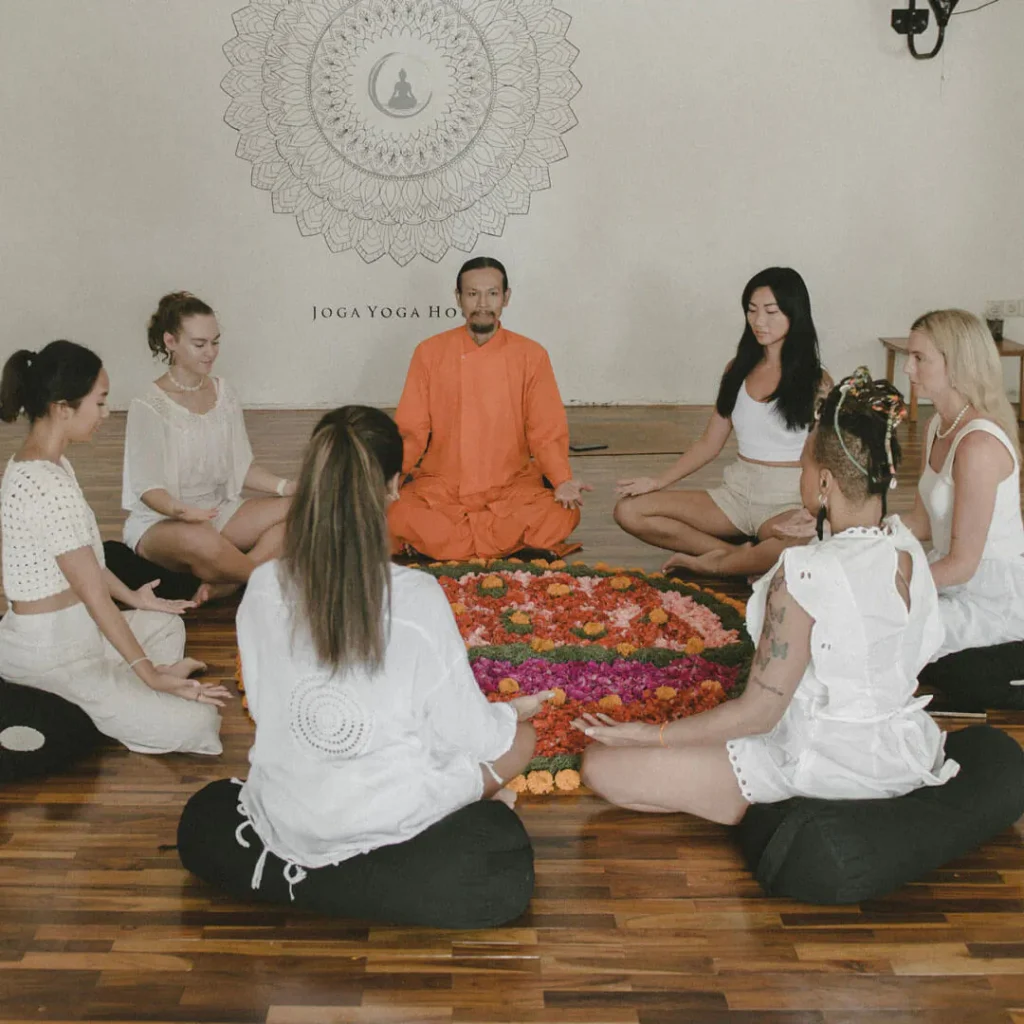
In a good teacher training, yamas and niyamas stop being theory and start shaping how you practice, teach, receive feedback, hold boundaries, and lead a room responsibly. They are part of what turns yoga from exercise into education.
This is especially important in teacher training because philosophy is not there as decoration. It affects how you cue, how you handle power, how you respond when a student is struggling, and how you define success as a teacher.
For example:
- Ahimsa shapes safer teaching and more respectful adjustments.
- Satya shapes honest teaching language and cleaner communication.
- Brahmacharya and aparigraha shape boundaries, professionalism, and ego management.
- Svadhyaya shapes reflection, feedback, and steady growth over time.
That is why these teachings belong inside a serious training, not tacked on as one token lecture. If you are exploring a program, Joga’s 200-hour yoga teacher training, 300-hour yoga teacher training, and broader yoga teacher training in Bali guide all sit naturally alongside this topic. The same is true of Joga’s article on the benefits of yoga teacher training, because many of the deepest benefits come from how yoga changes your conduct, not just your flexibility.
Why the yamas and niyamas still matter today
The yamas and niyamas matter because they solve a problem modern yoga often ignores. You can get stronger, more flexible, and still feel scattered, reactive, or stuck in the same patterns.
These principles fix that.
They turn yoga into something that affects:
- how you speak
- how you react
- how you handle stress
- how you deal with success and failure
Without them, yoga stays physical. With them, it becomes behavioral.
If you are serious about yoga, especially if you plan to teach, this is not optional knowledge. It is the difference between leading a class and actually guiding people.
FAQ
Are the yamas and niyamas part of the eight limbs of yoga?
Yes, the yamas and niyamas are the first two limbs of the eight-limbed path of yoga. They come before asana, pranayama, and meditation because they create the ethical and mental foundation for deeper practice.
What is the difference between yamas and niyamas?
The main difference is that the yamas guide how you relate to others, while the niyamas guide how you relate to yourself. Yamas are restraints such as non-harming and truthfulness, while niyamas are observances such as contentment and self-study.
What are the five yamas in order?
The five yamas in Patanjali’s system are ahimsa, satya, asteya, brahmacharya, and aparigraha. They are usually translated as non-harming, truthfulness, non-stealing, wise use of energy, and non-grasping.
What are the five niyamas in order?
The five niyamas are saucha, santosha, tapas, svadhyaya, and ishvara pranidhana. They are commonly understood as purity, contentment, disciplined effort, self-study, and surrender to something greater than the ego.
How do beginners practice the yamas and niyamas?
Beginners practice them best by applying one principle to one real habit at a time. For example, ahimsa can begin with gentler self-talk, while santosha can begin with noticing comparison and practicing gratitude.
Why are the yamas and niyamas important for yoga teachers?
They matter for yoga teachers because they shape how you communicate, hold boundaries, respond to students, and teach responsibly. In teacher training, they help turn philosophy into lived practice instead of memorized theory.
Are the yamas and niyamas religious?
No. They come from ancient Indian philosophy, but they are not tied to one religion. Many people practice them as practical life principles without any religious belief.
Do you need to follow all 10 perfectly?
No. Even traditional teachings present them as ongoing practices, not strict rules. The goal is awareness and progress, not perfection.
Which yama or niyama should beginners start with?
Start with ahimsa and satya. They are the easiest to notice in daily behavior and often create the fastest change.
How are the yamas and niyamas taught in teacher training?
In quality programs, they are integrated into daily practice, teaching methodology, and feedback, not just explained in theory.