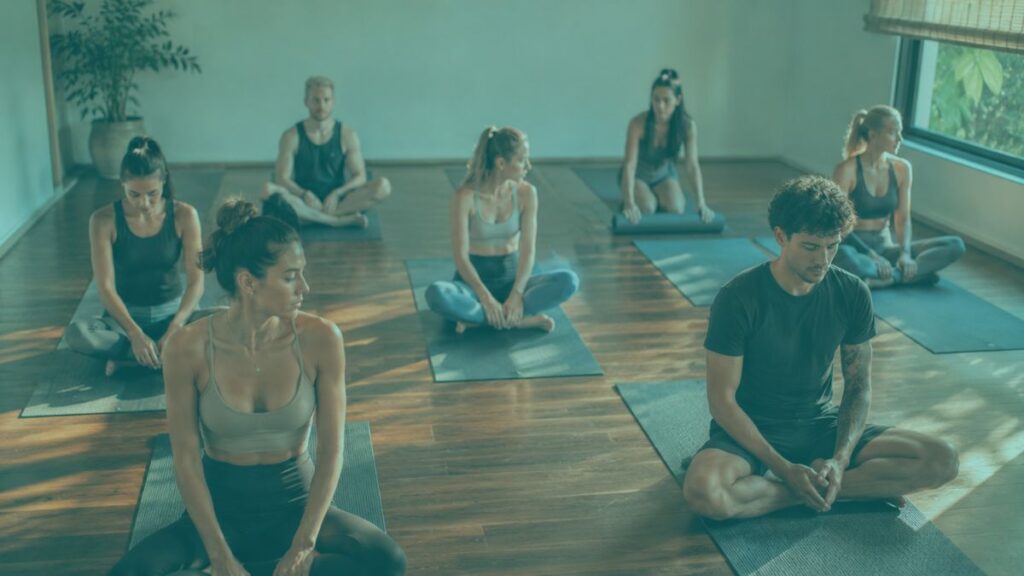

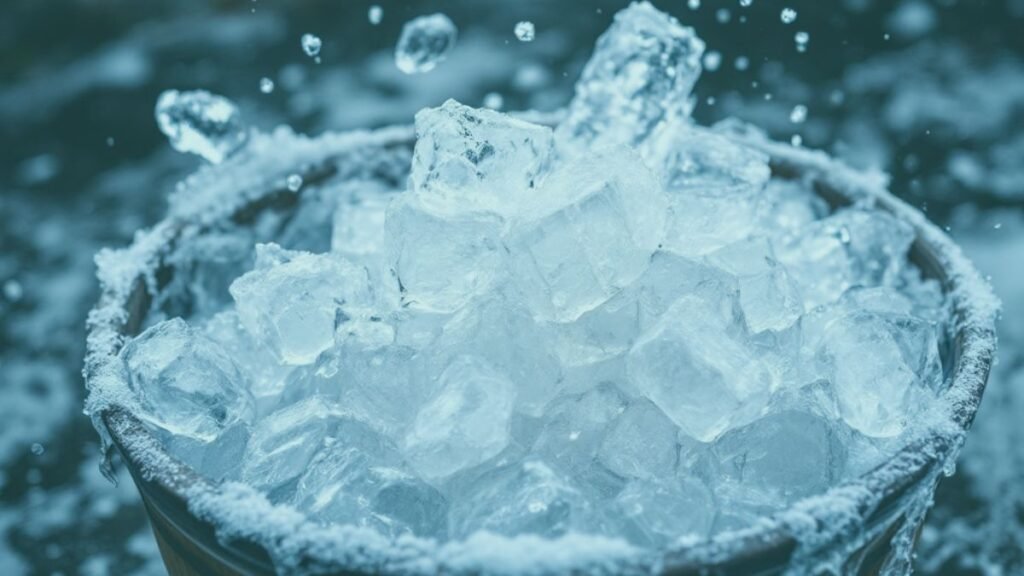
Cold plunge after yoga, in almost every case. The one exception is a heated class, where starting cool can stop the room from cutting your practice short. Below is the wait time after hot yoga, where the sauna fits, how cold the water should be, and what to do about the shivering afterwards.
Should you cold plunge before or after yoga?
Plunge after. Your muscles are already warm, which makes the cold easier to tolerate, and the recovery effect lands where it is useful. Go before your class only when the room is heated and you overheat easily.
Warm tissue handles cold exposure more comfortably than cold tissue, and the response you are after happens once the work is done. A systematic review and meta-analysis of post-exercise recovery methods in Frontiers in Physiology found cold water immersion among the more effective options for reducing muscle soreness and markers of inflammation after exercise.
| Your class | Plunge when | Why |
|---|---|---|
| Hot or heated class | After, or before if you overheat easily | After for recovery. Before if you want a lower starting core temperature so the heat does not end your practice early. |
| Vinyasa or power class | After | Tissues are warm and soreness is the thing you are managing. |
| Yin, restorative, or gentle class | After, or skip it | There is little muscle damage to recover from. Plunge for the mental reset instead. |
| Strength-focused practice | Later the same day | See the section on progress below. |
Plunging after yoga, which suits most people
After a strong practice your muscles are warm and pliable, and cold water at that point feels sharp rather than shocking. This is also when the reset is most useful. You finish with a raised heart rate and an active nervous system, and a short cold exposure followed by stillness brings both back down.
Plunging before yoga, which suits heated classes
There is one clear case for going first. If your class runs in a heated room, starting with a lower core temperature can stop the heat from ending your practice early. The trade-off is real though. Your muscles will be stiffer and slower to respond for the first few poses, so give yourself a longer warm-up than usual.
How long should you wait after hot yoga before a cold plunge?
Wait at least five to ten minutes and drink water during that time. Some guidance suggests closer to ten to twenty minutes. The wait itself matters more than the exact number you land on.
The reason is fluid loss rather than comfort. A heated class costs you a lot of water, and going straight from that into cold immersion can leave you lightheaded. Sitting for a few minutes lets your core temperature start dropping on its own and gives you a chance to rehydrate first. If you already tend to feel drained after hot yoga, use the longer end of that range as your default.
Skip the plunge entirely if you finished class dizzy, nauseous, or with a headache. Those are dehydration signals, and cold water immersion makes them worse rather than better. Water, salt, shade, and time.
Where does the sauna fit in the order?
Sauna first, cold plunge second, stillness last. Heat opens the blood vessels and loosens the muscles, cold closes them again, and the quiet minutes at the end are when your nervous system settles. Run it in that order.
Alternating heat and cold is what separates contrast therapy from a plain ice bath, and the order matters because finishing on cold followed by rest is what resets your nervous system most noticeably. Joga Yoga Training runs this as a three-part sequence in Canggu, Bali: fifteen minutes in the sauna, two minutes in the cold plunge, then five minutes of seated meditation.
The meditation is not decoration. Getting out of cold water and going straight back to your day skips the part where the benefit actually lands.
How cold should the water be, and how long should you stay in?
Cleveland Clinic puts the safe beginner range at 10 to 15°C and advises against going below 4°C. Start with 30 to 60 seconds, build towards two or three minutes over several weeks, and never exceed five minutes.
Ask what temperature the water is before you get in, at any studio anywhere. Cleveland Clinic recommends using a thermometer rather than guessing, and the reason is that the number changes what a sensible session looks like by a wide margin. Two minutes at 12°C and two minutes at 4°C are not the same exposure. Overly long plunges carry a real risk of hypothermia and skin or nerve damage.
A sensible first session
- Ask the water temperature before you commit to a time
- Enter calmly, get to waist level, then lower to chest in one movement rather than by degrees
- Aim for 30 to 60 seconds on your first attempt and treat that as a success
- Get out if you feel dizzy, notice chest discomfort, or go numb rather than cold
- Rewarm gradually afterwards with dry clothes and slow breathing rather than a hot shower
That last point is the one people skip, and it is why plenty of beginners never come back. The shivering that follows a plunge is uncomfortable and it lasts longer than the plunge did. A gradual rewarm shortens it. Jumping straight into a hot shower feels good for a minute and tends to make the shivering worse once you get out.
Does cold plunging after yoga undo your progress?
For a normal yoga practice, probably not. The research behind that worry studied heavy resistance training, not yoga, and used far longer immersions than a two-minute plunge. If your practice is strength-focused, leave a gap rather than dropping the plunge.
The detail is worth knowing. In a 12-week trial published in The Journal of Physiology, Roberts and colleagues had participants do resistance training and then either sit in 10°C water for ten minutes or do light cycling. The cold group gained less muscle and less strength across the twelve weeks. Ten minutes at 10°C after heavy lifting is a very different dose from two minutes after a vinyasa class.
Mayo Clinic Health System puts the practical version plainly: daily plunges after training could compromise long-term performance gains. A regular yoga practice is not producing that kind of muscle damage in the first place, so the concern mostly does not apply. If you are doing arm balance work, long holds, or anything genuinely strength-loading, the fix is timing. Plunge later in the day, or on your lighter practice days, and splitting practice and recovery across morning and evening sessions handles it without giving anything up.
How to breathe in a cold plunge without panicking
Slow the exhale, not the inhale. Cold water triggers an involuntary gasp and a fast, shallow breathing pattern, and lengthening the out-breath is what breaks it. For most people the breathing settles within the first minute.
This is the part that decides whether someone finds cold exposure useful or just unpleasant, and it is where a yoga background genuinely helps. Breath control under stress is the same skill you build in pranayama breathing, applied somewhere less comfortable. I have taught yoga and studied Chinese medicine for the last ten years, and the cold plunge is the clearest example I know of a practice where controlling the breath changes the experience entirely rather than slightly.
Do not use Wim Hof style hyperventilation in or near the water. The Wim Hof Method itself is explicit about this. Its own guidance says never to practise the breathing before or during immersion in or over water, because hyperventilation suppresses the urge to breathe and has caused deaths from shallow water blackout. Do that breathing seated on dry land if you use it at all, then breathe normally and slowly once you are in.
Cold water immersion raises heart rate and blood pressure sharply. Anyone with a cardiovascular condition, high blood pressure, epilepsy, or a history of fainting should get medical clearance before starting, and nobody should plunge alone on a first attempt.
Where to try sauna and cold plunge in Canggu
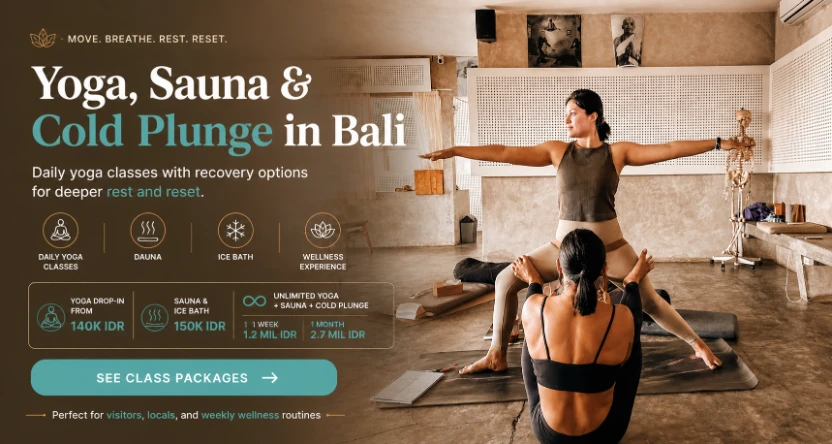
Joga Yoga Training runs sauna and ice bath drop-in sessions from its studio on Jl. Pantai Batu Bolong in Canggu, Bali. The sessions are open to anyone, and sauna and cold plunge also run as part of the 200-Hour Yoga Teacher Training and 300-Hour Yoga Teacher Training.
Canggu has a lot of recovery options and single sessions at the larger facilities generally run between 300,000 and 660,000 IDR, so it is worth checking prices before you book anything.
Sauna and cold plunge at Joga Yoga Training
Joga Yoga Training is a yoga school in Canggu, Bali founded by Joseph Berridge, and its recovery sessions are open to visitors as well as students.
- Sauna and ice bath drop-in: 150,000 IDR per session
- Unlimited yoga plus sauna and cold plunge: 1,200,000 IDR for one week, 2,700,000 IDR for one month
- Session structure: fifteen minutes sauna, two minutes cold plunge, five minutes seated meditation, with guided breathing
- Included in training: sauna and cold plunge sessions run as part of the 200-Hour Yoga Teacher Training
- Location: Jl. Pantai Batu Bolong, Canggu, Kuta Utara, Badung, Bali
Pairing a session with practice is the simple way to use it. Take one of the drop-in yoga classes, rest for ten minutes, then move through the sauna and plunge sequence. The teachers who run these sessions are listed on the Joga Yoga Training teachers page, and it is worth saying it is your first time so whoever is guiding you can pace it.
Train where recovery is part of the practice
Joga Yoga Training runs its 200-Hour Yoga Teacher Training in Canggu, Bali with sauna and cold plunge sessions built into the schedule rather than sold as an extra.
Apply for teacher training