



Bali is not one simple destination. It is many different trips packed onto one island.
Stay in Canggu, and your days can be full of cafes, surf, coworking spaces, gyms, beach clubs, and traffic. Stay in Ubud, and Bali feels more like rice fields, temples, yoga, healing, and jungle mornings. Stay in Sanur, and everything slows down. Stay in Uluwatu, and your trip becomes cliffs, beaches, scooters, sunsets, and surf.
So the real question is not only, “What is the best area to stay in Bali?”
The better question is, what kind of Bali do you actually want?
This guide helps you choose the best area to stay in Bali based on your travel style, energy, yoga goals, surf level, family needs, budget, and tolerance for traffic. It is written for travelers who want the right base, not just the most popular one.
If you are coming to Bali for yoga, wellness, or teacher training, your base matters even more. Staying in the wrong area can turn your trip into long drives, noise, and stress. Staying in the right area helps you settle, rest, explore, and enjoy the island with less friction.
For students planning a deeper yoga journey, you can also read our Yoga Teacher Training in Bali Complete Guide before choosing where to stay.

What is the best area to stay in Bali?
The best area to stay in Bali depends on your trip style. Choose Canggu for cafes and digital nomad life, Ubud for yoga and culture, Uluwatu for surf, Sanur for families, and Nusa Dua for resorts.
There is no single best area for everyone. Bali changes fast from one region to another. A place that feels perfect for a surfer can feel stressful for a family with small kids. A town that works for a digital nomad can feel too loud for someone who came to rest.
| Your Travel Style | Best Area to Stay | Why It Works |
|---|---|---|
| First-time visitors | Sanur, Seminyak, or Ubud | Easy, comfortable, and good for day trips |
| Digital nomads | Canggu, Ubud, or Sanur | Cafes, coworking spaces, community, and longer-stay options |
| Yoga travelers | Canggu or Ubud | Strong yoga scene, wellness spaces, and community |
| Surfers | Uluwatu or Canggu | Best wave access and surf culture |
| Families | Sanur or Nusa Dua | Calmer beaches, resorts, and easier routines |
| Luxury travelers | Nusa Dua or Seminyak | Resorts, restaurants, spas, and polished service |
| Nightlife travelers | Canggu or Seminyak | Beach clubs, bars, and social energy |
| Quiet nature lovers | Sidemen, Munduk, or Amed | Slower pace, nature, and fewer crowds |
| Divers and snorkelers | Amed | Clear water, reefs, and relaxed coastal life |
| Pre-yoga teacher training stay | Canggu | Close to Joga Yoga, the beach, cafes, and training community |
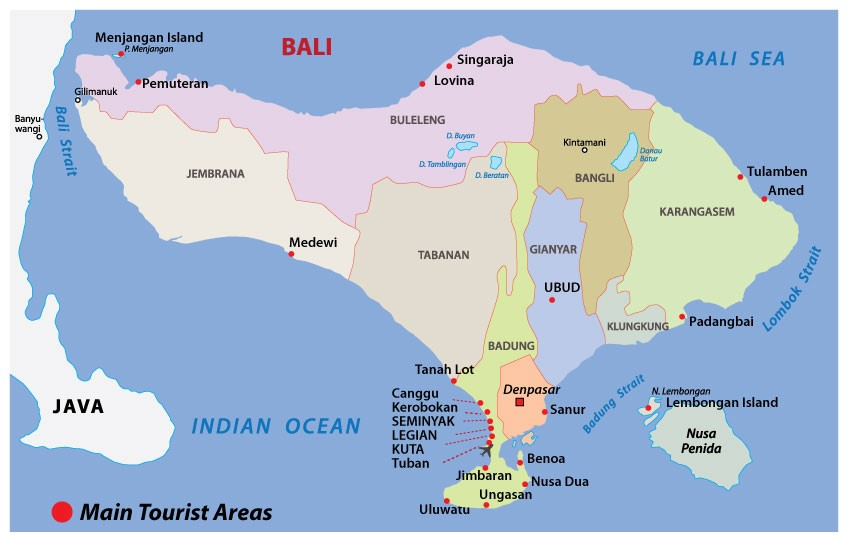
Bali looks small on a map, but travel time can be much longer than expected. Traffic, narrow roads, and weak road signs make self-driving stressful, and many travelers use drivers instead.
This is why your base matters. If you stay in Canggu but plan to visit Ubud, Uluwatu, Sanur, and waterfalls every day, you will spend too much time in traffic. If you stay in Ubud but want daily beach sunsets, you will feel far from the ocean.
For most travelers, the best plan is simple. Choose one main base for short trips. Split your stay between two areas if you have a week or more. Avoid moving every two nights unless you enjoy packing more than relaxing.
How should you choose where to stay in Bali?
Choose where to stay in Bali by looking at your trip length, transport style, energy level, beach needs, yoga goals, and crowd tolerance. The wrong base can make Bali feel stressful, even when the island itself is beautiful.
Most Bali guides start with places. That helps, but it misses the real decision.
You should start with your daily rhythm.
Ask yourself this first: what do I want my normal day in Bali to feel like?
Choose by your energy level
If you want high energy, choose Canggu, Seminyak, or parts of Uluwatu. These areas are social, busy, and full of places to eat, drink, train, work, and meet people.
If you want calm, choose Sanur, Sidemen, Amed, Munduk, or a quieter part of Ubud. These areas are better for slow mornings, early nights, nature, and rest.
This is especially important if you are coming to Bali after burnout, stress, or a big life change. A busy area can be fun for three days, then draining after a week.
Choose by your transport comfort
If you do not ride a scooter, stay somewhere walkable or easy for taxis.
Sanur is one of the easiest areas without a scooter because it has a calm beach path, restaurants, hotels, and a slower layout. Seminyak can also work if you stay near the beach or main restaurant streets. Central Ubud is walkable in parts, but traffic can still be heavy.
Uluwatu, Sidemen, Munduk, Amed, and Kintamani are harder without a scooter or private driver. They are beautiful, but they are more spread out.
Choose by your trip length
If you only have 3 to 5 days, choose one base. Do not try to “see all of Bali.” That usually turns into traffic, rushed meals, and tired mornings.
If you have 7 to 10 days, split your trip between two areas. A good plan is Ubud plus Uluwatu, or Canggu plus Ubud. If you have 14 days or more, you can add a quieter area like Sidemen, Amed, Munduk, or Nusa Lembongan.
Choose by your yoga goals
If yoga is a big part of your trip, Canggu and Ubud are the strongest choices.
Canggu works well if you want yoga classes, cafes, beach time, surf, and a social wellness scene. It is also the best base if you are joining Joga Yoga, since our training takes place in Bali and connects students with the Canggu lifestyle. You can learn more about local yoga options in our Yoga in Canggu Guide.
Ubud works better if you want a deeper retreat feeling, rice fields, temples, meditation, and a slower spiritual atmosphere.
Both can be great. They just offer different versions of Bali.
Where should first-timers stay in Bali?
First-timers should stay in Sanur, Seminyak, Ubud, or Jimbaran if they want an easier start. These areas give good comfort, restaurants, hotels, and access to day trips without throwing you straight into Bali’s busiest chaos.
If this is your first trip to Bali, do not choose only based on Instagram.
Canggu and Uluwatu look amazing online, but they are not always the easiest first base. Canggu can be crowded and full of traffic. Uluwatu is beautiful, but it is spread out and harder without a scooter. Kuta can be useful for budget travel and beginner surf, but it is not the best choice if you want a calm or wellness-focused trip.
BaliDave recommends Jimbaran or Sanur for many first-time visitors because Kuta, Legian, and Seminyak can feel overwhelming for some travelers. That advice makes sense if your goal is a softer landing.
Stay in Sanur for an easy first trip
Sanur is one of the safest choices for first-time visitors. It has calm beaches, a relaxed pace, family-friendly hotels, and a long beachfront path for walking or cycling.
Choose Sanur if you want Bali to feel simple. It is not the trendiest area, but that is part of the point. It works well for families, older travelers, first-timers, and anyone who wants less noise.
Sanur is also useful if you plan to visit the Nusa Islands because boats leave from Sanur Port.
Stay in Ubud for culture, yoga, and nature
Ubud is a strong first-time base if you care more about rice fields, temples, yoga, food, art, and wellness than beaches.
The mistake is staying right in the busiest part of town and expecting total peace. Central Ubud is convenient, but it can be crowded. If you want a calmer stay, choose accommodation slightly outside the center.
Ubud also fits well before or after a yoga journey. If you are comparing Bali yoga options, start with our Yoga Teacher Training in Bali Complete Guide.
Stay in Seminyak for food, shopping, and comfort
Seminyak is a good first-timer choice if you want restaurants, shopping, beach clubs, sunset drinks, and comfortable hotels. It is more polished than Canggu and easier than Uluwatu for many travelers.
It is not the best place for quiet nature or deep culture. But for a first Bali trip with good food and beach access, it works.
Stay in Jimbaran for beaches and a softer landing
Jimbaran is a good option if you want a beach stay close to the airport without the full noise of Kuta. It is calmer than many parts of South Bali and works well for couples, families, and short stays.
It is not as social as Canggu and not as stylish as Seminyak, but it gives you an easier start.
Where should yoga travelers stay in Bali?
Yoga travelers should stay in Canggu, Ubud, Sanur, or Sidemen, depending on the kind of practice they want. Choose Canggu for beach yoga and community, Ubud for retreat culture, Sanur for calm, and Sidemen for silence.
Bali has many yoga areas, but they do not feel the same.
Some places are social and active. Some are slow and spiritual. Some are better for deep rest. Others are better if you want yoga, surf, cafes, and community in one place.
Stay in Canggu for yoga, beach life, and community
Canggu is a strong choice if you want yoga to be part of a full Bali lifestyle. You can practice in the morning, work or explore during the day, then go to the beach for sunset.
It works well for travelers who want:
- Yoga classes
- Healthy cafes
- Surf
- Gyms
- Beach clubs
- Coworking spaces
- A social scene
- Easy access to Joga Yoga
Canggu is not the quietest area in Bali. It can be busy, loud, and full of traffic. But if you want a social yoga base near the beach, it makes sense.
For Joga Yoga students, Canggu is usually the easiest base because it keeps you close to training, the beach, food, and other students. If you are comparing teacher training options in this area, read our guide to the best yoga teacher training in Canggu.
Stay in Ubud for yoga, culture, and inner work
Ubud is best if you want Bali to feel more spiritual, green, and reflective.
It has rice fields, temples, art markets, meditation spaces, vegan cafes, retreats, and a long wellness history. Go2Bali’s 2026 retreat guide describes Ubud as one of Bali’s main retreat areas, with well-known yoga spaces like The Yoga Barn, Radiantly Alive, and Intuitive Flow.
Choose Ubud if you want:
- Yoga retreats
- Meditation
- Rice field walks
- Temples
- Balinese culture
- Vegan and vegetarian food
- A slower rhythm than Canggu
The main warning is this: central Ubud is not always peaceful. It can be crowded, especially near the market, Monkey Forest, and main roads. If you want the softer version of Ubud, stay outside the center.
Stay in Sanur for gentle yoga and calm beach days
Sanur is better for yoga travelers who do not want intensity.
It has a calmer beach, easier walking, and a slower pace. It is not as trendy as Canggu or as spiritual as Ubud, but that is the point. Sanur works when you want your body and mind to calm down.
Choose Sanur if you want:
- Morning beach walks
- Gentle movement
- Calm water
- Family-friendly hotels
- Less nightlife
- Easier routines
Sanur is also a useful base before heading to the Nusa Islands because boats leave from Sanur Port.
Stay in Sidemen for quiet, nature, and integration
Sidemen is not the place for nightlife, coworking, or beach clubs. It is the place for rice fields, quiet roads, slow mornings, and space to think.
This makes it a beautiful choice after a yoga retreat or yoga teacher training.
After an intensive training, some students do not want more noise. They want sleep, journaling, nature, and time to absorb what happened. Sidemen fits that mood better than Canggu.
Choose Sidemen if you want:
- Rice terraces
- Quiet homestays
- Local village life
- Nature walks
- Fewer tourists
- A softer landing after deep practice
If your Bali trip is focused on yoga, do not only ask, “Where are the most yoga studios?” Ask, “Where will my body actually feel settled?”
Where should digital nomads stay in Bali?
Digital nomads should stay in Canggu, Ubud, Sanur, or Uluwatu. Choose Canggu for cafes and networking, Ubud for focus and wellness, Sanur for calm routines, and Uluwatu for surf, sunsets, and a slower work-life rhythm.
Bali is still one of the biggest digital nomad hubs in Southeast Asia. But not every area works for remote work.
A good digital nomad base needs more than nice cafes. You need stable internet, places to work, food options, transport, community, and a daily routine that does not burn you out.
Stay in Canggu for coworking, cafes, and community
Canggu is the obvious choice for many digital nomads because it has the strongest remote-work ecosystem.
There are laptop-friendly cafes, coworking spaces, gyms, surf spots, events, and a large international community. A 2026 Canggu coworking guide notes that Batu Bolong and Berawa have many cafes, restaurants, and coworking spaces close together, which is why many remote workers choose to stay nearby.
Choose Canggu if you want:
- Coworking spaces
- Laptop-friendly cafes
- Fitness studios
- Surf before or after work
- Networking
- Social events
- Healthy food everywhere
But Canggu has one big problem: it can be overstimulating.
The traffic can drain you. The social scene can distract you. The “healthy lifestyle” can become expensive fast if every day becomes smoothie bowls, gym classes, coworking fees, and dinner out.
Canggu works best if you have discipline. If you need quiet to focus, choose your neighborhood carefully.
Choose Batu Bolong for the classic Canggu experience
Batu Bolong is central, social, and convenient. It has cafes, shops, restaurants, bars, and beach access.
Stay here if you want to be close to the action.
Do not stay here if you want quiet.
Choose Berawa for cafes, gyms, and beach clubs
Berawa is good for remote workers who want cafes, fitness, restaurants, and a more polished lifestyle scene.
It is still busy, but it works well if you like structure and convenience.
Choose Pererenan for a calmer Canggu base
Pererenan is better if you want access to Canggu without being in the most crowded part of it.
It still has cafes and restaurants, but the mood is a little slower.
For many nomads, this is the smarter choice.
Stay in Ubud for focus, yoga, and deep work
Ubud works well for digital nomads who want fewer beach distractions and more focus.
It gives you cafes, nature, yoga, wellness, and a more reflective pace. It is better for writers, coaches, creatives, and people working on deep projects.
The downside is that Ubud has no beach. If daily ocean time matters, you will feel far away.
Stay in Sanur for calm routines and fewer distractions
Sanur is underrated for digital nomads.
It is calmer than Canggu, easier to walk in, and better for people who want a stable routine. It will not give you the same networking energy as Canggu, but it gives you breathing room.
Choose Sanur if you want:
- Morning walks
- Calm cafes
- Less traffic stress
- A more mature crowd
- Easy access to the beach
- Better balance
Sanur is a good choice if you are tired of the “always on” digital nomad scene.
Stay in Uluwatu for surf and slower lifestyle
Uluwatu works for digital nomads who care more about surf, beach days, and sunsets than constant networking.
It is more spread out, so you need a scooter or driver. It also has fewer coworking options than Canggu. But the lifestyle can feel cleaner and less hectic if you choose the right area.
Pick Uluwatu if your best work routine looks like this:
Morning surf. Focused work block. Sunset. Early night.
That is a good life. Just do not pretend it is the easiest base for meetings across time zones.
Where should surfers stay in Bali?
Surfers should stay in Uluwatu, Canggu, Kuta, Medewi, or Nusa Lembongan, depending on skill level. Choose Uluwatu for advanced reef breaks, Canggu for social surf, Kuta for beginners, and Medewi for longer, quieter waves.
Bali is one of the world’s best surf islands, but the best area depends on your level.
A beginner should not choose the same base as an advanced surfer chasing reef breaks. A longboarder may want something different from a shortboarder. A surfer who wants nightlife will not choose the same place as someone who wants empty mornings.
Stay in Uluwatu for advanced surf and cliffside beaches
Uluwatu is the dream base for many experienced surfers.
It has powerful waves, reef breaks, dramatic cliffs, beach warungs, surf camps, and sunset views. A recent Uluwatu surf guide notes that the area has many nearby surf spots for different levels, wind conditions, and wave sizes.
Choose Uluwatu if you want:
- Strong waves
- Reef breaks
- Surf culture
- Cliff views
- Beach sunsets
- A slower pace than Canggu
But be honest about your level.
Some Uluwatu spots are not beginner-friendly. Reefs, currents, tides, and crowds can make mistakes expensive. If you are new to surfing, book lessons and choose easier breaks.
Stay in Canggu for social surf and mixed levels
Canggu is better if you want surf mixed with cafes, nightlife, yoga, gyms, and social energy.
It has waves for different levels, though conditions change. Batu Bolong is popular with beginners and longboarders. Echo Beach and nearby breaks can suit more experienced surfers depending on the day.
Choose Canggu if you want:
- Surf lessons
- Board rentals
- Beach cafes
- Social energy
- Yoga and fitness
- Easy food options
- Digital nomad life
Canggu is not the place for empty waves. It is popular, busy, and crowded in the water. But if you want surf plus lifestyle, it works.
If you want to mix surf with yoga, read our guide to yoga and surf in Bali.
Stay in Kuta or Legian if you are a beginner
Kuta and Legian are not the coolest areas in Bali anymore, but they still serve a purpose.
They can work for beginner surfers because the beach break is easier than many reef spots, and there are many surf schools. This does not mean Kuta is the best place to stay for everyone. It can be noisy, touristy, and crowded.
But if your main goal is simple beginner surf lessons on a budget, it is still useful.
Stay in Medewi for long waves and fewer crowds
Medewi is on Bali’s west coast and has a slower, quieter surf feel.
It is better for surfers who want longer waves and fewer distractions. It is not the best place if you want nightlife, cafes, or a busy social scene.
Choose Medewi if you want to surf, eat, sleep, and repeat.
Stay on Nusa Lembongan for island surf
Nusa Lembongan is a good choice if you want island life with surf, snorkeling, diving, and a slower pace.
It is not as convenient as staying on mainland Bali, but it feels like a real break. Stay here if you have more time and want to add an island chapter to your trip.
For most surfers, the simple rule is this:
Beginner, choose Kuta, Legian, or easy Canggu days.
Intermediate, choose Canggu or parts of Uluwatu with guidance.
Advanced, choose Uluwatu.
Surf plus yoga, choose Canggu or Uluwatu.
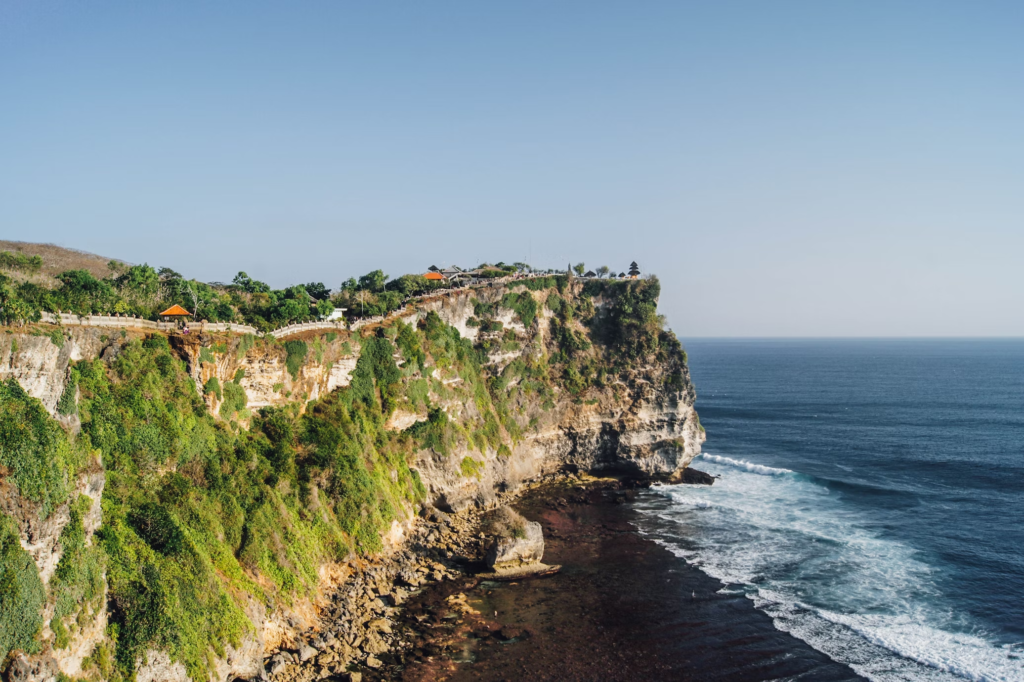
4. Seminyak – Best for Luxury, Nightlife, & Upscale Dining
If you’re looking for a mix of upscale living, great food, and a buzzing nightlife scene, Seminyak is where it’s at. This vibrant area blends Bali’s beach charm with a touch of sophistication—think beach clubs, boutique shopping, and high-end dining, all just steps away from the sand.
Seminyak’s golden beaches are perfect for sunset lovers, while its lively atmosphere makes it a great base for families, couples, or anyone wanting a bit of luxury without going overboard. Plus, you’re close enough to Canggu for the café scene or Uluwatu for a day trip, so it’s a solid all-rounder.
Pros:
- Affordable luxury with great hotels, villas, and beach clubs.
- Excellent restaurants and boutique shopping options.
- Lively nightlife with beach bars, lounges, and clubs.
- Stunning sunsets right from the beach.
Cons:
- Crowds and traffic, especially during peak season.
- Limited cultural attractions nearby.
Perfect for:
Families, couples, and travelers looking for a mix of relaxation, nightlife, and a little luxury.
Seminyak Highlights:
- Sip cocktails and watch the sunset at Potato Head Beach Club or Ku De Ta.
- Treat yourself to a shopping spree at Seminyak Village or local boutique stores.
- Hit the nightlife scene at spots like La Favela and Motel Mexicola.
- Relax on the beach or try a surf lesson, perfect for beginners.
- Enjoy world-class dining at restaurants like Mama San or Sisterfields.

5. Sanur – Best for Families & Laid-Back Travel
If you’re after a laid-back, family-friendly vibe, Sanur on Bali’s east coast is your go-to. It’s far from the hustle of Seminyak or Canggu, offering calm beaches, gentle waters, and a slower pace, perfect for families, retirees, or anyone looking to truly unwind.
Sanur’s beaches are ideal for swimming and watersports like kayaking and stand-up paddleboarding, thanks to the sheltered bay. Plus, its location makes it super convenient for day trips to Ubud or hopping on a boat to the Nusa Islands.
Pros:
- Calm beaches with shallow waters, great for kids and swimming.
- Peaceful atmosphere with a charming boardwalk along the beach.
- Family-friendly resorts with kid-friendly amenities.
- Close to Bali’s airport and ferry ports for island-hopping.
Cons:
- Limited nightlife. Sanur is not for partygoers.
- Wrong side of the island for sunsets.
Perfect for:
Families, older travelers, and anyone looking for a peaceful, no-stress holiday.
Sanur Highlights:
- Relax on the calm beaches and stroll along the Sanur Beach Boardwalk.
- Hop on a ferry to the Nusa Islands for an unforgettable day trip.
- Try out watersports like kayaking, snorkeling, or paddleboarding.
- Enjoy family-friendly dining at beachfront warungs and cozy cafes.
- Explore Taman Festival, an abandoned theme park with an eerie charm.
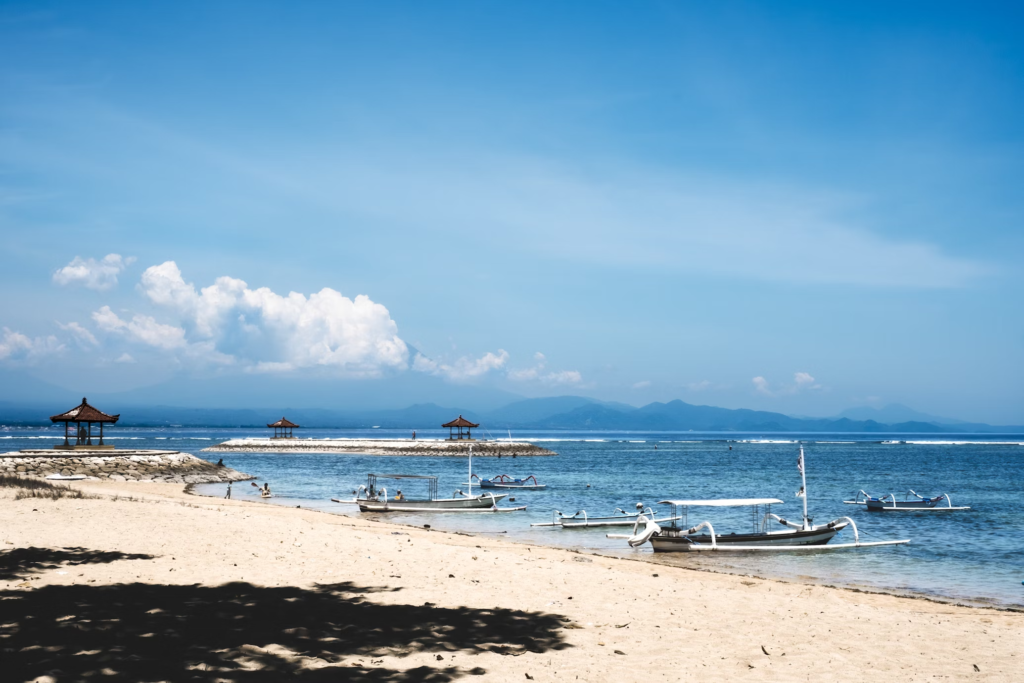
6. Nusa Dua – Best for Luxury Resorts & All-Inclusive Stays
If your idea of a perfect Bali trip involves lounging in a luxury resort, sipping cocktails by a private pool, and soaking up pristine beach views, then Nusa Dua is the spot for you. Developed with high-end tourism in mind, Nusa Dua is Bali’s most polished area, packed with 5-star resorts, immaculate beaches, and world-class facilities.
While it’s not the place to go for “authentic Bali,” it’s perfect if you’re looking to unplug, relax, and enjoy an all-inclusive style holiday with everything you need in one place.
Pros:
- Pristine white-sand beaches and clear turquoise waters.
- Many luxury, all-inclusive resorts with top-notch amenities.
- Quiet, clean, and well-maintained—ideal for a stress-free holiday.
- Easy access to watersports and golf courses.
Cons:
- Lacks authentic Balinese culture—it’s a purpose-built tourist area.
- Not much to do outside the resorts unless you plan day trips.
Perfect for:
Luxury seekers, honeymooners, and travelers looking for a peaceful, resort-style vacation.
Nusa Dua Highlights:
- Relax on the spotless beaches and swim in calm, clear waters.
- Enjoy water sports at Tanjung Benoa—jet skiing, parasailing, and banana boating.
- Watch the Devdan Show, a cultural performance blending dance and acrobatics.
- Visit the iconic GWK Cultural Park and see Indonesia’s tallest statue.
- Treat yourself to a luxury spa day at one of the world-class resorts.

Where should families stay in Bali?
Families should stay in Sanur, Nusa Dua, Jimbaran, or Seminyak, depending on their travel style. Choose Sanur for calm beach days, Nusa Dua for resorts, Jimbaran for a softer landing, and Seminyak for food and comfort.
Traveling Bali with kids is different from traveling Bali as a solo backpacker or digital nomad.
You need calm water, easy meals, safe walking areas, short transfers, and a base that does not turn every outing into a mission. The best family area is not always the trendiest area. It is the area that makes your daily routine easier.
A 2026 family beach guide names Sanur Beach and Mengiat Beach in Nusa Dua as two of the best Bali beaches for babies and toddlers because they have calmer water, soft sand, and easier access.
Stay in Sanur for calm beach days and easy routines
Sanur is one of the best areas in Bali for families because it feels simple.
The beach is calmer than Canggu or Seminyak. The beachfront path makes it easier to walk, cycle, or push a stroller. Restaurants are easier to reach, and the pace is slower.
Choose Sanur if you want:
- Calm beach mornings
- Family-friendly hotels
- Easy walks
- Early dinners
- Less nightlife
- Boat access to the Nusa Islands
- A softer Bali experience
Sanur is not the place for big parties or trendy beach clubs. That is exactly why many families like it.
Stay in Nusa Dua for resorts and low-stress holidays
Nusa Dua is the easiest choice if you want a resort-style family holiday.
It is clean, polished, and built for comfort. Many resorts have pools, kids’ clubs, beach access, restaurants, and activities in one place. That makes it useful when you do not want to plan every hour.
Choose Nusa Dua if you want:
- Luxury resorts
- Calm beaches
- Kids’ clubs
- Clean public areas
- Water sports nearby
- Less street chaos
- A low-effort family stay
The downside is that Nusa Dua can feel separate from the rest of Bali. It is not the best place if you want local culture, small cafes, or a lively neighborhood feel.
Stay in Jimbaran for beach comfort near the airport
Jimbaran works well for families who want beach time without being too far from the airport.
It has a calmer feel than Kuta and Seminyak, plus a long beach and seafood restaurants by the sand. It is a good choice for short stays, first nights, last nights, and family trips where convenience matters.
Choose Jimbaran if you want:
- A beach base near the airport
- Family-friendly resorts
- Sunset dinners
- A quieter feel than Kuta
- Easy access to Uluwatu for day trips
Jimbaran is not as social as Canggu and not as polished as Nusa Dua, but it is comfortable and practical.
Stay in Seminyak for food, shopping, and comfort
Seminyak can work for families who want better restaurants, shopping, private villas, beach access, and a more active area.
It is busier than Sanur or Nusa Dua, so choose your accommodation carefully. Stay near the beach or a quieter villa lane if you want less noise.
Choose Seminyak if you want:
- Restaurants
- Private villas
- Shopping
- Beach sunsets
- Easy access to cafes
- More energy than Sanur
Seminyak is better for families with older kids or teens than families with toddlers who need calm routines.
Should families stay in Canggu?
Canggu can work for some families, but it is not the easiest family base.
It has cafes, villas, gyms, surf lessons, and international food. But traffic, narrow roads, scooters, and busy beach areas can make daily movement stressful.
Choose Canggu with kids only if you know the area, stay near what you need, and do not mind the traffic.
If your family wants calm, Sanur or Nusa Dua is usually the safer bet.
Where should you stay in Bali if you want quiet?
Stay in Sidemen, Amed, Munduk, Lovina, or outer Ubud if you want quiet Bali. These areas are better for nature, slow mornings, early nights, and fewer crowds than Canggu, Seminyak, Kuta, or central Ubud.
Quiet Bali still exists. You just have to stop looking for it in the busiest places.
If your idea of Bali is rice fields, mountain air, ocean mornings, village roads, waterfalls, and simple dinners, do not base yourself in Canggu or Seminyak. Those areas can be fun, but they are not peaceful.
A 2026 guide to Bali’s quiet side focuses on Sidemen, Amed, and Munduk as alternatives for travelers who prefer volcano sunsets and slower stays over beach club reservations.
Stay in Sidemen for rice fields and deep rest
Sidemen is one of the best areas in Bali if you want quiet.
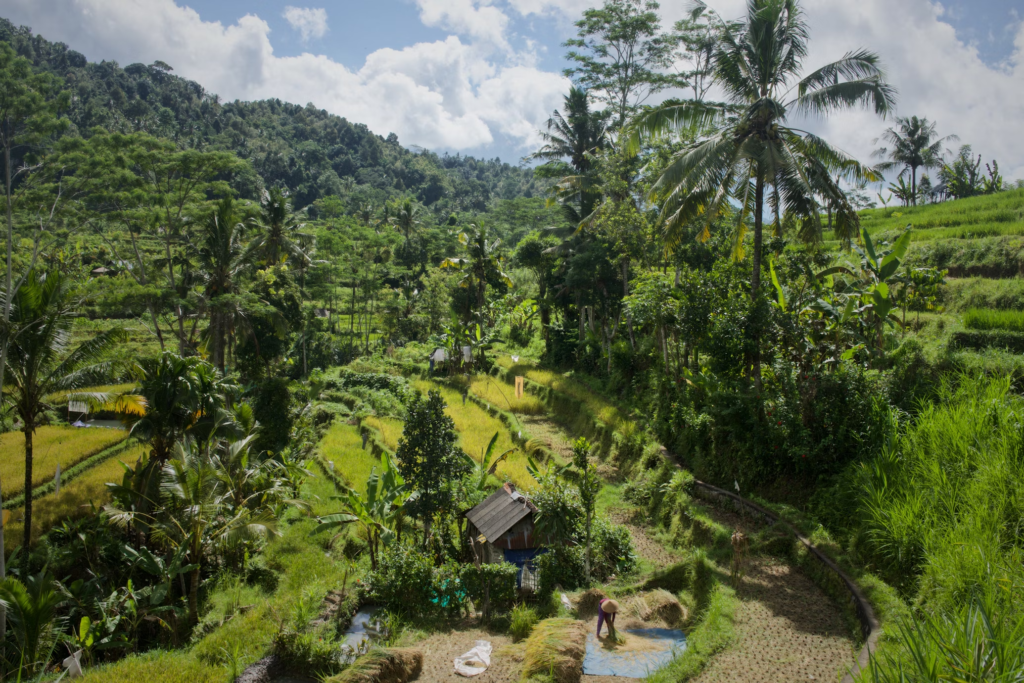
It gives you rice terraces, Mount Agung views, local village life, and a slower pace. It is the kind of place where you wake up early, drink tea, walk through rice fields, and sleep without feeling like you missed a party.
Choose Sidemen if you want:
- Rice field views
- Quiet homestays
- Nature walks
- Local village life
- Space to read, write, or rest
- A peaceful post-retreat stay
Sidemen is not ideal if you need nightlife, coworking spaces, beach clubs, or lots of restaurant choices.
Stay in Amed for slow coastal life and diving
Amed is best for travelers who want ocean without the chaos of South Bali.
It is known for diving, snorkeling, black sand beaches, Mount Agung views, and relaxed coastal villages. The pace is slow, and many days revolve around the water.
Choose Amed if you want:
- Diving
- Snorkeling
- Quiet beaches
- Ocean views
- Simple warungs
- A slower coastal rhythm
Amed is far from the airport and South Bali. Do not stay here if you only have three days and want to see everything.
Stay in Munduk for waterfalls and cool mountain air
Munduk is a good choice if you want a different side of Bali.
It is cooler, greener, and more mountainous than the southern beach towns. You can visit waterfalls, lakes, coffee farms, and temples. It is better for walking, nature, and cooler weather than beach time.
Choose Munduk if you want:
- Waterfalls
- Mountain views
- Cooler weather
- Hiking
- Lakes
- Quiet evenings
Munduk is not convenient for nightlife or quick beach access. It is a nature base, not a social base.
Stay in Lovina for North Bali calm
Lovina is quiet, slow, and far from the main tourist rush.
It has black sand beaches, calm water, dolphin tours, hot springs, and a much slower pace than South Bali. It works well for families, older travelers, and people who want to see North Bali without rushing.
Choose Lovina if you want:
- Quiet coastal life
- Dolphin trips
- Hot springs
- Fewer crowds
- North Bali day trips
- Slow travel
Lovina is not the best choice if you want stylish cafes, nightlife, or quick access to Canggu and Uluwatu.
Stay outside central Ubud for quiet with access
Ubud can be quiet, but only if you choose the right part.
Central Ubud is busy. The roads around the market, Monkey Forest, and main shopping areas can be crowded. But outside the center, Ubud still offers rice fields, retreats, jungle stays, and slower village life.
Choose outer Ubud if you want a balance of:
- Yoga
- Nature
- Restaurants
- Culture
- Rice fields
- Day trips
This is a good middle ground if Sidemen feels too quiet and Canggu feels too much.
Where should you stay in Bali if you do not ride a scooter?
Stay in Sanur, Seminyak, central Ubud, or parts of Canggu if you do not ride a scooter. These areas have more walkable streets, taxis, restaurants, hotels, and daily needs close by than remote areas like Sidemen or Munduk.
You do not need to ride a scooter to enjoy Bali.
But you do need to choose your base carefully.
Some Bali areas look close on a map, but they are spread out in real life. Walking can be hard because sidewalks are uneven or missing. Traffic can be heavy. Some roads are narrow, and Grab or Gojek access can vary by area.
A 2026 no-scooter itinerary recommends using walkable bases, private drivers, and boats instead of relying on scooters for the whole trip.
Stay in Sanur if you want the easiest no-scooter base
Sanur is one of the easiest areas in Bali without a scooter.
You can walk along the beachfront path, reach restaurants, book drivers, and enjoy calm beach days without moving too much. It feels less chaotic than many parts of South Bali.
Choose Sanur if you want:
- Beach walks
- Easy meals
- A calmer road layout
- Hotels near the beach
- Family-friendly movement
- Simple taxi access
Sanur is not the most exciting area, but it is one of the most practical.
Stay in Seminyak if you want restaurants and comfort nearby
Seminyak can work without a scooter if you stay in the right location.
Choose a hotel or villa near the beach, Eat Street, or the main restaurant areas. That way, you can walk to meals, shops, spas, and sunset spots.
The issue is traffic. Short rides can still take time, especially during busy hours.
Choose Seminyak if you want:
- Restaurants
- Shopping
- Beach clubs
- Private villas
- Spa access
- A more polished Bali base
Seminyak is better without a scooter than Uluwatu, but it is still not perfectly walkable everywhere.
Stay in central Ubud if you want culture without constant transport
Central Ubud can work without a scooter because you can walk to cafes, yoga studios, shops, restaurants, temples, and the market.
But it is not always easy walking. Traffic is heavy, sidewalks are uneven, and some streets feel crowded.
Choose central Ubud if you want:
- Yoga classes
- Cafes
- Culture
- Markets
- Restaurants
- Easy day-trip pickup
If you want quiet, stay slightly outside the center, but expect to use taxis or drivers more often.
Stay in Batu Bolong or Berawa if you choose Canggu without a scooter
Canggu is not truly walkable, but some parts are easier than others.
If you do not ride a scooter, stay near Batu Bolong or Berawa so you are close to cafes, restaurants, gyms, and the beach. Do not stay too far inland unless you are happy to use taxis for everything.
Choose central Canggu without a scooter only if you want:
- Cafes nearby
- Beach access
- Yoga and fitness studios
- Social energy
- Short rides instead of long day trips
For yoga-focused travelers, staying near your training or studio matters. If you are planning classes in Canggu, read our Yoga Class in Canggu guide before choosing your area.
Avoid remote bases if you do not ride a scooter
Sidemen, Munduk, Amed, Kintamani, and parts of Uluwatu are beautiful, but they are harder without your own transport.
You can still visit them. Just plan for private drivers, hotel transfers, or slower travel days.
The simple rule is this:
If you do not ride a scooter, choose convenience first and scenery second. Your nervous system will thank you.

How many areas should you stay in during one Bali trip?
Most travelers should stay in one Bali area for trips under 5 days, two areas for 7 to 10 days, and three areas for 14 days or more. Moving too often wastes time because Bali traffic is slow.
This is where many Bali trips go wrong.
People look at the map and think Canggu, Ubud, Uluwatu, and Sanur are all close. Then they arrive and realize that one short-looking drive can take much longer than expected.
BaliDave’s 2026 guide says traffic, narrow roads, poor signs, and rough road conditions are major reasons not to rent a car and drive yourself in Bali. It also notes that hiring a car with a driver can be good value for day trips.
So do not plan Bali like a checklist. Plan it like a rhythm.
Stay in one area if you have 3 to 5 days
If you only have a short trip, choose one base and build around it.
Do not split your stay between Canggu, Ubud, and Uluwatu in 5 days. That sounds exciting on paper, but it often feels rushed in real life.
Good 3 to 5 day bases:
| Travel Goal | Best Base |
|---|---|
| Easy first trip | Sanur |
| Culture and yoga | Ubud |
| Food and nightlife | Seminyak |
| Surf and cliffs | Uluwatu |
| Cafes and social energy | Canggu |
| Resort holiday | Nusa Dua |
If you are coming for yoga, choose the base closest to your main practice or training. For example, if you plan to join classes or training in Canggu, staying nearby saves energy every day. Our Yoga Class in Canggu guide can help you understand the local yoga scene before you book.
Stay in two areas if you have 7 to 10 days
With one week or more, splitting your stay can work well.
The best Bali split is usually one inland base and one beach base.
Good 7 to 10 day combinations:
| Combo | Best For |
|---|---|
| Ubud + Uluwatu | Culture, yoga, nature, surf, beaches |
| Canggu + Ubud | Cafes, yoga, digital nomad life, rice fields |
| Sanur + Ubud | Families, first-timers, calm travel |
| Seminyak + Uluwatu | Restaurants, beach clubs, sunsets |
| Canggu + Sidemen | Social start, quiet finish |
| Ubud + Amed | Wellness, temples, snorkeling, slow travel |
Try to stay at least 3 nights in each area. Anything shorter can feel like you are always packing.
Stay in three areas if you have 14 days or more
If you have two weeks, Bali opens up.
You can mix busy, cultural, and quiet areas without rushing.
Good 14 day routes:
| Route | Best For |
|---|---|
| Canggu + Ubud + Uluwatu | First-timers who want variety |
| Sanur + Ubud + Nusa Lembongan | Families and calmer travelers |
| Seminyak + Ubud + Amed | Food, culture, snorkeling |
| Canggu + Sidemen + Uluwatu | Social energy, quiet nature, surf |
| Ubud + Munduk + Sanur | Nature, waterfalls, culture, calm beaches |
If you are doing yoga teacher training, keep your plan even simpler. Arrive early, settle near your school, finish the training, then add one calm area after. That gives your body and mind time to land.
For more planning around training, read our Yoga Teacher Training in Bali Complete Guide.
Where should you stay before or after yoga teacher training in Bali?
Before yoga teacher training, stay close to your school so you can settle in, rest, and avoid traffic. After training, choose Ubud, Sidemen, Amed, or Uluwatu, depending on whether you want reflection, quiet, ocean, or surf.
Yoga teacher training is not a normal holiday.
You are not just sightseeing. You are studying, practicing, waking up early, meeting new people, learning anatomy, philosophy, meditation, breathwork, alignment, and teaching skills. Your nervous system needs space before and after.
Joga Yoga’s own program materials describe the training as an intimate Yoga Alliance certified course in Bali, with over 2,000 graduates, 8+ years established, and a curriculum covering asana, pranayama, meditation, yoga philosophy, teaching methodology, anatomy, Ayurveda, and more.
So your base should support the training, not fight against it.
Stay near your school before training starts
If your training is in Canggu, stay in Canggu.
Do not book a villa in Ubud because it looks peaceful, then plan to commute to Canggu. That is a bad idea. You will lose time, energy, and patience before class even begins.
Before training, your goal is simple:
- Sleep well
- Learn your area
- Find food that works for you
- Adjust to Bali weather
- Reduce travel stress
- Arrive at training calm
If you are training with Joga Yoga, Canggu is the best pre-training base because it keeps you near the studio, beach, cafes, and student community. You can also read our guide to the best yoga teacher training in Canggu if you are still comparing programs.
Stay in Canggu if you want community after training
Some students want to stay close to friends after training ends. That makes sense.
Canggu gives you cafes, beach sunsets, yoga classes, gyms, restaurants, and social life. It is useful if you want to keep practicing, meet people, and stay connected before flying home.
Choose Canggu after training if you want:
- Community
- Beach time
- Cafes
- Easy meals
- More yoga classes
- Surf lessons
- A social ending to your trip
Just keep your schedule light. After training, you may feel full, tired, emotional, inspired, or all of those at once. Do not plan five activities every day.
Stay in Ubud if you want reflection and culture
Ubud is a strong post-training choice if you want to process the experience.
It gives you temples, rice fields, meditation spaces, vegetarian food, art, and slower mornings. It can feel like a natural next step after deep practice.
Choose Ubud after training if you want:
- Journaling
- Temple visits
- Meditation
- Rice field walks
- Gentle yoga
- Culture
- Time to reflect
Stay outside the busy center if you want quiet.
Stay in Sidemen if you want deep quiet
Sidemen may be the best post-training area if you feel overstimulated.
It is quiet, green, and simple. There are fewer distractions. You can sleep, walk, read, write, and let the training settle.
Choose Sidemen after training if you want:
- Silence
- Rice terraces
- Mountain views
- Slow mornings
- No nightlife
- Space to integrate
This is not the area for people who need entertainment. It is the area for people who need space.
Stay in Amed if you want ocean and slow recovery
Amed works well after training if you want ocean without the noise of South Bali.
You can snorkel, dive, eat simple food, watch Mount Agung, and move slowly. It is far from Canggu, so give yourself enough time.
Choose Amed if you want:
- Snorkeling
- Diving
- Quiet beaches
- Ocean air
- Slow days
- Early nights
Stay in Uluwatu if you want surf, cliffs, and sunsets
Uluwatu is a good post-training base if you want beach energy without returning to busy Canggu.
It gives you cliffs, clear water, surf, sunsets, beach clubs, and a more open feeling. It is still spread out, so transport matters.
Choose Uluwatu if you want:
- Surf
- White sand beaches
- Cliff views
- Sunsets
- Space from Canggu
- A more active post-training reset
If you want to mix post-training movement with surf, read our guide to yoga and surf in Bali.
What are the best areas to stay in Bali by daily rhythm?
The best Bali area depends on how you want your normal day to feel. Canggu feels social and busy, Ubud feels green and reflective, Sanur feels calm, Uluwatu feels open and surf-focused, and Sidemen feels quiet.
This is the part most Bali guides miss.
They tell you what an area has. They do not always tell you what it feels like to wake up there.
A place can have great cafes and still be wrong for you. A place can be quiet and beautiful, but too boring if you want people around. That is why your daily rhythm matters.
What Bali areas feel like in the morning and evening
| Area | 7 a.m. Feels Like | 7 p.m. Feels Like |
|---|---|---|
| Canggu | Scooters, surf checks, coffee, gym classes | Traffic, dinners, beach clubs, social plans |
| Ubud | Rice fields, yoga, temple sounds, cool air | Restaurants, markets, wellness talks |
| Uluwatu | Surf checks, quiet roads, cliff views | Sunset crowds, beach clubs, early nights |
| Sanur | Beach walks, cycling, calm water | Family dinners, quiet streets, slow evenings |
| Seminyak | Hotel breakfasts, shopping setup, beach walks | Restaurants, cocktails, sunset bars |
| Nusa Dua | Resort breakfasts, pools, calm beaches | Hotel dinners, quiet resort evenings |
| Sidemen | Mist, roosters, rice fields, silence | Very quiet, early sleep |
| Amed | Diving boats, ocean views, slow starts | Simple dinners, stars, quiet roads |
| Munduk | Cool air, waterfalls, mountain views | Cold evenings, quiet stays |
| Lovina | Calm sea, dolphin boats, slow mornings | Hot springs, quiet meals, early nights |
Use this table before you book.
If you want sunrise walks and early sleep, Sanur or Sidemen will feel better than Canggu. If you want community and movement, Canggu will feel better than Lovina. If you want surf, sunset, and space, Uluwatu may beat Seminyak.
Choose Canggu if your day needs people
Canggu works when you want your day to have movement and options.
You can practice yoga, surf, work from a cafe, train at a gym, meet friends, and go to dinner without feeling like the area has gone quiet.
But options can become noise. Stay in Canggu if you like stimulation. Avoid it if you are already tired.
Choose Ubud if your day needs meaning
Ubud works when you want your day to feel slower, deeper, and more reflective.
It is good for yoga, journaling, culture, temples, cooking classes, rice fields, and wellness. It is not good if you need the ocean every day.
Choose Sanur if your day needs ease
Sanur works when you want fewer decisions.
Walk by the beach. Eat breakfast. Swim. Rest. Repeat.
That is not boring if ease is what you came for.
Choose Uluwatu if your day needs space
Uluwatu works when you want beaches, cliffs, surf, and sunset. It feels less packed than Canggu, though popular spots still get busy.
You need transport here. If you do not ride a scooter, choose your hotel location carefully.
Choose Sidemen if your day needs silence
Sidemen works when you want less from Bali.
Less noise. Less traffic. Less social pressure. Less scrolling around for the next place to go.
It is not where you go to be entertained. It is where you go to exhale.
Should you stay in Nusa Dua or Seminyak?
Stay in Nusa Dua if you want a polished resort holiday with calm beaches, pools, spas, and low planning. Stay in Seminyak if you want restaurants, shopping, beach clubs, sunset bars, and a livelier Bali base.
Nusa Dua and Seminyak are both popular, but they offer very different trips.
Nusa Dua is built for comfort. Seminyak is built for lifestyle. One feels like a resort bubble. The other feels like a busy beach town with better dining, villas, and nightlife.
Bali Untold describes Nusa Dua as an upmarket resort area made for luxury tourism and popular with families because it has many of Bali’s biggest resorts. It also describes Seminyak as lively and popular with younger families and couples who want upscale stays without the highest luxury prices.
Choose Nusa Dua if you want everything handled
Nusa Dua is best when you want Bali to feel easy.
You can land, check in, swim, eat, book a spa treatment, take the kids to the pool, and not think too much. Many hotels have direct beach access, restaurants, water sports, and family services.
Choose Nusa Dua if you want:
- Luxury resorts
- Calm beaches
- Kids’ clubs
- Clean streets
- Pools and spas
- Water sports nearby
- A low-stress holiday
Nusa Dua is not the best choice if you want small cafes, local village life, yoga community, nightlife, or a strong sense of everyday Bali.
It is comfortable, but it can feel separate from the island.
Choose Seminyak if you want food, shopping, and nightlife
Seminyak is better if you want a more active beach holiday.
You get restaurants, beach clubs, boutiques, villas, spas, sunset bars, and easier access to Canggu and Legian. It is more polished than Kuta, but still lively.
Choose Seminyak if you want:
- Good restaurants
- Private villas
- Shopping
- Beach clubs
- Sunset drinks
- More nightlife
- A social but comfortable base
The tradeoff is traffic and crowds. Seminyak is not a quiet escape. Stay closer to the beach or a quieter villa lane if you want less noise.
Nusa Dua vs Seminyak quick choice
| Choose Nusa Dua If You Want | Choose Seminyak If You Want |
|---|---|
| Resort comfort | Restaurants and nightlife |
| Calm beaches | Sunset bars |
| Family facilities | Private villas |
| Kids’ clubs | Shopping |
| A clean, controlled area | A more local street feel |
| Less planning | More things nearby |
If you are coming to Bali for yoga, wellness, or personal growth, neither Nusa Dua nor Seminyak is usually the strongest base. Nusa Dua can feel too resort-focused. Seminyak can feel too busy. For yoga-focused travel, Canggu and Ubud usually make more sense.
If your trip is partly yoga and partly beach holiday, read our Yoga Teacher Training in Bali Complete Guide before choosing your base.
Should you stay on the Nusa Islands or Gili Islands?
Stay on the Nusa Islands if you want cliffs, snorkeling, diving, beach clubs, and adventure close to Bali. Stay on the Gili Islands if you want car-free island life, clear water, slower days, and a stronger escape from mainland Bali.
The nearby islands are not just “extra stops.” They can change the whole mood of your Bali trip.
The Nusa Islands are closer to Bali. The Gili Islands sit off Lombok, so they take more effort to reach. Both are beautiful, but they suit different travelers.
A 2026 Nusa Islands guide says fast ferries leave daily from Sanur, and the boat trip usually takes around 45 minutes. It recommends 2 days for Nusa Lembongan, 1 day for Nusa Ceningan, and 3 days for Nusa Penida if you want enough time across all three islands.
Choose Nusa Penida for adventure and dramatic views
Nusa Penida is the most famous of the Nusa Islands.
It has huge cliffs, blue water, wild beaches, and famous spots like Kelingking Beach, Broken Beach, Angel’s Billabong, and Atuh Beach.
Choose Nusa Penida if you want:
- Adventure
- Big views
- Cliff photos
- Snorkeling
- Rugged roads
- A wilder island feel
Nusa Penida is not the easiest place for a relaxed stay. Roads can be rough, attractions are spread out, and day trips can feel rushed.
Stay overnight if you want a better experience.
Choose Nusa Lembongan for a calmer island base
Nusa Lembongan is easier and more relaxed than Nusa Penida.
It has beaches, snorkeling, diving, cafes, beach clubs, and a slower pace. It is a better island base if you want to relax instead of chasing viewpoints all day.
Choose Nusa Lembongan if you want:
- Island calm
- Ocean views
- Beach clubs
- Snorkeling
- Diving
- Slower mornings
- Easier movement
Simply Madeleine’s 2026 Nusa guide says Nusa Lembongan and Nusa Ceningan are smaller and calmer, with laid-back beaches and island-life energy.
Choose Nusa Ceningan for a small island feel
Nusa Ceningan is tiny compared with Nusa Penida. It connects to Nusa Lembongan by the Yellow Bridge.
Stay here if you want something simple, small, and quiet. It works best as part of a Lembongan stay, not as your only island stop unless you really want slow travel.
Choose the Gili Islands if you want to fully switch off
The Gili Islands are not part of Bali, but many travelers add them to a Bali trip.
They have no cars, no motorbikes, clear water, snorkeling, diving, beach bars, and a slower island rhythm.
Choose:
- Gili Trawangan for nightlife and social energy
- Gili Air for balance
- Gili Meno for quiet and romance
The Gilis take more effort than the Nusa Islands, so give yourself enough time. Do not add them to a short Bali trip just because they look good online.
Nusa Islands vs Gili Islands quick choice
| Choose Nusa Islands If You Want | Choose Gili Islands If You Want |
|---|---|
| Easier access from Bali | A stronger island escape |
| Cliffs and adventure | No cars or motorbikes |
| Snorkeling and diving | Clear water and slow days |
| Short add-on trip | More time away from Bali |
| Nusa Penida viewpoints | Beach bars and island cycling |
If you only have one or two extra nights, choose Nusa Lembongan. If you have three or more nights and want a full island reset, consider the Gili Islands.
What areas should you avoid staying in Bali?
Avoid staying in Kuta, Denpasar, and remote areas far from your main plans if they do not match your trip style. These places are not “bad,” but they often create more noise, traffic, or inconvenience than travelers expect.
This section needs balance.
Some guides say “avoid Kuta” like it has no value. That is not fully fair. Kuta can still work for budget travelers, beginner surfers, short airport stays, shopping, nightlife, and families who want certain attractions nearby.
But for yoga travelers, families seeking calm, couples wanting beauty, or digital nomads who need focus, Kuta is usually not the best base.
Bali Holiday Secrets describes Kuta as Bali’s original tourist hub and says it is strongly connected with the island’s party side. Its Kuta guide also covers crowds, nightlife, traffic, safety, and who the area suits.
Avoid Kuta if you want calm, beauty, or deep rest
Kuta is busy, loud, and commercial. It has hotels, malls, bars, surf schools, and a long tourist history. But it does not offer the same charm as Ubud, the same surf beauty as Uluwatu, or the same calm as Sanur.
Avoid Kuta if you want:
- Peace and quiet
- Yoga retreat energy
- Romantic beaches
- Nature
- Slow travel
- A clean wellness base
Consider Kuta if you want:
- Budget hotels
- Beginner surf lessons
- Nightlife
- Shopping
- Airport convenience
- A short stay before flying out
So the better advice is not “never stay in Kuta.” It is: do not stay in Kuta for the wrong reason.
Avoid Denpasar unless you have a specific reason
Denpasar is Bali’s capital and local business hub. It is useful for government offices, hospitals, markets, local life, and errands. But it is not the easiest base for most travelers.
Avoid Denpasar if you want:
- Beach access
- Easy sightseeing
- Resort comfort
- Nightlife
- Walkable tourist streets
- A relaxing holiday mood
A 2026 Denpasar safety guide says travelers should use caution and lists Sanur, Ubud, and Seminyak as better places to stay instead.
Denpasar can be interesting for a day trip, but most visitors should sleep somewhere else.
Avoid remote areas if you only have a short trip
Sidemen, Amed, Munduk, Lovina, and Kintamani are beautiful. But they are not always smart choices for short trips.
Avoid remote bases if:
- You only have 3 days
- You want daily nightlife
- You do not ride a scooter
- You hate long drives
- You want to visit many South Bali areas
- You need lots of restaurants nearby
These places work best when you slow down. If you rush them, they lose their magic.
Avoid choosing an area only because it is popular
This is the biggest mistake.
Canggu is not automatically best because it is trendy. Ubud is not automatically peaceful because it is spiritual. Uluwatu is not automatically easy because it has beautiful beaches. Nusa Dua is not automatically boring because it is resort-heavy.
Pick the area that fits your real day, not the one that looks best in someone else’s video.
For yoga travelers, that means choosing a base that supports your body, your routine, and your reason for coming. If your Bali trip includes teacher training, start with the location of the school, then build around that. You can compare training options in our 200-Hour Yoga Teacher Training in Bali program guide.

Final thoughts: where should you stay in Bali?
The best area to stay in Bali is the area that fits your real travel style. Choose Canggu for social energy, Ubud for yoga and culture, Sanur for calm, Uluwatu for surf, and Nusa Dua for resorts.
Bali is not hard to enjoy. But it is easy to plan badly.
The biggest mistake is choosing the most popular area instead of the right area. Canggu looks exciting, but it can feel too busy. Ubud looks peaceful, but central Ubud can be crowded. Uluwatu looks perfect, but it is spread out. Nusa Dua looks relaxing, but it can feel removed from local Bali.
So keep it simple.
| Your Main Goal | Best Area to Stay |
|---|---|
| First Bali trip | Sanur, Seminyak, Ubud, or Jimbaran |
| Yoga and wellness | Canggu or Ubud |
| Yoga teacher training | Canggu, especially if training near Joga Yoga |
| Digital nomad life | Canggu, Ubud, Sanur, or Uluwatu |
| Surf | Uluwatu, Canggu, Kuta, Medewi, or Nusa Lembongan |
| Family holiday | Sanur, Nusa Dua, Jimbaran, or Seminyak |
| Luxury resort stay | Nusa Dua |
| Restaurants and nightlife | Seminyak or Canggu |
| Quiet nature | Sidemen, Munduk, Amed, or Lovina |
| Diving and snorkeling | Amed or Nusa Lembongan |
| No scooter | Sanur, Seminyak, central Ubud, or central Canggu |
If you are still unsure, choose based on your daily rhythm.
Stay in Sanur if you want easy beach days.
Stay in Ubud if you want culture, yoga, and rice fields.
Stay in Canggu if you want cafes, surf, gyms, yoga, and people.
Stay in Uluwatu if you want cliffs, beaches, surf, and sunsets.
Stay in Nusa Dua if you want a resort holiday with less planning.
Stay in Sidemen or Amed if you want Bali to feel slow again.
For yoga travelers, Canggu and Ubud are usually the strongest choices. Canggu gives you beach life, classes, cafes, and community. Ubud gives you deeper retreat energy, temples, nature, and quiet spaces if you stay outside the center.
If your trip includes yoga teacher training, start with your school location first. Long daily travel can drain you before the day even begins. If you are planning a training journey in Bali, read our 200-Hour Yoga Teacher Training in Bali program guide or start with our full Yoga Teacher Training in Bali Complete Guide.
Bali works best when you stop trying to see everything.
Pick the base that matches your body, your pace, and your reason for coming. That is how Bali becomes a trip you enjoy, not a list you rush through.
FAQs
What is the best area to stay in Bali for first-timers?
Sanur, Seminyak, Ubud, and Jimbaran are the best areas for first-timers in Bali. Sanur is calm, Seminyak is convenient, Ubud is cultural, and Jimbaran gives you beach comfort close to the airport.
Canggu can also work for first-timers who want cafes, nightlife, surf, and a social scene. But it is not the easiest choice if you want peace, walkability, or low traffic.
Is Canggu or Ubud better to stay in?
Canggu is better if you want beach life, cafes, coworking, gyms, surf, nightlife, and social energy. Ubud is better if you want yoga, rice fields, temples, wellness, culture, and a slower pace.
Choose Canggu if you want movement and community. Choose Ubud if you want depth and nature.
Where should digital nomads stay in Bali?
Digital nomads should stay in Canggu, Ubud, Sanur, or Uluwatu. Canggu has the strongest coworking and cafe scene. Ubud is better for focus and wellness. Sanur is calmer. Uluwatu works for surf-focused remote workers.
If you need strong routine and fewer distractions, Sanur or Ubud can be better than Canggu.
Where should families stay in Bali?
Families should stay in Sanur, Nusa Dua, Jimbaran, or Seminyak. Sanur is best for calm beach days and easy routines. Nusa Dua is best for resorts. Jimbaran is good near the airport. Seminyak works better for families with older kids.
Canggu can work for some families, but traffic and narrow roads make it less relaxing for many parents.
Where should surfers stay in Bali?
Surfers should stay in Uluwatu, Canggu, Kuta, Medewi, or Nusa Lembongan. Uluwatu is best for experienced surfers. Canggu is best for surf plus social life. Kuta and Legian suit beginners. Medewi is quieter and better for long waves.
Beginners should book lessons and avoid advanced reef breaks without guidance.
Where should yoga travelers stay in Bali?
Yoga travelers should stay in Canggu, Ubud, Sanur, or Sidemen. Canggu is best for beach yoga, community, cafes, and teacher training. Ubud is best for retreats and culture. Sanur is best for calm. Sidemen is best for quiet integration.
If you are planning yoga teacher training, choose a base near your school. For Canggu training options, read our guide to the best yoga teacher training in Canggu.
Where should I stay in Bali without a scooter?
Stay in Sanur, Seminyak, central Ubud, or central Canggu if you do not ride a scooter. These areas give easier access to restaurants, cafes, hotels, taxis, and daily needs.
Avoid remote areas like Sidemen, Munduk, Amed, and Kintamani unless you plan to hire drivers.
What is the quietest area to stay in Bali?
Sidemen, Munduk, Amed, Lovina, and outer Ubud are some of the quietest areas to stay in Bali. Choose Sidemen for rice fields, Munduk for waterfalls, Amed for slow coastal life, and Lovina for North Bali calm.
Avoid Canggu, Seminyak, Kuta, and central Ubud if you want deep quiet.
How many areas should I stay in during one Bali trip?
Stay in one area for trips under 5 days, two areas for 7 to 10 days, and three areas for 14 days or more. Moving too often wastes time because Bali traffic can be slow.
For a balanced 7 to 10 day trip, combine one inland base with one beach base, such as Ubud and Uluwatu, or Canggu and Ubud.
Should I stay in Bali or the Nusa Islands?
Stay in Bali if you want yoga, culture, cafes, surf, restaurants, nightlife, or easier transport. Stay on the Nusa Islands if you want cliffs, snorkeling, diving, island views, and a short adventure away from mainland Bali.
For most travelers, Nusa Lembongan is easier for a relaxed island stay. Nusa Penida is better for dramatic views and adventure.