Vinyasa Flow Yoga can look fast and graceful from the outside, but the heart of the practice is simple. You move with your breath. You stay present. You build strength, balance and calm in a steady and natural way.
This guide explains Vinyasa Flow Yoga in clear grade 7 English. You will understand what it is, how it works and why so many people enjoy it. There is no confusing language and no long history lessons. You get the information you need in a way that feels human and useful.
What Vinyasa Flow Yoga Is
The word vinyasa comes from Sanskrit. It means to place in a special way. In yoga, this means you place your body with purpose as you move. You are not rushing. You are not guessing. You move with attention.
Flow means the poses link together in a smooth path. You move from one pose to the next without stopping for long periods. Your breath sets the rhythm. When breath and movement work together, the practice feels steady and connected.
If you want to explore more Sanskrit terms in yoga, see Yoga Sanskrit Terms and Meanings.
How Breath Links Each Movement
Vinyasa uses breath as the main guide.
Inhale for expansion.
Your chest lifts. Your body opens. Your spine grows tall.
Exhale for contraction.
Your body folds or settles. Your core supports the movement.
This breath pattern keeps you safe because it slows you down. It helps you avoid forcing your body into shapes it is not ready for. It keeps your focus sharp so you stay aware of your posture and balance.
How Vinyasa Flow Yoga Works
The Basic Structure of a Flow
A Vinyasa Flow class usually follows a simple structure.
Warm up
You prepare your joints, wake up your spine and build heat slowly.
Main sequence
You link poses together. You move from one shape to the next using breath as your guide. This is the most active part of the class.
Cool down
You slow the pace. You stretch gently. You return your breath to a calm and smooth rhythm.
This structure makes the practice safe and balanced. It also helps beginners know what to expect.
Why Transitions Matter More Than Static Poses
Many people focus only on the final pose. In Vinyasa, the way you move into and out of each pose is just as important. Smooth transitions protect your joints. They teach you how to shift your weight with control. They also help you learn good movement habits that carry into everyday life.
Strong transitions keep the flow steady. They also prevent sudden jumps or twists that can cause injury.
The Role of Ujjayi Breathing
Ujjayi breathing is a steady and soft breath used in many Vinyasa classes. You breathe through your nose and create a gentle sound at the back of your throat. It is not loud. It is calm and even.
This breath helps you stay focused. It sets a slow and clear pace. It also keeps your mind from wandering so you can stay present in each movement.
Vinyasa Flow Yoga vs Other Yoga Styles
Vinyasa vs Hatha Yoga
Vinyasa moves from one pose to the next in a steady flow. Your breath guides each step. The pace is active and continuous.
Hatha Yoga is slower. You hold each pose for longer. You focus on alignment and calm breathing without much movement. It feels more still than vinyasa.
If you want a deeper look at Hatha Yoga, see What is Hatha Yoga.
Vinyasa vs Ashtanga Yoga
Ashtanga Yoga follows a fixed sequence. The poses are always done in the same order. It has a set structure that does not change.
Vinyasa has more freedom. Each class can be different. Teachers design their own flows. This gives you more variety and space to explore.
For more detail, see Ashtanga vs Vinyasa Yoga Guide.
Vinyasa vs Power Yoga
Power Yoga is stronger and more intense. It often focuses on building strength and endurance. The movements can feel like a workout.
Vinyasa can be strong too, but the main focus is smooth breath linked with movement. The goal is balance, not only strength.
Vinyasa vs Yin Yoga
Yin Yoga is slow and quiet. You hold gentle stretches for a long time. It targets deeper tissues and helps the body relax.
Vinyasa is active. You move more, build heat and change poses often. It feels energetic rather than still.
Is Vinyasa Flow Yoga Good for Beginners
A Simple Answer
Yes, vinyasa can be great for beginners when the teacher sets a slow pace and explains each movement clearly. Many new students enjoy the steady rhythm of breath and movement.
What Makes It Beginner Friendly
Clear steps
You move in small steps rather than big jumps. Each pose links to the next in a simple way.
Steady breath
Your breath guides you so you do not rush. This keeps the practice safe.
Easy options
Every pose has a gentle version. You can bend your knees or lower your hands if needed.
When Vinyasa Can Feel Hard
Vinyasa can feel hard when the pace is fast. Some flows also ask for strength in the shoulders, core and legs. If you are new, this can feel tiring at first.
You can slow it down. You can take breaks in child’s pose. You can choose gentle versions of poses. A good teacher will help you find a pace that feels steady and safe.
For more beginner support, see Beginner Yoga.
Benefits of Vinyasa Flow Yoga
Works the Whole Body
Vinyasa Flow Yoga trains your body in a balanced way.
Strength
You build strength in your arms, legs and core because the poses link together with steady movement.
Flexibility
The flow brings your body through many ranges of motion. This helps your muscles stay open and less tight.
Balance
You shift weight from side to side and move through standing poses. This improves your balance over time.
Helps the Mind
Vinyasa does more than train the body. It supports the mind too.
Lower stress
The steady breath helps calm the nervous system.
Better focus
You stay present because each movement follows the breath.
Calmer mood
The rhythm of the flow helps the mind settle after a busy day.
To learn more, see Yoga for Stress Relief and Yoga for Anxiety and Depression.
Supports Heart and Lung Health
Vinyasa can act like light cardio. The constant movement raises your heart rate a little. This helps circulation and general fitness. It also trains better breathing control because each pose follows an inhale or an exhale.
Can Help with Weight Goals
Vinyasa uses more energy than slow styles. The flow keeps you moving. You burn more calories and raise your metabolism for a short time after class.
More movement
The linking poses keep your body active.
Higher energy burn
Your body works harder during transitions and full body poses.
If you want more detail, see Hot Yoga Calories Burned.
Calories Burned in Vinyasa Flow Yoga
A Simple Range
A typical vinyasa class can burn about 250 to 500 calories in one hour. The range changes based on the pace of the class and your body weight. A slow flow burns less. A strong and fast flow burns more.
Larger bodies use more energy. Smaller bodies use less. The goal is not to chase numbers but to stay steady and safe.
Why Vinyasa Uses More Energy Than Slow Yoga
You burn more energy in vinyasa because you never fully stop moving. Each inhale and exhale links to a new pose. The continuous transitions keep your muscles active. Your body works through more positions in a short time.
For more calorie guidance, see Hot Yoga Calorie Counter.
Common Mistakes and Safety Tips
Moving Too Fast
When you rush from pose to pose you lose alignment. Your knees, wrists and lower back take more strain. Moving too fast also makes the breath uneven. Slow down enough to place each foot and hand with control.
Holding the Breath
Some people forget to breathe when the flow becomes hard. This creates strain in the neck and chest. It also tires you out quickly. Smooth breathing keeps your body steady and your mind calm.
Overarching the Lower Back
In backbends or upward facing shapes it is easy to press too much into the lower back. Use your core to support your spine. Keep length in your torso. This protects the lower back and keeps the pose safe.
When to Avoid Vinyasa
Vinyasa is not right for every moment.
Recent injuries
If you have a fresh injury, the fast changes in movement can cause more pain.
High stress days
If your mind feels overwhelmed, the quicker pace may feel too intense.
Low energy days
If you are tired or sick, the flow can drain you instead of helping you.
Listen to your body. It is fine to choose a gentle class or rest when needed.
Easy Vinyasa Flow Sequence for Beginners
Warm Up
Cat and Cow
Go on hands and knees. Lift your chest on the inhale. Round your back on the exhale. This warms your spine.
Gentle Forward Fold
Stand tall. Fold forward with soft knees. Let your head hang. This relaxes your back and legs.
Shoulder Rolls
Roll your shoulders up and back. This prepares the upper body for movement.
Main Flow
Move slowly and follow your breath.
Mountain Pose
Stand tall with steady feet. Inhale and raise your arms.
Forward Fold
Exhale and fold forward with soft knees.
Half Lift
Inhale and lift your chest halfway. Keep your spine long.
Step Back to Low Lunge
Exhale and step one foot back. Keep your hands on the floor and your chest lifted.
Downward Dog
Inhale and step back with the other foot. Lift your hips. Press your hands into the mat.
Knee to Chest
Exhale and bring one knee toward your chest as you step forward again.
Warrior One
Inhale and rise with arms overhead. Bend your front knee. Keep your back heel grounded.
Return to Forward Fold
Exhale and fold forward. Then rise to standing on the next inhale.
Repeat on the other side.
Timing
Move each step with one breath. If it feels fast, take more than one breath per pose.
Cool Down
Seated Forward Fold
Sit with legs out long. Fold gently over your legs.
Child’s Pose
Kneel and rest your chest over your thighs. Stretch your arms forward. Breathe slowly.
Deep Breathing
Sit tall and take five slow breaths. Inhale through your nose. Exhale through your nose.
Intermediate Vinyasa Flow Sequence
Warm Up
Sun Salutation A
Move through a simple round of standing poses, plank and downward dog. Go slow and warm the whole body.
Main Flow
Low Lunge Twist
Step one foot forward. Place opposite hand on the mat. Reach the other arm to the sky. Inhale to lengthen. Exhale to twist.
Warrior Two
Step back into a wide stance. Open your arms. Bend your front knee.
Reverse Warrior
Lift your front arm overhead. Keep your front knee bent.
Side Angle Pose
Place your elbow on your front knee or hand on the floor. Reach your top arm overhead.
Plank to Chaturanga
Lower with control. Use your core. Keep your elbows close.
Upward Facing Dog
Lift your chest and open your shoulders.
Downward Dog
Lift your hips and lengthen your back.
Repeat on the other side.
Cool Down
Pigeon Pose
Bring one leg forward and fold over it. This opens the hips.
Supine Twist
Lie on your back. Drop knees to one side. Switch sides after a few breaths.
Resting Pose
Lie flat. Relax your whole body.
How to Teach Vinyasa Flow Yoga
The Logic Behind a Good Sequence
Build heat
Start with simple movements to warm the body and prepare the joints.
Build strength
Use standing poses or plank work to train the core, legs and shoulders.
Build balance
Add poses that test focus and stability once the body is warm.
Return to calm
End with slow stretches and steady breathing to cool down.
This pattern keeps class safe and clear.
How to Cue Breath Simply
One cue per movement
Tell students when to inhale and when to exhale without adding extra words.
One idea at a time
Focus on one clear action. For example, lift the chest or soften the shoulders. Too many cues at once confuse beginners.
How to Watch Students and Adjust Them
Keep eyes off your own mat
Stand and watch your students instead of staying in every pose yourself. This helps you see what they need.
Move around the room
Walk slowly and look from different angles. Offer gentle guidance with your voice or hands when needed.
For deeper teaching skills, see the YTT Yoga Teacher Training Guide.
You can also learn from experienced teachers at Joga Yoga. They guide students through alignment, breath and safe movement every day.
Vinyasa Flow Yoga in Bali
What Classes Feel Like in a Bali Studio
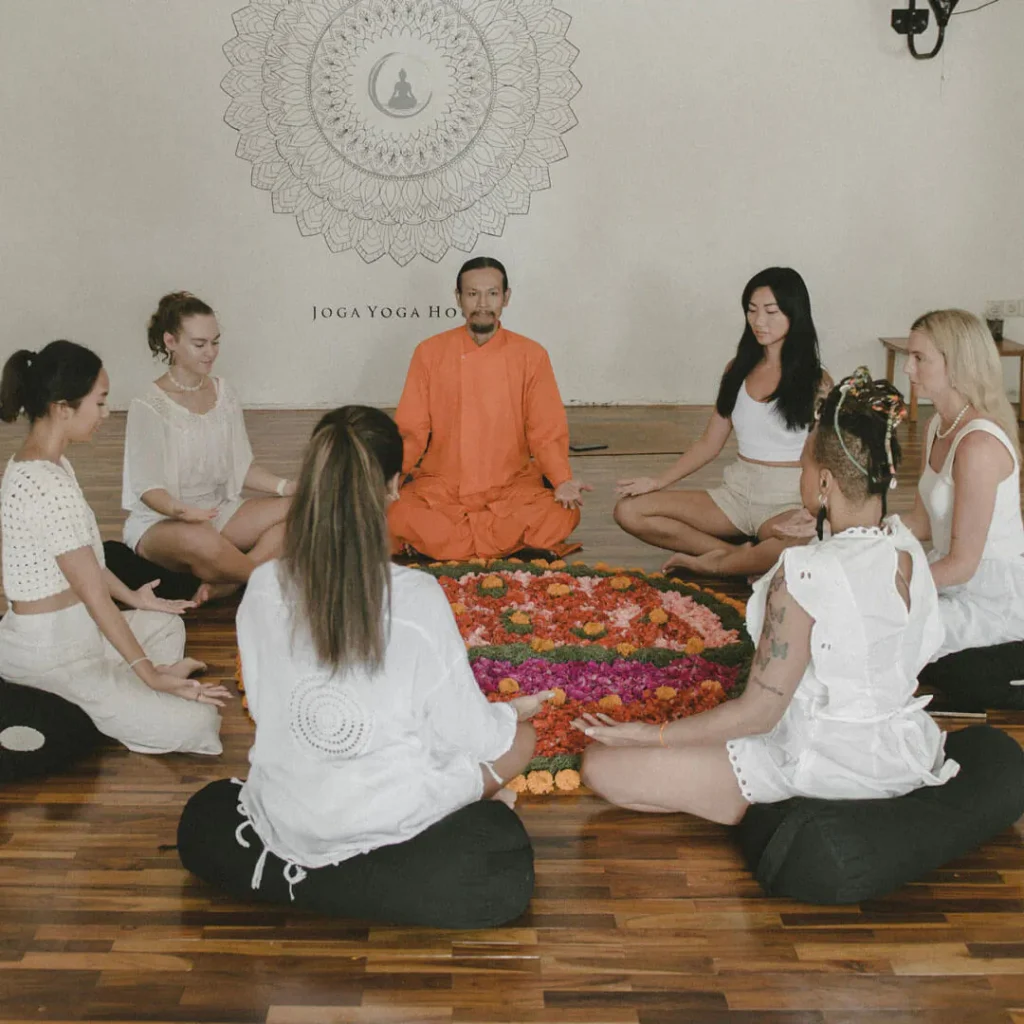
A Vinyasa class in Bali has a calm and natural feel. You often hear soft music in the background. You breathe with the warm air around you. Many studios open into gardens or rice fields, so you can hear birds and feel a gentle breeze. The atmosphere is peaceful but alive. This helps you stay present as you flow from pose to pose.
Vinyasa at Joga Yoga in Canggu
At Joga Yoga, the space is surrounded by plants, trees and open air. The shala feels grounded and quiet, which makes it easier to focus on your breath. Classes are taught by experienced teachers who guide beginners and advanced students with care. The team has trained in traditional yoga, anatomy and meditation, and they teach with clear steps and steady support.
If you want to join a class in Canggu, see Yoga Classes Bali.
Final Thoughts
Vinyasa Flow Yoga is a simple and steady way to build strength, calm your mind and move with more ease. If you are new, start with a slow paced class so you can learn the breath and the basic steps. If you want to go deeper and understand how to guide others, you can explore training with a supportive school in Bali.
To learn more, see Yoga Teacher Training in Bali.
Frequently Asked Questions
What is Vinyasa Flow Yoga
It is a style of yoga where you move from one pose to the next while following your breath.
Is Vinyasa Flow Yoga Hard
It can feel hard when the pace is fast or the poses need strength, but slowing down makes it more comfortable.
Is Vinyasa Good for Beginners
Yes. With a patient teacher and a slow pace, beginners can learn it safely.
What Are the Disadvantages of Vinyasa Yoga
The flow can feel tiring, the speed can be too quick for some people and moving without control can lead to strain or injury.
Can Vinyasa Yoga Help You Lose Weight
Yes. The steady movement burns more calories than slow yoga and supports weight goals.
How Many Calories Do You Burn in Vinyasa
Most people burn about 250 to 500 calories in one hour based on body weight and class pace.
Who Should Avoid Vinyasa
People with fresh injuries, strong fatigue, high stress or medical limits should choose a gentler style.
What Makes Vinyasa Flow Different from Hatha
Vinyasa links poses with movement while Hatha holds poses for longer.