Yoga is more than just moving your body. It is a way to connect your breath, your mind, and your body. The word “yoga” comes from the ancient Sanskrit word yuj. It means “to join” or “to unite.”
When we learn about the history of yoga, we can better understand why it is such a powerful practice. Knowing where yoga came from helps us see it as more than just poses. It becomes a path for living with peace, strength, and awareness.
In this article, you will learn how yoga started in ancient India, how it changed over time, and how it became what we know today. From early stone carvings to modern studios, yoga has a long and beautiful story.
What Does Yoga Mean?
Yoga means connection. The word comes from yuj, a Sanskrit word that means “to join.” Yoga joins the body, the breath, and the mind. It helps you feel more balanced and calm.
Many people think yoga is only about stretching or exercise. That is not true. Moving your body is just one part of yoga. The full practice includes breathing, focus, and learning how to live in a kinder and more peaceful way.
Yoga helps us become more present. It teaches us how to listen to our body and calm our mind. That is why so many people around the world practice it today.
Where Did Yoga Come From?
Yoga began in ancient India more than 5,000 years ago. One of the oldest signs of yoga comes from the Indus Valley, which is now part of modern-day India and Pakistan. There, people have found stone carvings that show figures sitting in cross-legged poses. These look like the poses we still use in yoga today.
Before people wrote things down, early yogis passed their knowledge through speaking, chanting, and rituals. These traditions focused on breath, stillness, and the spirit. They were not just for the body. They helped people feel closer to nature and to something greater than themselves.
A famous discovery from the Indus Valley is a carving called the “Pashupati Seal.” It shows a person sitting in a pose that looks like meditation. Around the figure are animals. Some people believe this is an early image of a yoga god or a symbol of deep inner power. This carving shows that yoga may have started as a sacred way to connect with nature and the universe.
Vedas and the Rise of Yogic Thought
After yoga’s early roots, the next big step came with the Vedas — the oldest sacred texts from India. These texts were written over 3,000 years ago. They were filled with hymns, chants, and rituals that were passed down by word of mouth long before they were written.
Many of the chants focused on breath and sound, which are still important in yoga today. These practices helped people focus their minds and feel calm. Over time, new ideas like prana (life energy) and dhyana (meditation) started to grow from these teachings.
Even today, many breathing techniques in yoga are based on Vedic ideas. If you’ve ever done pranayama or focused on your breath during class, you’ve practiced something that began thousands of years ago.
The Yoga Sutras of Patanjali (200 BCE – 400 CE)
The next big moment in yoga history came when a man named Patanjali wrote a book called the Yoga Sutras. This was around 2,000 years ago. Patanjali did not invent yoga, but he organized its teachings into clear steps. His work helped many people understand yoga as a path for the mind and spirit.
In the Sutras, Patanjali shared the Eight Limbs of Yoga — eight steps to help people live with more focus, peace, and balance.
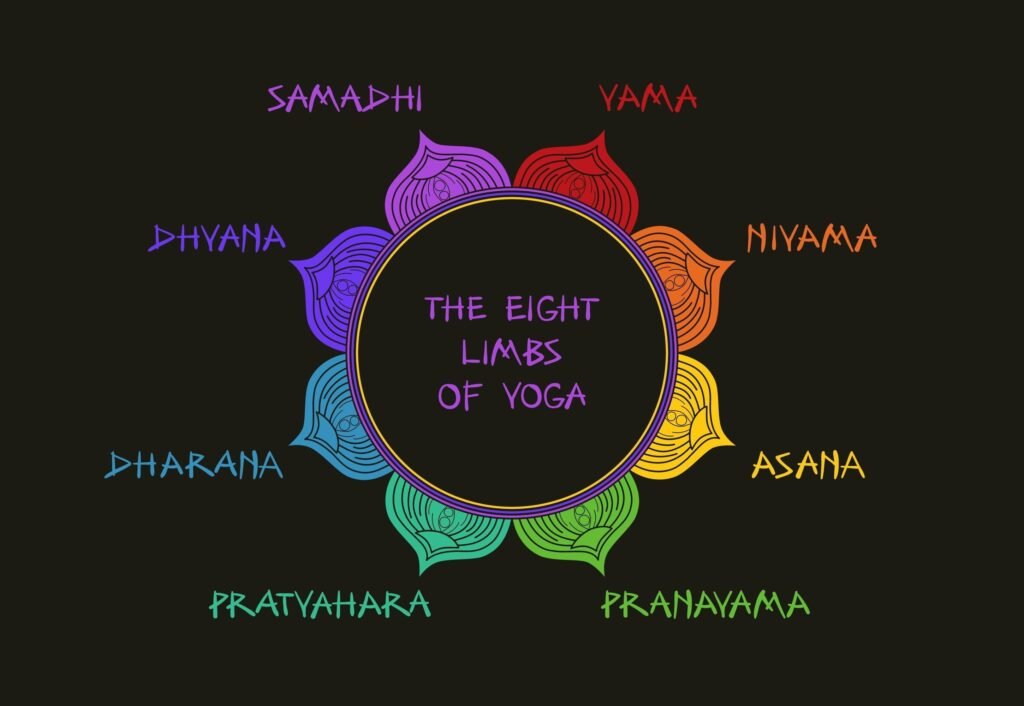
The Eight Limbs of Yoga:
| Limb | Meaning | Example in Daily Life |
| Yama | How we treat others | Being honest, kind, and not hurting others |
| Niyama | How we treat ourselves | Staying clean, being thankful |
| Asana | Body postures | Practicing poses like Warrior or Tree |
| Pranayama | Breathing control | Deep breathing to calm the mind |
| Pratyahara | Turning inward | Taking a break from outside distractions |
| Dharana | Focus | Paying full attention to one thing |
| Dhyana | Meditation | Sitting quietly and watching your thoughts |
| Samadhi | Deep peace | Feeling fully connected and at peace inside |
These steps became a kind of manual for the mind. They showed people how to live better, not just how to move their bodies. Many yoga schools still use the Eight Limbs to guide their practice today.
The Age of Hatha Yoga and Tantra
After Patanjali’s time, yoga became more focused on the body and breath. This is when Hatha Yoga began. Hatha yoga is the style that includes many of the postures we see in studios today.
Teachers in this period believed the body was a tool for spiritual growth. They taught people how to move, breathe, and clean the body to prepare for meditation. These practices included:
Yoga also began to explore the energy systems of the body. Yogis studied chakras (energy centers), nadis (energy paths), and how to keep the flow of energy strong and balanced.
Another tradition that rose during this time was Tantra. Many people think Tantra is only about sex, but this is not true. Traditional Tantra was about using energy and rituals to connect with higher awareness. It helped people see the body and mind as sacred.
How Yoga Traveled to the Modern World
Yoga stayed mostly in India for thousands of years. That changed in 1893, when a teacher named Swami Vivekananda gave a famous speech in Chicago. He spoke about yoga, the mind, and the spirit. Many people in the West heard about yoga for the first time that day.
In the 1900s, more Indian teachers began sharing yoga with the world. One important teacher was Krishnamacharya. He taught many students who later created their own yoga styles. Two of the most well-known were:
- B.K.S. Iyengar, who focused on alignment and using props
- Pattabhi Jois, who developed the flowing style of Ashtanga Vinyasa Yoga
As yoga spread, it started to change. In the West, people saw yoga as a way to stretch, build strength, and reduce stress. It became popular in gyms and studios. Over time, it also returned to its deeper roots in breath, mindfulness, and healing.
Yoga Timeline:
| Year | Event |
| 1893 | Swami Vivekananda introduces yoga to the West (USA) |
| 1920s | Krishnamacharya teaches royal families and students |
| 1940s–60s | Iyengar and Pattabhi Jois begin teaching globally |
| 1970s | Yoga becomes popular in Europe and the US |
| 1990s–2000s | Yoga studios grow worldwide |
| Today | Yoga is practiced in nearly every country |
Yoga Today: Ancient Wisdom, Modern Practice
Today, yoga is a mix of old and new. People all over the world practice yoga for many reasons. Some want to build flexibility or reduce pain. Others want to feel calmer, stronger, or more focused.
Modern yoga includes many styles, like:
- Hatha, which teaches steady postures and breath
- Vinyasa, where movements flow with the breath
- Yin Yoga, which focuses on stillness and deep stretches
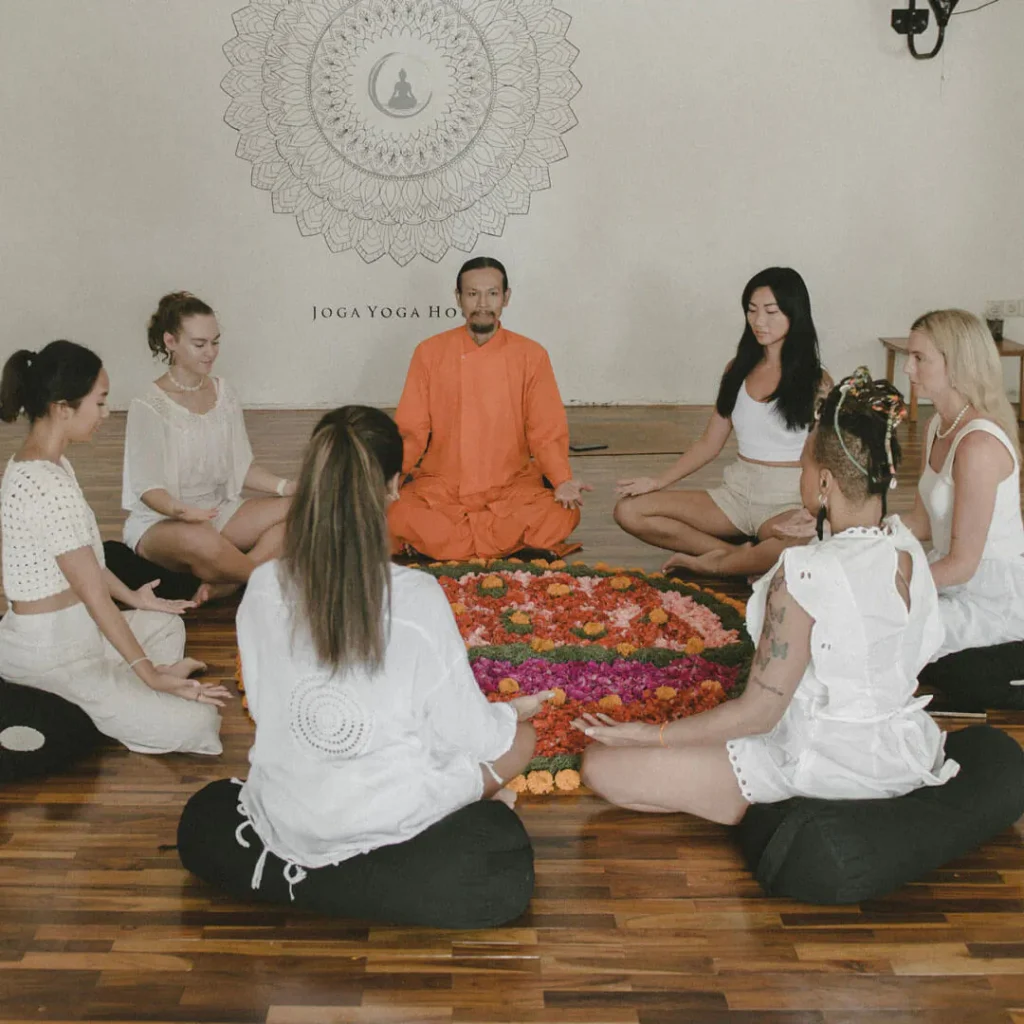
At Joga Yoga, we teach all of these styles because each one supports a different part of your journey. Some people begin with physical goals, like better posture or balance. Over time, they discover that yoga also helps with emotions, focus, and inner peace.
In places like Bali, yoga has become a way of life. Students come from around the world to connect with nature, learn from experienced teachers, and take part in spiritual traditions that are still alive today. During our Yoga Teacher Trainings in Bali, students not only practice yoga but also take part in temple visits, ceremonies, and deep inner work.
If you’re new to yoga, or just exploring your path, our classes are open to all levels. Whether you’re starting with yoga for beginners or want to explore different styles, yoga today offers something for everyone.
Final Thoughts: Why History Still Matters on the Mat
Yoga may look different today than it did thousands of years ago, but its purpose has not changed. It is still a way to connect with ourselves and live with more peace, strength, and kindness.
When we understand where yoga comes from, we practice with more respect and meaning. We remember that each pose and breath is part of a much bigger story.
At Joga Yoga, we honor this history by teaching both the ancient and modern sides of yoga. Our classes and teacher trainings include philosophy, meditation, breathwork, and spiritual traditions. We believe yoga is a living path, one that grows with every student who steps on the mat.
Ready to Go Deeper?
Want to deepen your yoga journey in the heart of Bali?
Explore our Yoga Teacher Trainings designed for modern seekers of ancient wisdom.
FAQs About the History of Yoga
What is the origin of yoga?
Yoga began over 5,000 years ago in ancient India, during the time of the Indus Valley Civilization. Early signs of yoga include carvings of people sitting in meditation poses and ancient teachings passed down through chants and rituals.
Who is the father of yoga?
Patanjali is often called the “father of yoga” because he wrote the Yoga Sutras, a book that organized yoga philosophy into simple steps. While he didn’t invent yoga, he helped many people understand it better.
What are the oldest forms of yoga?
The earliest forms of yoga were mostly about the mind and spirit, not just the body. They included practices like breathing (pranayama), meditation (dhyana), and chanting. Later, Hatha Yoga introduced postures and breath control to help prepare for deep meditation.
What is modern yoga?
Modern yoga often focuses on movement, stretching, and fitness, but still includes breathing, focus, and inner balance. Today, people can choose from many styles, such as Vinyasa, Yin, and Hatha. While it looks different, the heart of yoga — connecting body, mind, and breath — remains the same.