
 Written by Joseph Berridge, Founder of Joga Yoga
What the word “tantra” actually means
Tantra is a Sanskrit word that translates to “to weave.” It refers to an ancient Indian spiritual system that uses the body, breath, and daily experience as tools for awareness, not a ritual about sex or a shortcut to altered states.
The root tan means to expand, extend, or stretch outward. A second root, tra, points toward liberation or release. Together they point at something practical: a method for expanding consciousness and freeing attention from the habits and contractions that limit it. That is the origin of the word. The sexual association came later, was applied to a small fraction of the tradition’s actual scope, and was filtered through a very specific set of cultural misunderstandings.
The core claim of tantra is both simple and unusual: every moment of life is already a doorway. Work, food, breath, relationships, even frustration — none of it is separate from the spiritual path. Nothing needs to be escaped or transcended before practice can begin. The goal is to use what is already present, not wait for better conditions.
Why modern yoga traces back to tantra (most practitioners don’t know this)
If you practice hatha yoga, vinyasa, or kundalini, you are already using tools from tantric lineages. The postures, breathwork sequences, chakra framework, and energy principles that shape modern yoga were passed down through tantric teachers — not through Patanjali’s Yoga Sutras, which mention only four seated postures and focus entirely on renouncing the body.
The dynamic, asana-centered practice most people associate with yoga traces back to a different lineage: the Nath tradition, a movement of tantric yogis active from around 1000 to 1200 CE. A teacher named Goraksha compiled the earliest hatha yoga texts as a deliberate simplification of classical tantric yoga, making the practices available outside the monastic setting. Around 1450 CE, the Hatha Yoga Pradipika formalized this further and became the foundation for virtually all physical yoga taught today.
The kundalini energy system, the chakra map, and the concept of prana itself all come from these tantric scriptures. Tantra scholar Christopher Wallis has written that what most people call yoga in the 21st century is better understood as filtered tantra, stripped of some of its more advanced elements but built on the same framework. His writing on what distinguishes tantra from other Indian traditions is one of the clearest accounts available.
For a full account of how tantra developed across India, Tibet, and Bali, the origins and history of tantra covers the timeline from the early Shaiva texts through to the traditions still practiced today.
How tantra got misread in the West
Most Western ideas about tantra reduce it to sexual technique. This misreading has a specific history and understanding it helps anyone who wants to engage with the real thing.
When British colonial scholars encountered tantric texts in 17th and 18th century India, they read the ritual and symbolic language around the body through the lens of Victorian morality. Imagery that was metaphorical or specific to advanced esoteric practice was taken literally, stripped of its context, and labeled dangerous or obscene. That reading shaped how tantra entered the Western world — already distorted before most people had access to a full translation.
In the 20th century, neo-tantra emerged as a Western movement focused almost entirely on conscious sexuality and intimacy. Some of what neo-tantra teaches has genuine value. But applying the word tantra to it exclusively is like describing a library by its most provocative shelf. Classical scholars estimate that practices involving sexuality account for roughly 5% of the tradition’s full scope. The remaining 95% covers mantra, philosophy, energy work, ritual, and the daily cultivation of awareness. Neo-tantra treated the 5% as the whole category.
Understanding yoga philosophy more broadly helps locate where tantra sits in the tradition. It is one stream in a very wide body of knowledge, not a separate or extreme practice.
The main branches of tantra and how they differ
There are four main living lineages. They share historical roots but differ significantly in method, emphasis, and the kind of result they are aimed at.
| Branch | Origin | Core focus | Key practices |
|---|---|---|---|
| Hindu Tantra | India (Shaiva, Shakta traditions) | Energy awakening, deity, ritual | Mantra, yantra, puja, kundalini work |
| Buddhist Tantra (Vajrayana) | Tibet, Nepal, India | Transformation through visualization | Deity yoga, mudra, mantra, guru relationship |
| Taoist Tantra | China | Health, longevity, internal alchemy | Qigong, breathwork, inner energy circulation |
| Neo-Tantra | Western Europe, North America (20th century) | Conscious intimacy, personal growth | Breath, presence, partner practices |
Tantra yoga, as practiced at yoga schools and studios, draws mainly from the Hindu tantric tradition. It works with hatha yoga postures, pranayama, mantra, and meditation as its primary tools, without the more advanced ritual or esoteric elements of classical Shaiva tantra.
Within the Hindu tradition, there is also a further distinction between left-hand and right-hand tantra. Right-hand tantra uses subtle, inner practices: visualization, mantra, meditative absorption. Left-hand tantra uses transgressive methods, including physical elements that violate social norms, as a tool for cutting through conditioned thinking. What most yoga schools teach sits firmly on the right-hand side.
What tantra actually uses as tools
Classical tantra works with five main tools. Each one targets energy in a specific way. The list is simpler than most introductions suggest.
Mantra is the use of sacred sound, repeated aloud or silently, to direct the mind and shift energy. Each sound carries a specific vibrational quality that affects attention and nervous system state in measurable ways. Accessible entry points include “Om,” “So Hum” (I am that), and “Om Namah Shivaya.” More advanced mantras require initiation from a qualified teacher because their effects are stronger and require guidance to work with safely.
Pranayama is controlled breathwork used to move prana deliberately through the body’s energy channels, known as nadis. In tantric practice, breath is not just a relaxation tool. Nadi shodhana, the alternating nostril technique, is the standard starting point. It clears the channels before mantra or meditation work. More advanced techniques like kapalabhati and bhastrika are used to generate heat and activate energy, and they need to be introduced carefully.
Yantra is visual meditation on sacred geometric designs. Each yantra represents a specific aspect of consciousness and is used as a stable focus point for extended meditation. The Sri Yantra, associated with Shakti energy, is the most widely recognized. The practice is about steady, sustained attention, not interpretation or analysis.
Ritual in tantra is precise action performed with full awareness and intention. It typically combines sound, breath, movement, and offering in a sequence that builds a specific internal state. It is not superstition. In tantric terms, the external action creates internal conditions, the same way a musician’s physical technique produces a sound that affects a listener.
Mudra are sacred hand gestures and bodily seals that redirect energy flow and reinforce the effects of the other tools. They are used across all of the main branches.
Tantra at Joga Yoga and why Bali is a natural setting for it
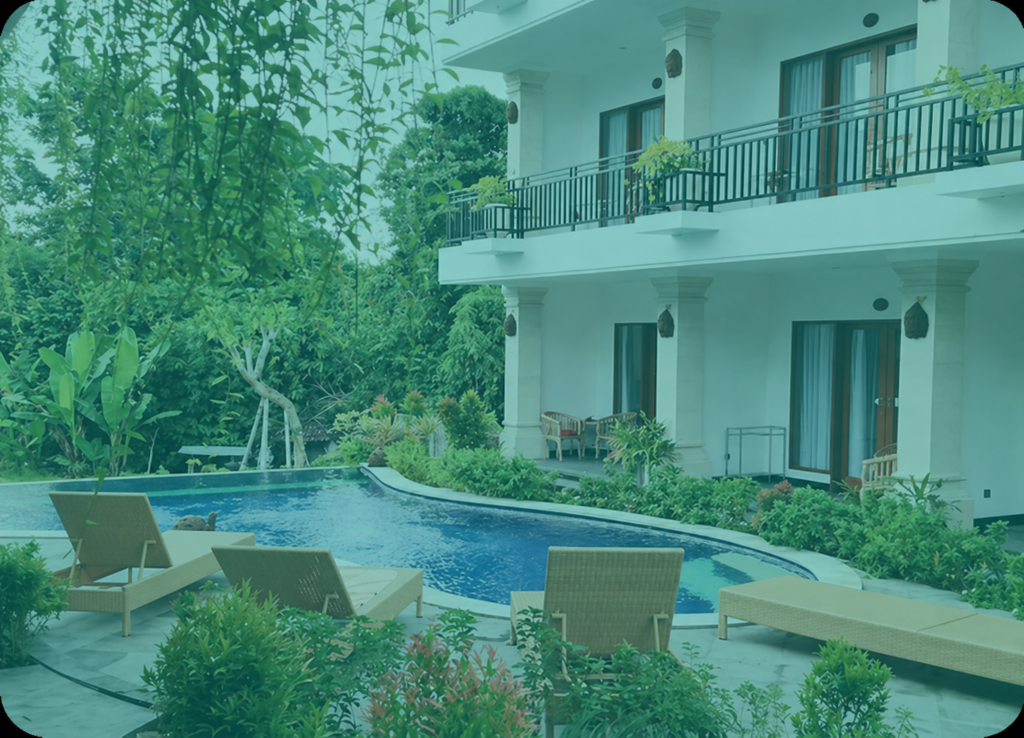
Bali is one of the few places outside India where a tantric-influenced form of Hinduism is still practiced in daily life. Balinese Agama Hindu Dharma preserved elements of tantric philosophy that were lost or diluted elsewhere. The temple offerings at crossroads, the daily ceremony woven into market stalls and rice fields, the sense that the sacred is present in ordinary places: all of it reflects a tantric worldview. The divine is not located somewhere else. It is woven into everything. That is not a metaphor in Bali. It is how the culture is organized.
This is the environment Joga Yoga operates in, and it shapes how tantra is approached here.
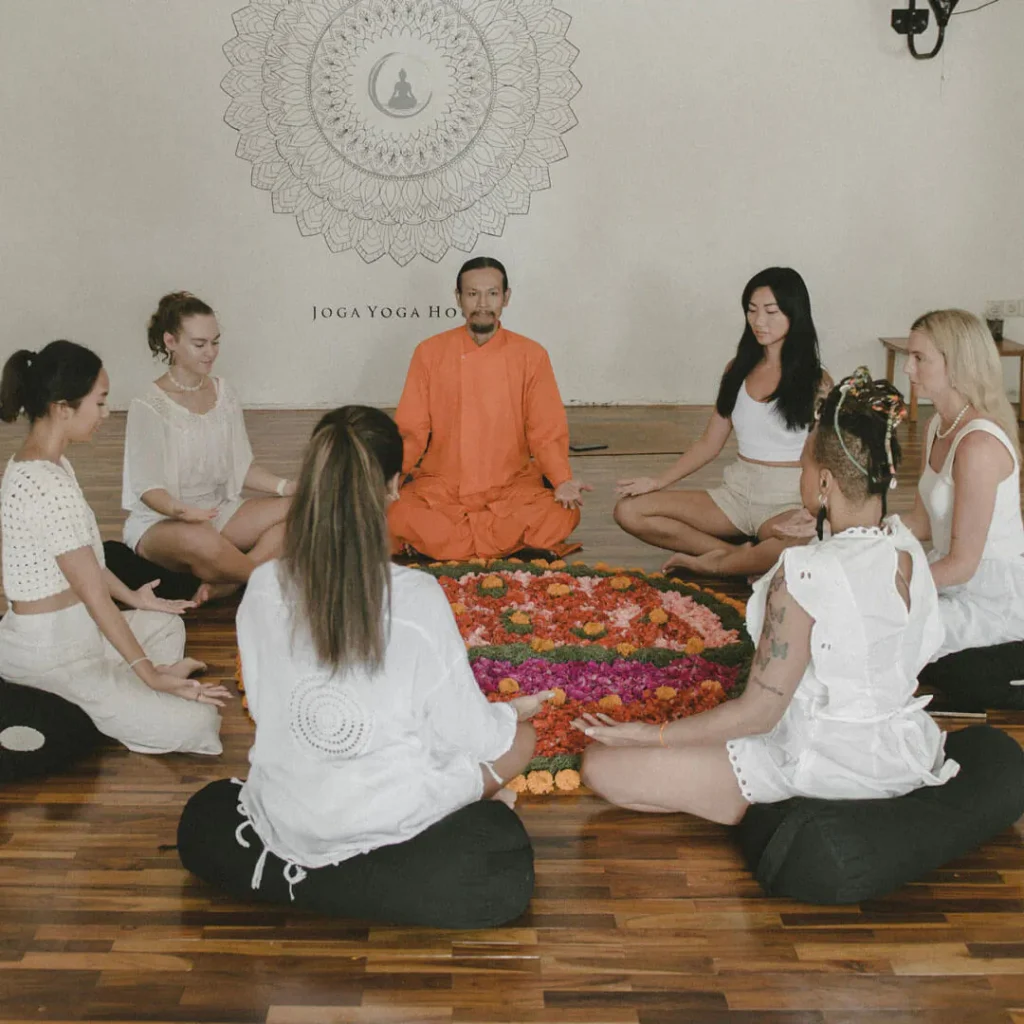
Dada, one of Joga’s core philosophy and meditation teachers, has been a practicing monk for over 20 years. He was introduced to the holistic practices of yoga, meditation, and Tantra and Rajadhiraja Yoga in 1993. After several years working in the corporate world, he left his job in 1999 and trained in India as a sannyasin, a senior yoga monk. His background is not self-taught or built from workshops. It comes from a direct lineage of practice that most yoga schools do not have access to. Dada’s full background and the other teachers at Joga are on the teachers page.
Gus Wira, Joga’s sound healer and breathwork teacher, is trained in acupuncture, acupressure, and pranayama alongside yoga. His teaching focuses on energy work: using physical posture, movement, and breath to locate and release patterns held in the body. He describes yoga as therapy for the whole person, which sits naturally within a tantric framework.
Michelle Sukendro, a freelancer from Indonesia who trained with Joga, described the program as covering not only anatomy but also “spiritualism from very experienced teacher.” That specific detail points to how the philosophical depth of the faculty is what sets the experience apart from a standard yoga school.
What to look for in a tantra teacher or school: Clear lineage or training background, transparent about what practices involve, no high-pressure sales or secrecy about methods, and no promise of instant results. A qualified teacher teaches at your current level, not the level that makes the best sales pitch. Bali has excellent teachers and opportunists in roughly equal measure. Check backgrounds before committing to anything advanced.
How to start today: a 10-minute beginning practice
You don’t need rituals, a guru, or years of study to begin. The entry point for most people is a short morning practice built from the two most accessible tantric tools: breath and mantra.
Sit in a comfortable upright position, either on a chair or on the floor with a folded blanket under your hips. Close your eyes and take three slow breaths, making each exhale longer than the inhale. This settles the nervous system and pulls attention away from the day ahead.
From there, move into nadi shodhana for about three minutes. Inhale through the left nostril while blocking the right with your thumb. Switch and exhale through the right. Inhale right, exhale left. That is one cycle. Do ten cycles at a pace that feels natural. This practice clears the main energy channels and prepares the body for mantra work.
Spend the next five minutes with the mantra “So Hum.” Repeat “So” silently on the inhale and “Hum” on the exhale. The translation is “I am that,” which points directly at the tantric idea that individual awareness and universal awareness are the same thing. Don’t try to concentrate hard. Just keep returning to the mantra when the mind drifts, which it will. The returning is the practice.
Close with one minute of stillness. No technique, no counting, no goal. Let the practice settle.
This is not meditation for relaxation. It is an introduction to kundalini energy work, using breath and sound to begin building the awareness that tantra develops over time. Do it consistently for two weeks and the effects on attention, stress tolerance, and morning clarity are usually noticeable before that period is up.
Common questions about tantra
Is tantra the same as tantric sex?
No. Sexual practice is a small, specialized part of certain tantric lineages, used by advanced practitioners in specific traditional contexts. Most classical tantra has no sexual component at all. Neo-tantra, the modern Western version, created this association by pulling one element out of context and centering an entire movement around it. The result is accurate to about 5% of the tradition.
Can anyone practice tantra, or do you need to be religious?
Anyone can start with the introductory tools: breathwork and mantra. These are grounded, practical techniques with documented physiological effects. No belief system is required. Advanced practices involving deity meditation or energy initiations benefit from a teacher and some philosophical context, but that comes later, not at the beginning.
Do you need a guru?
For introductory breathwork and mantra, no. For advanced practices (kundalini work, mantra initiation, deity visualization, or anything involving sustained energy movement through the body), yes. A qualified teacher can recognize what is happening in your practice and protect you from the common pitfalls that are not obvious from the outside. The distinction between a legitimate teacher and someone selling access to mystical experience is not always obvious, which is why reputation, lineage, and transparency matter.
Is tantra only for couples?
Traditional tantric practice is almost entirely solo. Solo practice is the foundation for everyone, including in lineages where partnership practices exist. Those partnership practices are rare, context-specific, and reserved for advanced practitioners. Most beginners will spend months or years on breath, mantra, and meditation before anything else is relevant.
Can tantra help with stress or anxiety?
The breathwork and mantra tools drawn from tantric practice have documented effects on nervous system regulation. Research on pranayama consistently shows reductions in cortisol and improvements in heart rate variability. These effects come from consistent beginner-level practice, not advanced ritual. Two weeks of daily nadi shodhana and mantra is enough time to notice the difference in most people.
Ready to Become a Certified Yoga Teacher?
Join our 200-Hour Yoga Alliance certified training in Canggu, Bali.
Reserve Your Spot →