
Related Articles
How Long Does It Take to Become a Yoga Teacher? 200-Hour Timeline

How Long Does It Take to Become a Yoga Teacher?

Becoming a yoga teacher typically requires completing a 200-hour to 500-hour certification. The time depends on factors like experience, chosen....
yoga for runners

Yoga for Runners: Unlocking Peak Performance and Recovery

Discover how yoga can help runners prevent injuries, recover faster, and boost focus. Get practical tips and the best poses....
Heart Opening Poses

Heart Opening Poses: Unlock Emotional Balance and Physical Freedom

Heart-opening poses are yoga movements that stretch your chest, shoulders, and back while helping you release emotional tension. They improve....
kundalini snake cakra

Kundalini Snake Meaning: Symbolism, Awakening Signs, and Safe Practice

Table of Contents

If you have come across the term Kundalini snake, you are really looking at a symbol used in yoga and Tantra to describe dormant inner energy. The strongest version of this topic is not about fear or fantasy. It is about meaning, symbolism, awakening, and safe practice.

yoga sauna and cold plunge in canggu bali

What does the Kundalini snake mean in yoga?

The Kundalini snake refers to a symbolic form of inner energy described in yoga and Tantric traditions as resting in a coiled state at the base of the spine. It represents potential, transformation, and the possibility of expanded awareness.

In classical yoga language, Kundalini is not a literal snake inside the body. It is a symbolic way to describe dormant spiritual energy, often linked with Shakti, the active creative force. Encyclopaedia Britannica describes kundalini as cosmic energy imagined as a coiled serpent at the base of the spine, rising through the chakras as part of yogic practice. Britannica

For most readers, the simplest way to understand the image is this: the serpent stands for power that is present but not yet active. That is why the symbol keeps appearing in yoga philosophy, meditation, and energy-based teachings.

If you want more context on the lower energy center often linked with this image, Joga’s guide to the root chakra is a useful companion read.

Why is Kundalini shown as a serpent?

Kundalini is shown as a serpent because the image communicates stored power, coiled movement, shedding, and transformation more clearly than abstract language does. The symbol helps explain how yoga traditions describe change that begins quietly and unfolds over time.

The serpent image works on a few levels at once.

First, a coiled snake suggests energy held in reserve. Second, the movement of a serpent mirrors the traditional description of energy rising through the central channel. Third, the idea of a snake shedding its skin makes the symbol useful for describing release, renewal, and inner change.

This is where many weaker articles go off track. They treat the symbol as dramatic proof of something supernatural. A stronger reading is simpler and more helpful: the snake is symbolic language for a process of awakening, not a literal creature and not a promise of instant enlightenment.

How is Kundalini awakening described in yoga traditions?

Kundalini awakening is usually described as a gradual shift in awareness, energy, and perception brought about through disciplined practice, not as a single dramatic event. Different schools explain it differently, but most emphasize preparation, balance, and guidance.

Traditional descriptions connect awakening with practices such as meditation, breathwork, concentration, mudra, bandha, and sustained yogic discipline. Modern readers often meet the idea through Kundalini Yoga, but the concept itself is broader than any one style of yoga.

That distinction matters. Kundalini energy is the concept. Kundalini Yoga is one practice system that aims to work with that concept through movement, breath, mantra, and meditation.

At Joga, readers who want a grounded foundation before diving into more esoteric language should start with pranayama yoga and Nadi Shodhana. Those practices build the steadiness and breath awareness that make deeper study more useful.

What signs do people associate with Kundalini awakening?

People commonly associate Kundalini awakening with sensations such as heat, tingling, spontaneous movement, emotional release, unusual clarity, or shifts in perception, but these experiences vary widely and should not be treated as a fixed checklist.

This is one of the biggest content gaps in the current article. Readers usually want a grounded answer here, not a mystical performance.

Research on kundalini-related experiences during Tantric yoga meditation has reported sensory, motor, and affective experiences rather than one single standard pattern. Frontiers 2022 Another Frontiers study on spontaneous spiritual and kundalini awakenings notes that some experiences are challenging, but many are also understood by participants as meaningful and ultimately positive. Frontiers 2021

The most helpful way to frame signs is with caution:

  • some people report physical sensations
  • some notice emotional material surfacing
  • some feel calmer, clearer, or more inwardly focused
  • some feel overwhelmed if they push too hard or lack support

Not every strong meditation experience is Kundalini awakening. Not every difficult experience is spiritual progress either. That is why grounded interpretation matters.

How can you explore Kundalini practices safely?

The safest way to explore Kundalini-related practice is slowly, with basic breath awareness, steady yoga practice, and experienced guidance rather than forceful techniques or experience-chasing. A slower path usually creates better understanding and less confusion.

This topic attracts sensational advice, but the more useful advice is plain:

  • build consistency before intensity
  • favor breath awareness over aggressive breath control
  • stay grounded in sleep, food, movement, and routine
  • pause if practice creates distress, panic, or instability
  • work with a qualified teacher when moving into deeper energy practices

Joga’s yoga philosophy guide is also a good reminder that yoga is not only about chasing unusual experiences. The wider tradition is about steadiness, self-study, discernment, and awareness.

What is the difference between Kundalini energy, serpent energy, and Kundalini Yoga?

These terms are related, but they are not interchangeable. Kundalini energy is the broader yogic concept, serpent energy is a modern symbolic phrase for the same idea, and Kundalini Yoga is a specific practice tradition built around awakening and directing that energy.

This distinction helps clean up a lot of confusion on page 1.

When someone searches for Kundalini snake, they usually want the symbolic explanation first. When they search for Kundalini awakening, they want signs, process, and safety. When they search for Kundalini Yoga, they want the practice system itself.

A strong article should cover the overlap, but it should also separate the terms clearly so the page answers the real question behind the keyword.

Why does the Kundalini snake still matter in modern practice?

The Kundalini snake still matters because it gives practitioners a simple way to talk about inner potential, transformation, and disciplined spiritual growth without reducing yoga to fitness alone. The symbol survives because it is memorable, layered, and still useful.

For some people, the image opens the door into yoga philosophy. For others, it becomes a reminder that growth is usually gradual, not theatrical. Either way, the symbol points back to a core yogic idea: profound change begins with preparation, awareness, and practice.

If you want to study yoga beyond surface-level symbolism, Joga’s 200-hour yoga teacher training in Bali offers a more structured way to explore breath, meditation, philosophy, and practice in context.

transform your life through yoga in bali

FAQs

Is the Kundalini snake a real snake?

No. In yoga, the Kundalini snake is a symbol used to describe dormant spiritual energy and the process of awakening, not a literal physical snake in the body.

Is Kundalini awakening always dramatic?

No. Many traditions describe awakening as gradual. Some people report strong sensations, but others describe the process as subtle, steady, and unfolding over time.

Is Kundalini awakening dangerous?

It can feel destabilizing if someone forces intense practices or lacks support, which is why slower, grounded practice and qualified guidance matter.

Does Kundalini always rise through the chakras in the same way?

No. Different traditions and teachers describe the process differently, so it is better to avoid rigid formulas and focus on clear, grounded understanding.

Can beginners study this topic without practicing Kundalini Yoga?

Yes. A beginner can study the symbolism and philosophy first, then build a foundation through breathwork, meditation, and general yoga practice before exploring more specialized methods.

Explore Our Yoga Teacher Training

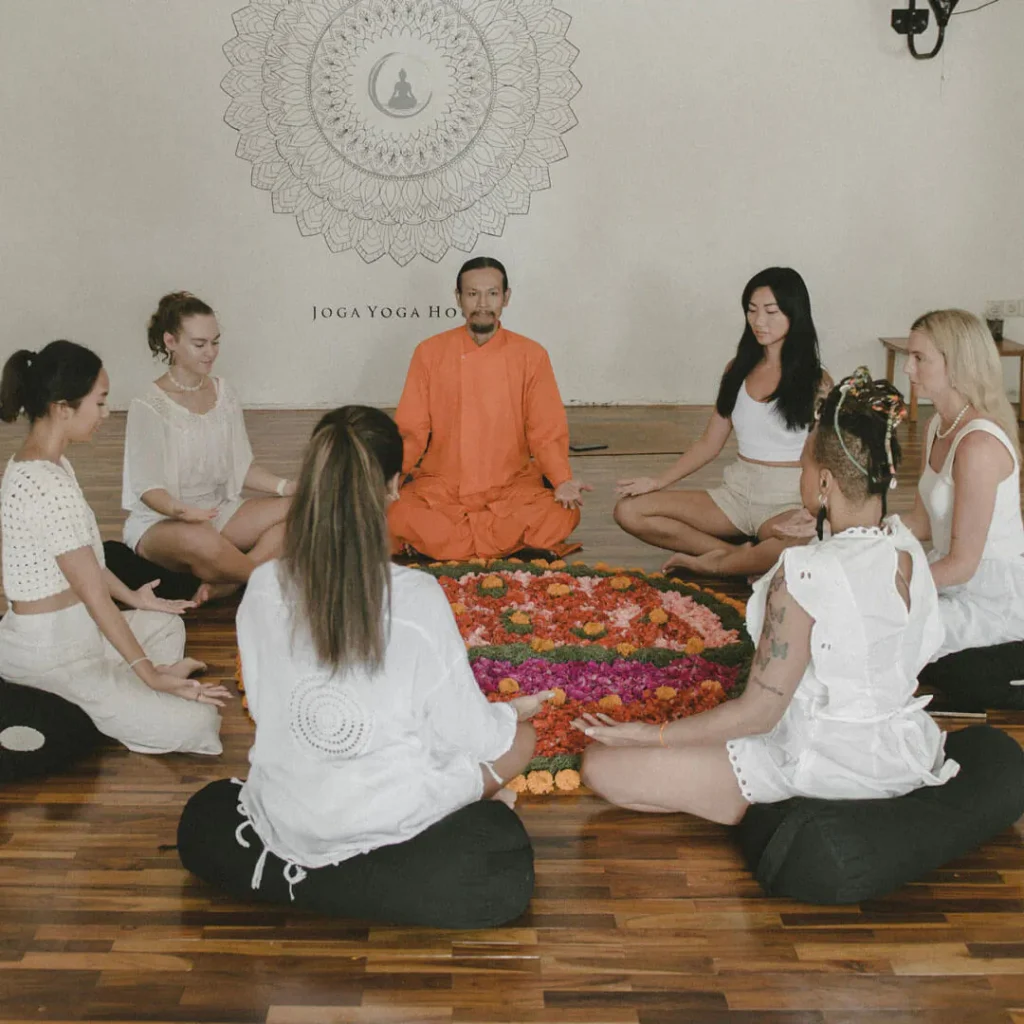
Our training focuses on deepening one’s understanding of yoga philosophy, asanas (postures), pranayama (breathing techniques), meditation, and teaching methodologies. It aims to empower aspiring yoga teachers to guide others on their journey towards physical, mental, and spiritual well-being.

Robert
Typically replies in few minutes

09.45

Namaste and welcome to Joga Yoga 🙏
Looking for answers about yoga training or Bali? I’m here to help—just drop me a message!

Or Fill out the form below

Joga Yoga Training

30% OFF

Limited Spots Available

IDR 47 Mio

IDR 33 Mio

€2,350

€1,650

Apply now to be eligible:

Michelle

Michelle is a 650-hour certified yoga teacher with a passion for guiding others into strength, freedom, and self-discovery through movement and breath.
Her classes are dynamic, creative, and inspiring — designed to help students feel challenged yet deeply connected to themselves.
Through blending tradition with a modern, approachable style she makes yoga accessible and meaningful for everyone.
Her mission is to empower people to grow — on the mat and beyond. She creates a space that celebrates movement, self-love, and the courage to live authentically.

Nitish

My name is Nitish, and I am a dedicated yoga teacher from the Himalayas in India. With a primary focus on Yoga Anatomy, Hatha, Vinyasa, and precise alignments, I have been passionately teaching for the past seven years. I hold a Bachelor’s degree in Yoga Therapy from S-VYASA University in Bangalore and a Master’s degree in Yoga Therapy from JRRSU University in Rajasthan. Additionally, I am a certified yoga instructor with over 1000 hours of training. My experience encompasses teaching practitioners of all levels, helping them navigate their unique yoga journeys with expertise and care.

Lena

Lena is an incredible and dynamic yoga and advanced stretching teacher. Her background is in competition gymnastics and yoga so she has a profound understanding of the human body. In present – stretching, yoga and fitness instructor, preferring to combine styles and make functional healthy trainings aimed to improve flexibility, mobility, body control, healthy breathing and awareness, as well as recovery after activities.

Dr Sharma

Dr. Sharma is an experienced Ayurveda Practitioner, Naturopath, and Yoga Teacher based in Bali, Indonesia, dedicated to helping individuals achieve holistic well-being through ancient healing practices. With a background in Ayurveda, naturopathy, yoga, and Traditional Chinese Medicine, Dr. Sharma offers personalized wellness plans, therapeutic yoga, natural detox programs, and Ayurvedic spa therapies. With over a decade of experience, including leadership roles in wellness centers and international workshops, he combines modern therapeutic approaches with timeless healing traditions to guide clients on their journey to better health, balance, and inner peace.

Dada

Dada has been a practising monk for over 20 years. He was searching for spiritual answers since childhood and finally introduced to holistic practices of yoga pose, meditation, and Tantra and Rajadhiraja Yoga in 1993. In 1999, after several years working in the corporate world, Dada’s strong vision for spirituality led him to a major turning point in his life when he decided to leave his job and immerse himself fully in a devoted path of yoga. He went on to pursue training in India as a sannyasin, senior yoga monk.

Gus Wira

Gus Wira got to know Yoga from his father who was practicing Yoga everyday at home to get well. Gus got interested in Yoga only when he grew older, especially as he found out for himself that Yoga can address various sicknesses and helps to control mind and emotions.

Besides having completed his Yoga teacher training, Gus Wira is also trained in acupuncture and acupressure. His unique way of teaching includes physical postures, body movement and breathing techniques (pranayama) with a strong focus on energy work. Gus sees Yoga as form of therapy and healing for body, heart and mind.

Joseph

Joe has devoted the last ten years studying yoga and music, discovering that yoga can help to realize true happiness, inner peace, and strength in day-to-day life. He studied music and Chinese medicine while balancing this with yoga practice to maintain a clear mind and reduce stress. He then traveled to India and Bali to study yoga and has now made Bali his home. Exploring the art and science of yoga has given him enthusiasm for sharing the knowledge and physical practice to benefit all of us.

Ningrum

Ningrum Ambarsari, S.Sos., MBA., Ph.D., ERYT500, YACEP
is a highly respected educator and internationally certified yoga expert with over 22 years of experience.

She earned her Ph.D. in Cultural Studies from Udayana University and her MBA in Business and Innovation from Gadjah Mada University (UGM).
As a lecturer at the Faculty of Social and Political Sciences, she specializes in International Relations, Cultural Studies, Economic Business, Entrepreneurship, and Innovation—bridging academic excellence with the wisdom of yoga philosophy and practice.

Internationally recognized as a teacher and lead trainer, Dr. Ningrum offers a transformative approach to personal and professional growth.
With her guidance, individuals are supported in identifying and releasing deep-seated emotional and psychological blocks. Her unique method empowers people to turn inner challenges into clarity, resilience, and purposeful transformation.