
Related Articles
Research-Backed Yoga Tips for Glowing, Healthy Skin

Research-Backed Yoga Tips for Glowing, Healthy Skin

Discover how yoga can help you achieve naturally glowing skin. By practicing specific poses and breathing exercises, you can enhance....
Yoga Retreat vs Yoga Teacher Training

Yoga Retreat vs Yoga Teacher Training: Which One Is Right for You?

Confused between taking a yoga retreat or enrolling in a teacher training? This guide breaks down the key differences in....
what is tantra

What Is Tantra? Meaning, Origins and How It Is Practised

Tantra is an ancient Indian system that uses the body, breath, and daily life as tools for awareness. This guide....
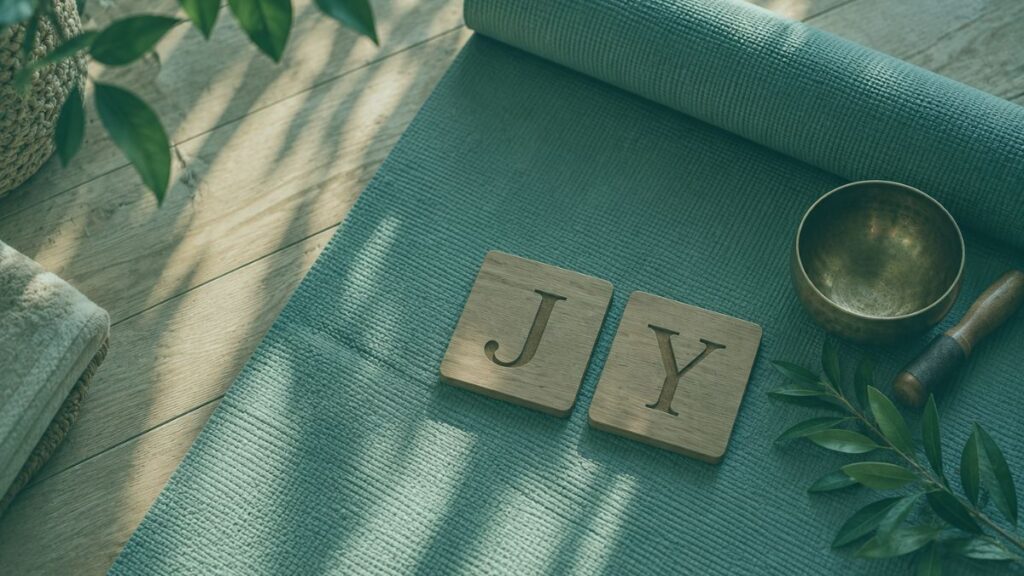
Two wooden letter tiles showing J and Y side by side on a teal yoga mat

Joga or Yoga? Both Are Correct, and Here’s Why

Table of Contents

Both are correct. Joga is the standard spelling in Polish, Slovak and Croatian. Yoga is standard in English. They’re the same word, written under two different conventions, and pronounced almost identically.

Neither one is a typo. That surprises people, so here’s the actual reason, plus the two cases where the confusion has a specific cause: a German spelling change in 2017, and a Portuguese word that looks identical but means something completely different.

Why the Same Word Has Two Spellings

It comes down to one letter doing different jobs in different languages.

The word starts with a consonant sound English writes as y, as in “yes.” Most Slavic languages that use the Latin alphabet write that exact sound with j. Same sound, different letter.

So a Polish speaker writing the sound they hear produces joga. An English speaker writing the same sound produces yoga. Both are spelling the word correctly according to their own alphabet. Neither is adapting or corrupting the other.

This is also why German has ja where English has “yeah,” and why the Polish name Jan is pronounced like the English “Yan.”

Which Spelling Belongs to Which Language

LanguageSpelling
Englishyoga
Polishjoga
Slovakjoga
Croatian and Serbianjóga (Cyrillic јо́га)
Czechjóga
Icelandicjóga
Finnishjooga
GermanYoga (Joga until 2017)
Portugueseioga
French, Spanish, Italian, Dutchyoga
Swedish, Danish, Norwegianyoga
Greekγιόγκα
Russian and Ukrainianйога
Hindi and Sanskritयोग

Sources: Wiktionary, Cambridge Polish–English Dictionary and Collins.

Notice that Finnish doubles both vowels to jooga, because Finnish spelling marks vowel length. Czech and Icelandic use jóga with an accent for the same reason. Every language is solving the same problem with its own tools.

The German Case: Joga Was Correct Until 2017

If you’re German and unsure which spelling to use, you’re not imagining the inconsistency.

Joga was an accepted German spelling, and then it wasn’t. It was superseded in 2017, with Yoga becoming standard. German dictionaries still record Joga with its full grammatical declension, der Joga and das Joga across all four cases, because the word was in genuine use for decades.

That’s why German yoga books from the 1980s say Joga and German studio websites today say Yoga. Both were right when they were written. If you’re writing German now, use Yoga.

Source: Collins German–English Dictionary.

The Portuguese Trap

In Portuguese, joga means “plays.” It’s a form of the verb jogar, to play. Portuguese spells yoga as ioga, with an i.

So a Brazilian or Portuguese search for “joga” is far more likely to be about football than about a yoga class. If you’re Portuguese-speaking and looking for yoga, search ioga.

This is the one case on this page where the two words genuinely are unrelated. Everywhere else, joga and yoga are the same word.

What the Original Actually Says

The word comes from Sanskrit, written योग in Devanagari script. Its root means to join or to yoke, which is where the idea of union in yoga philosophy comes from.

Devanagari is a different writing system entirely, so every spelling in the Latin alphabet is a transliteration. The standard academic transliteration is yoga. But a transliteration is a convention rather than a law, and different languages picked different conventions.

That’s the deepest answer to the question. There is no single original Latin-alphabet spelling to be right or wrong about, because the original isn’t in the Latin alphabet.

Is the Pronunciation Different?

Barely. Both are roughly YO-ga, with the stress on the first syllable.

The small differences are vowel length and quality rather than the consonant. Polish joga has a shorter, more open first vowel than English “yoga.” Czech and Icelandic jóga lengthen it. Finnish jooga lengthens it further still. A yoga teacher in Warsaw and one in London are saying close to the same thing.

So Why Are We Called Joga Yoga?

Because both spellings are correct, and our students arrive using both.

We’re a yoga teacher training school in Canggu, Bali. Our trainees come from Poland, Germany, Brazil, the Netherlands, the US, the UK and Australia. Some of them have written the word with a j their whole lives. Some have only ever written it with a y. Carrying both in the name means nobody has to wonder whether they’ve found the right place.

It also happens to describe what we do reasonably well. Yoga travels between languages, keeps its meaning, and adapts its spelling to wherever it lands.

Frequently Asked Questions

Is it joga or yoga?

Both, depending on the language. Joga is standard in Polish, Slovak and Croatian, and jóga in Czech and Icelandic. Yoga is standard in English, French, Spanish, Italian, Dutch, Swedish, Danish and Norwegian. Neither is a misspelling of the other.

Is joga a typo for yoga?

Usually not. In most Slavic languages written with the Latin alphabet, the letter j represents the sound English spells with y. So joga and yoga are the same word under two spelling conventions, both pronounced roughly YO-ga.

Is Joga correct in German?

It was. Joga was an accepted German spelling until 2017, when it was superseded and Yoga became standard. German dictionaries still record Joga with its full declension, which is why older German books use it and newer ones don’t.

What does joga mean in Portuguese?

It means “plays,” a form of the verb jogar, to play. Portuguese spells yoga as ioga, so a Portuguese or Brazilian search for joga is usually about football rather than yoga.

What is the original Sanskrit spelling?

The word is written योग in Devanagari and transliterated as yoga, from a root meaning to join or to yoke. Because Devanagari is a different script, every Latin-alphabet spelling is a transliteration, which is why more than one convention exists.

Why is your school called Joga Yoga?

The name carries both spellings so it reads correctly whichever convention a student grew up with. Our trainees come from Poland, Germany, Brazil, the US, the UK and Australia, and the name works in all of those places.

Joga, Yoga, Jóga, Jooga

However you spell it, you can study it with us in Canggu, Bali. Yoga Alliance-certified teacher trainings and daily classes.

See Our Trainings
About Author

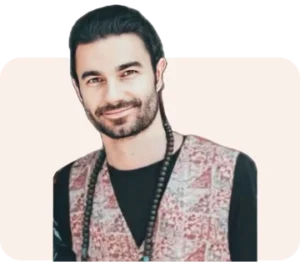
Picture of Joseph Berridge<br><span style="font-size:16px">Founder of Joga Yoga / Lead Yoga Teacher</span>

Joseph Berridge
Founder of Joga Yoga / Lead Yoga Teacher

Joe has devoted the last ten years studying yoga, Chinese medicine and music, discovering that yoga can help to realize true happiness, patience, inner peace and harmony, and strength in day-to-day life. Joe then traveled to India and Bali to study yoga in more depth and has now made Bali his home. Exploring the art and science of yoga has given him enthusiasm for sharing the knowledge and physical practice. He founded Joga Yoga, a health conscious yoga and wellness studio in Bali and Children’s Garden Kindercare. He also works with local schools to support children’s and teachers in need.

Explore Our Yoga Teacher Training

Our training focuses on deepening one’s understanding of yoga philosophy, asanas (postures), pranayama (breathing techniques), meditation, and teaching methodologies. It aims to empower aspiring yoga teachers to guide others on their journey towards physical, mental, and spiritual well-being.

Robert
Typically replies in few minutes

09.45

Namaste and welcome to Joga Yoga 🙏
Looking for answers about yoga training or Bali? I’m here to help—just drop me a message!

Or Fill out the form below

Chloe

Chloe is a dedicated personal trainer and certified yoga teacher currently based in Bali, Indonesia. With a BSc in Medical Sciences and a Level 3 Personal Training certification, Chloe brings a strong foundation in both science and movement to her practice. As a 200hrs certified yoga teacher, she blends structured fitness training with the mindful discipline of yoga, guiding clients toward better strength, flexibility, and overall wellness. Passionate about all things fitness, wellness, and yoga, Chloe creates personalized approaches that help her clients build sustainable, healthy habits for life.

Joga Yoga Training

30% OFF

Limited Spots Available

IDR 47 Mio

IDR 33 Mio

€2,350

€1,650

Apply now to be eligible:

Fi

Fi is an Indonesian who currently call Bali as a home. She sees yoga as much more than movement. It’s a pathway home to oneself. In her classes, she guides students to reconnect with their breath, body, and spirit while gently helping them find proper alignment and a graceful flow. She embraces the grounding stillness of Yin and the invigorating fire of Yang, believing that both are essential for true harmony. Through this balance, she aims to support others in cultivating a centered mind and a deeply nourished body.

Marion

After years of working on superyachts, Marion found her grounding in Bali, where her journey into yoga deepened. She has studied yoga both in Bali and India, with a focus on strengthening the connection between mind, body, and spirit. Yoga became her anchor in a fast-paced world, and now she’s passionate about creating a space for others to slow down, tune inwards, and reconnect. Marion’s classes are gentle, grounding, and guided by a deep sense of calm and connection.

Briggita

Brigitta is an Indonesian creative and mindfulness enthusiast who believes in the power of writing as a tool for self-reflection and personal growth. Through her journaling sessions, she creates a gentle and safe space for participants to slow down, connect with themselves, and explore their thoughts and emotions through writing. Her approach encourages curiosity, honesty, and self-discovery, allowing each person to explore their own journey through the simple practice of putting thoughts into words.

Ricky Gunawan

Ricky Gunawan (RYT-200), Indonesian, has practiced yoga since 2014 and completed his teacher training at Joga Yoga (Bali). His teaching focuses on understanding the mechanics of movement through strength, mobility, and anatomy-informed cueing to help students move with greater clarity, control, and confidence.

Nitish

My name is Nitish, and I am a dedicated yoga teacher from the Himalayas in India. With a primary focus on Yoga Anatomy, Hatha, Vinyasa, and precise alignments, I have been passionately teaching for the past seven years. I hold a Bachelor’s degree in Yoga Therapy from S-VYASA University in Bangalore and a Master’s degree in Yoga Therapy from JRRSU University in Rajasthan. Additionally, I am a certified yoga instructor with over 1000 hours of training. My experience encompasses teaching practitioners of all levels, helping them navigate their unique yoga journeys with expertise and care.

Lena

Lena is an incredible and dynamic yoga and advanced stretching teacher. Her background is in competition gymnastics and yoga so she has a profound understanding of the human body. In present – stretching, yoga and fitness instructor, preferring to combine styles and make functional healthy trainings aimed to improve flexibility, mobility, body control, healthy breathing and awareness, as well as recovery after activities.

Dr Sharma

Dr. Sharma is an experienced Ayurveda Practitioner, Naturopath, and Yoga Teacher based in Bali, Indonesia, dedicated to helping individuals achieve holistic well-being through ancient healing practices. With a background in Ayurveda, naturopathy, yoga, and Traditional Chinese Medicine, Dr. Sharma offers personalized wellness plans, therapeutic yoga, natural detox programs, and Ayurvedic spa therapies. With over a decade of experience, including leadership roles in wellness centers and international workshops, he combines modern therapeutic approaches with timeless healing traditions to guide clients on their journey to better health, balance, and inner peace.

Dada

Dada has been a practising monk for over 20 years. He was searching for spiritual answers since childhood and finally introduced to holistic practices of yoga pose, meditation, and Tantra and Rajadhiraja Yoga in 1993. In 1999, after several years working in the corporate world, Dada’s strong vision for spirituality led him to a major turning point in his life when he decided to leave his job and immerse himself fully in a devoted path of yoga. He went on to pursue training in India as a sannyasin, senior yoga monk.

Gus Wira

Gus Wira got to know Yoga from his father who was practicing Yoga everyday at home to get well. Gus got interested in Yoga only when he grew older, especially as he found out for himself that Yoga can address various sicknesses and helps to control mind and emotions.

Besides having completed his Yoga teacher training, Gus Wira is also trained in acupuncture and acupressure. His unique way of teaching includes physical postures, body movement and breathing techniques (pranayama) with a strong focus on energy work. Gus sees Yoga as form of therapy and healing for body, heart and mind.

Joseph

Joe has devoted the last ten years studying yoga and music, discovering that yoga can help to realize true happiness, inner peace, and strength in day-to-day life. He studied music and Chinese medicine while balancing this with yoga practice to maintain a clear mind and reduce stress. He then traveled to India and Bali to study yoga and has now made Bali his home. Exploring the art and science of yoga has given him enthusiasm for sharing the knowledge and physical practice to benefit all of us.

Mirah

Mirah is a Balinese local who grew up surrounded by the island’s beauty and traditions. Her love for yoga deepened when she completed her 200-hour Teacher Training, inspiring her to share the practice with her community. For Mirah, yoga is more than poses—it’s about awareness, connection, and joy, both on and off the mat. With a balance of strength and softness, she guides her students to find harmony within themselves and with the world around them.