
Yoga teacher training gets described as transformative, life-changing, and deeply rewarding. All of that can be true. It also doesn’t tell you what the next three weeks will actually feel like on day ten when your legs are sore and you have an anatomy test on Monday.
This is the honest version.
Is yoga teacher training genuinely hard?
Yes. A 200-hour YTT is demanding in specific ways. The physical load is high, the study content is real, and standing up to teach a live class for the first time is uncomfortable for almost everyone who goes through it.
The difficulty comes from three distinct areas: physical, academic, and performance. Most people walk in expecting the postures to be the hard part. Sometimes they are. But the elements that actually catch people off guard are the anatomy module, the teaching practicum, and the mental load of being fully switched on for six days straight.
None of this means it’s out of reach. People complete 200-hour trainings every year with no prior teaching experience and widely varying levels of physical practice. The shape of the difficulty changes week by week, and most graduates describe week three as easier than week two in almost every way.
How demanding is the daily schedule?
An intensive 200-hour YTT runs from roughly 7am to 7pm over three to four weeks, six days a week. That’s ten to twelve active hours of practice, anatomy lectures, philosophy study, and teaching labs each day.
Physical practice is typically two to three hours daily. Morning sessions focus on alignment and technique. Afternoons often bring restorative or yin work to balance the intensity. Around those, you have lectures, group discussions, peer teaching, and independent study. You’re not on the mat non-stop, but you’re mentally on for most of the day and the cumulative fatigue is real.
Yoga Alliance’s RYT-200 standards require a minimum of 75 hours of techniques, training, and practice, 30 hours of anatomy and physiology, 30 hours of yoga philosophy, and 50 hours of teaching methodology. Schools fill those hours differently, but the total commitment is fixed regardless of location or format.
Most students hit a wall somewhere between days 8 and 14. The physical fatigue from daily practice starts stacking, and the novelty wears off before the rhythm has fully settled. Momoyoga’s account of an intensive residential YTT describes this as near-universal, typically easing by week three once the body adjusts to the pace. Most students report feeling more grounded in week three, not more exhausted.
Joga’s 200-hour program in Canggu runs 21 days, with Saturdays as half-days and Sundays completely free. That free Sunday matters more than it sounds — it’s the one day where recovery isn’t structured and you can process what you’ve absorbed.
What makes the academic side harder than expected?
Most students expect the posture work to challenge them most and are surprised by the anatomy module. You’re learning muscle groups, joint mechanics, and contraindications under time pressure, and you’ll be assessed on it before the training ends.
The 30-hour anatomy requirement covers how the skeletal system moves, which muscles are working in key postures, and what to avoid with students who have common injuries. It’s not background reading. You need to understand it well enough to apply it in real time while you’re also trying to cue a class.
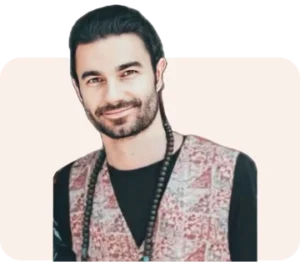
Nitish, who leads yoga anatomy at Joga, holds a Bachelor’s in Yoga Therapy from S-VYASA University in Bangalore and a Master’s in Yoga Therapy from JRRSU University in Rajasthan. He has 1,000+ hours of training and seven years of teaching experience with a primary focus on anatomy, Hatha, Vinyasa, and precise alignments.
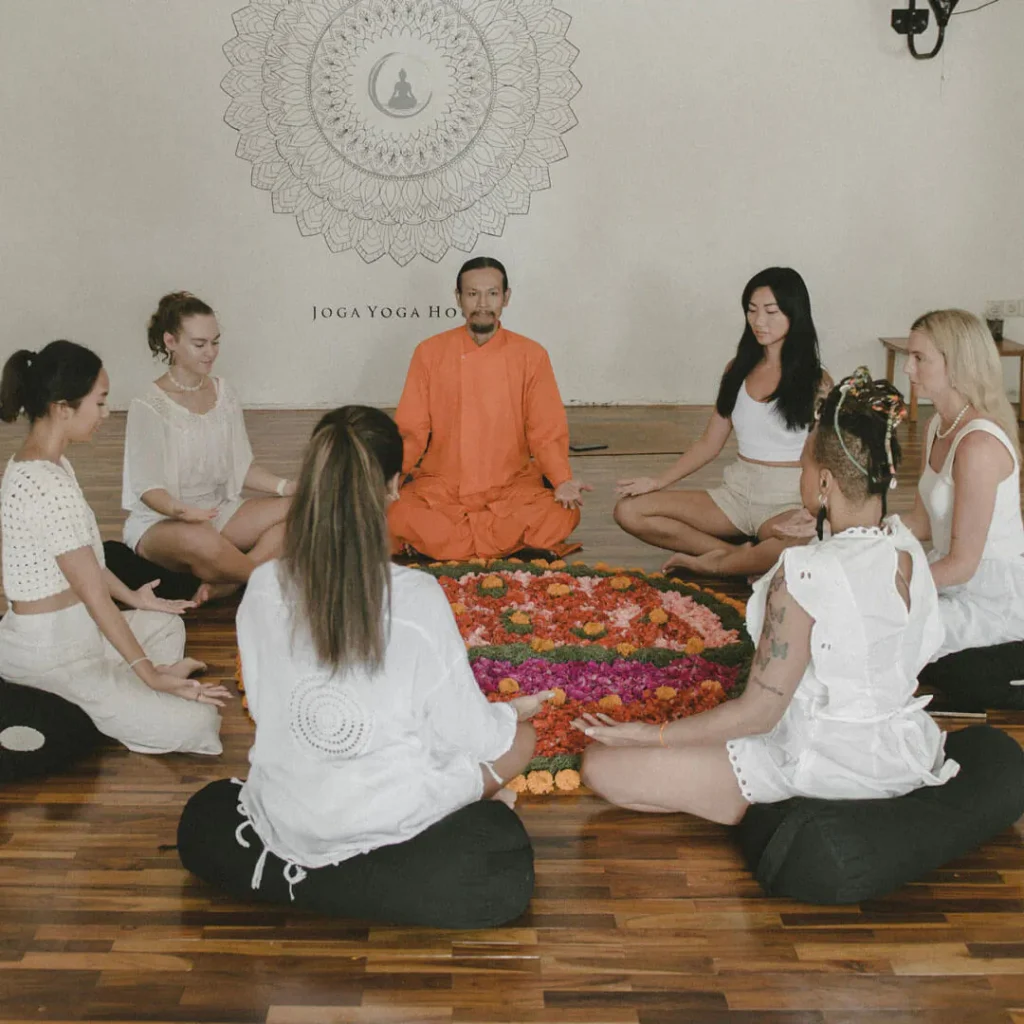
Philosophy adds another layer. Most students come in with little background in texts like the Yoga Sutras of Patanjali or the Hatha Yoga Pradipika. Joga’s philosophy and meditation module is led by Dada, a practising monk with over 20 years of experience who pursued formal training in India as a senior yoga monk. You won’t be expected to become a scholar, but the depth of instruction means you’ll need to engage seriously with material that doesn’t yield to casual attention.
Breathwork is part of the curriculum too. Understanding how pranayama works physiologically — not just how to practice it — is part of what separates a yoga teacher from a yoga practitioner.
Why do most students find the teaching practicum the hardest part?
Standing up to teach a yoga class to your peers is harder than any posture in the curriculum. Most programs start teaching practicums in week two, requiring you to cue clearly, manage the room, correct alignment in real time, and hold your composure when you forget your sequence.
The anxiety is almost universal. As one first-hand account of YTT puts it plainly: “You will be very tired. Is yoga teacher training hard? Yes, it is an intense physical experience.” The teaching element adds a layer of pressure the physical practice alone does not.
Most trainees spend their first teaching session monitoring themselves internally rather than watching the room. You’re thinking about what comes next instead of seeing what’s happening in front of you. That narrows with repetition, but the first few sessions are uncomfortable regardless of how long you’ve practiced.
Programs that build in multiple teaching opportunities throughout the training produce more grounded graduates than those that save the practicum for the final week. The skill being built is not confidence — it’s the ability to stay present under mild pressure, practiced enough times that the discomfort stops running the session.
Dakota Mays, a Yoga Instructor from the United States who completed Joga’s program, put it directly: “This training was everything I could’ve asked for. After leaving, I was more than prepared to teach and start my full-time job as a yoga instructor. This isn’t a cookie-cutter training so expect to push yourself.”
The community context matters here. Teaching in front of people who just went through the same anatomy lecture as you is a different experience from teaching strangers. If you want to understand what comes after the practicum, the guide to becoming a yoga teacher covers the steps after certification.
Does your current yoga level affect how hard it is?
Your existing practice helps on the physical side but is not the deciding factor in how well you do. Students who have practiced for two years often struggle with the teaching practicum as much as beginners. Practicing yoga and teaching yoga are different skills, and the training is primarily building the second one.
What matters more than flexibility or strength is your capacity to absorb new information, receive feedback without shutting down, and communicate clearly when you’re tired and slightly out of your depth. If you’ve never taught anything to anyone in any context, that adjustment is where the training works on you the hardest.
Beth James, a Paediatric Nurse from the United Kingdom, described her experience this way: “Learning from experts, within their differing fields of yoga and philosophy, with an intimate group in a stunning setting, created such joy, connection and growth for me on a mental, physical and spiritual level.”
You don’t need an advanced arm balance to start a 200-hour YTT. What you need is genuine commitment to the process. The Joga FAQ page covers specific questions about prerequisites, prior experience, and what the first week looks like.
What is different about doing YTT in Bali?
An immersive Bali YTT is more physically demanding than a weekend or online format because the hours are concentrated and daily. But the immersion also removes the main reason part-time training fails: managing it alongside the rest of your life.
Bali adds one factor that most YTT guides skip: heat. Canggu sits on the coast and is humid year-round, averaging 28 to 30 degrees Celsius. Morning practice in an open-sided shala is a meaningfully different physical experience from an air-conditioned studio. You sweat more, dehydrate faster, and a good water bottle is non-negotiable from day one. This is not a reason to avoid the format — it’s a reason to prepare for it specifically.
What the immersive environment gives you in return is focus. You’re not checking work emails between anatomy lectures or driving to a studio after a full working week. The single-focus structure is a significant part of why graduates consistently describe residential YTTs as more complete experiences, even when they also describe them as more intense.
Joga sits 1.4km from Batu Bolong Beach in Canggu, surrounded by rice fields. Walking paths between sessions and access to the beach on your free Sunday are built into how the program supports recovery without turning the training into a holiday. The course opens with a traditional Balinese ceremony on the Sunday before day one — something no studio-based training replicates.
For anyone weighing whether the residential Bali format is the right fit, the full schedule, intake dates, and what’s included are on the Joga 200-hour YTT page.
What Joga’s 200-Hour YTT in Bali Covers
Teaching styles: Traditional Hatha, Creative Vinyasa, Ashtanga Vinyasa, Yin Yoga
Curriculum areas:
- Anatomy and physiology including benefits, contraindications, and healthy movement patterns applied to yoga — led by Nitish, with a Master’s in Yoga Therapy
- Yoga philosophy and traditional texts including the Yoga Sutras of Patanjali, Hatha Yoga Pradipika, and Bhagavad Gita — led by Dada, a practising monk with 20+ years of experience
- Teaching methodology covering demonstration, observation, assisting, and correcting
- Communication skills including group dynamics, time management, and adapting to individual student needs
- Ethics for yoga teachers including teacher-student relationships and the principle of seva
- Pranayama, meditation, and breathwork — led by Gus Wira, trained in acupuncture, acupressure, and energy work
Program details:
- 21 days. Saturdays are half-days. Sundays are free.
- Traditional Balinese opening ceremony the Sunday before the course begins
- Post-graduation access to Joga’s studio for continued practice teaching
- Yoga Alliance-accredited RYT-200 certification, valid internationally
- Instruction in English — instructors also speak Indonesian and Spanish
- Location: Canggu, Bali, 1.4km from Batu Bolong Beach
Yoga teacher training is hard in ways that are specific and manageable. The schedule is demanding but structured. The anatomy is learnable when you take it seriously. The teaching practicum gets less uncomfortable every time you do it. What most people don’t expect is how much of the challenge is internal rather than physical. That tends to be the part they talk about most once it’s over.