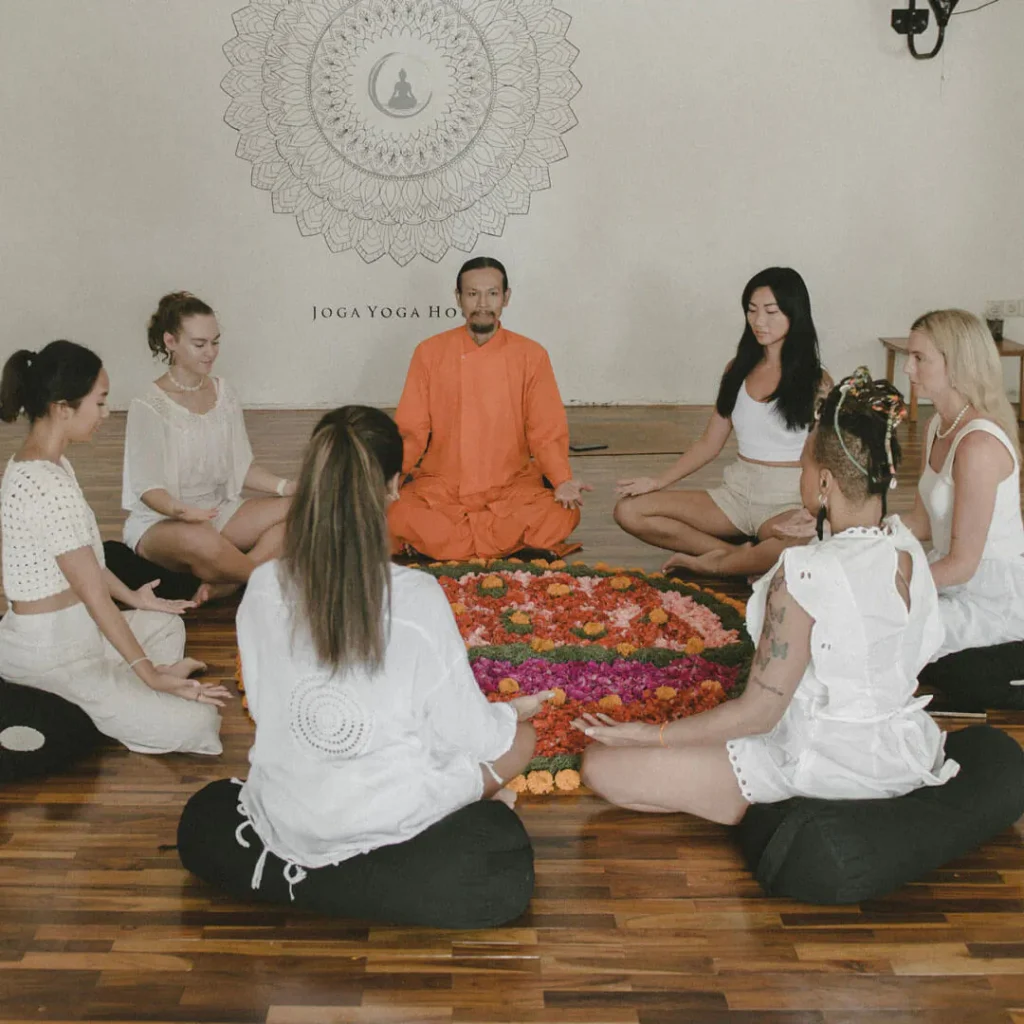

Joga Yoga Training reports that 50% of its students take the 200-hour course for self development rather than to teach. That is roughly half a room of people who are there for their own practice. This covers what the training gives you, what the certificate lets you do afterwards, and how to work out whether it makes sense financially if you never teach a class.
What are the main benefits of yoga teacher training?
The concrete benefits are a working knowledge of anatomy and alignment, breathwork and meditation you can use daily, yoga philosophy in context, and a teaching credential you can register or leave unregistered. Around three weeks of daily practice does the rest.
Those are the parts worth planning around because you can predict them. Bigger shifts in how people think about their lives do happen, but they come out of the daily hours rather than from anything a syllabus can schedule.
| What you get | Useful if you teach | Useful if you never teach |
|---|---|---|
| Anatomy and alignment | Keeps your students safe | Keeps you practising without injury for decades |
| Breathwork and meditation | Tools you pass on in class | Daily tools for stress and sleep |
| Yoga philosophy | Context for what you teach | The part many people say changed how they think |
| Sequencing and cueing | Core teaching skill | Lets you build your own home practice properly |
| The certificate | Often required or preferred by studios | Optional to register, no deadline to do so |
| Three weeks of daily practice | Builds teaching stamina | The single biggest change to your own practice |
If your interest is the career side, whether there is work available and what it pays, that is a separate question and the yoga teacher career guide covers it properly.
Can you do yoga teacher training if you don’t want to teach?
Yes, and nothing about the training requires you to teach afterwards. The certificate is a record that you completed the hours. Whether you ever use it professionally is a separate decision you can make years later or not at all.
The name causes the confusion. A 200-hour course is called teacher training because the syllabus includes sequencing, cueing and class structure, and those hours have to be taught to somebody. You sit through them whether you intend to use them or not, and plenty of people find that having to explain a pose out loud is what finally makes them understand it.
The practical question is whether you mind spending part of the course on skills you will not use. A Yoga Alliance syllabus splits into five areas, and only two of them are teaching-specific. Techniques and practice, anatomy and physiology, and yoga philosophy apply to you whether you teach or not. Teaching methodology and practicum are the parts you would be sitting through for someone else.
Do you have to register with Yoga Alliance if you never teach?
No. Registration is voluntary and separate from your certificate. You finish the training, the school issues the certificate, and registering as an RYT with Yoga Alliance is an optional step you pay for afterwards.
According to Yoga Alliance’s own help centre, there is no cut-off time to join after completing your training, and an initial RYT membership costs $115, made up of a one-time $50 registration fee and $65 in annual dues.
What that means in practice. You can train this year, skip registration entirely, and register in five years if you decide to start teaching. Your training does not expire. Annual dues only start once you choose to register, so an unused certificate costs you nothing to hold.
One condition matters if you are comparing schools. Yoga Alliance only accepts training completed at a Registered Yoga School, and hours from several shorter courses cannot be combined to reach 200. If there is any chance you will want to register later, check the school’s registration status before you book, since not every course qualifies. Our page on whether Yoga Alliance registration is necessary goes into the trade-offs.
Is yoga teacher training worth the money if you never teach?
That depends what you compare it against. A residential course bundles three weeks of daily instruction with a place to stay, so the fair comparison is a year of drop-in classes plus a holiday, not classes alone.
Here is a way to work it out for yourself rather than relying on how a course page frames it.
Work out your own answer
- Add up what you spend on classes in a year, then compare it to the course fee
- Subtract what you would have spent on a holiday of the same length, since a residential training replaces one
- Check exactly what the fee includes, because accommodation and meals are the largest variable between schools
- Decide whether you would pay the same amount for three weeks of intensive instruction in any other skill
- Treat future teaching income as zero, so the decision holds even if you never teach
Our breakdown of yoga teacher training costs in Bali has the current figures and what tends to be bundled into a course fee. If you are weighing the career case instead, what yoga teachers get paid is the number to check first.
The cost people underestimate is time. Three weeks away from work is harder to arrange than the fee is to pay, and it is the reason most people who want to do a training keep postponing it.
How does yoga teacher training change your own practice?
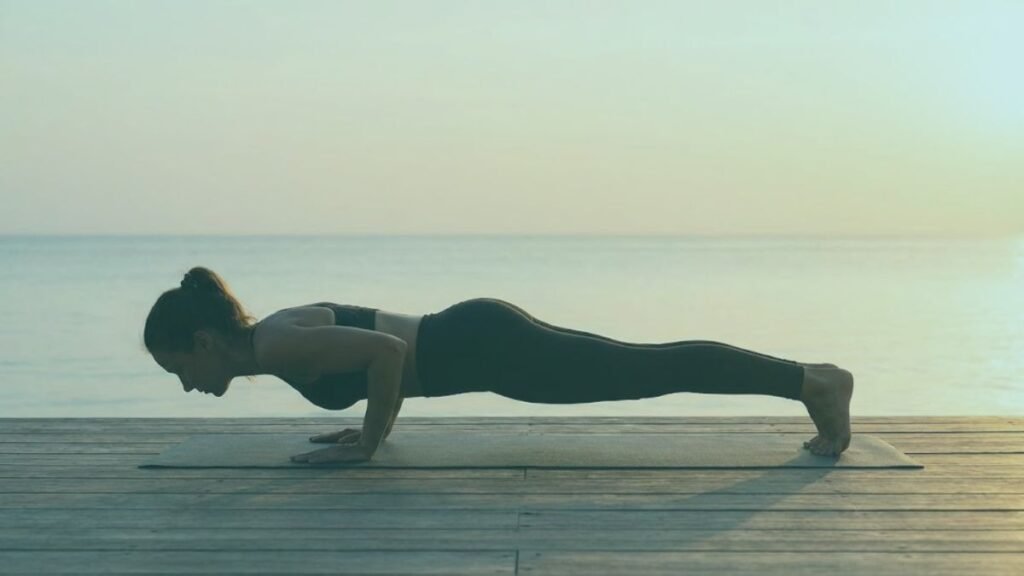
Practising every day for three weeks does most of it. You stop treating poses as shapes to reach and start noticing what your body is doing to get there, mainly because you finally have the anatomy vocabulary to describe it.
The shift is from copying to understanding. Before training, a cue like “root down through your back heel” is an instruction you follow. Afterwards it is something you can feel the reason for, which means you can adjust it when your body needs something different that day.
I have spent the last ten years studying yoga, Chinese medicine and music, and the part that changed my own practice most was not learning to cue a class. It was understanding why the breath does what it does, because that carried over into every other hour of the day.
What does the research say about yoga, stress, and mental health?
The evidence supports yoga for everyday stress and general wellbeing. It is weaker for diagnosed anxiety disorders and depression. That distinction matters if you are considering a training partly for mental health reasons.
The National Center for Complementary and Integrative Health cites a 2018 study of 90 participants in which an 8 and 16 week yoga programme produced significant reductions in stress and anxiety alongside improved psychological health and wellbeing compared with a control group.
The picture for clinical conditions is different. NCCIH’s review of yoga effectiveness and safety reports that yoga may help anxiety symptoms across a range of populations but that there is little evidence of benefit for people with diagnosed anxiety disorders, and a 2021 trial found Kundalini yoga less helpful for generalised anxiety disorder than cognitive behavioural therapy.
Read that as a reason to be realistic rather than discouraged. Three weeks of daily practice, breathwork and meditation is a reasonable thing to expect will help with ordinary stress. It is not treatment. If you are managing a diagnosed condition, a training can sit alongside proper care rather than replace it, and it is worth talking to your doctor before committing to three weeks of intensive physical practice.
Will I be the least experienced person in the room?
Probably not, and it matters less than you think. A 200-hour group usually contains a wide range of experience and body types, and the syllabus assumes you are there to learn the fundamentals rather than demonstrate them.
The fear behind this question is usually about flexibility. Being able to reach your toes is not a prerequisite and it is not what the training assesses. Understanding what a pose is for, and being able to modify it, is more useful in a group than being the person who can already do the advanced version.
What helps is a consistent practice beforehand, not an advanced one. Two or three classes a week for a few months means you arrive able to handle the daily volume, which is the part people actually find hard. Our guide to how hard yoga teacher training is covers the physical demands honestly.
What to check before you book a training in Bali
Ask four things: the daily timetable, what the fee includes, whether the school is registered with Yoga Alliance, and who is actually teaching. Those four answers tell you more than any course description will.
The timetable matters most in Bali specifically, because heat and humidity decide whether a schedule is workable. Ask when asana is scheduled and how the day is split between practice and theory. Ask about the wet season too if you are looking at roughly November through March, since it changes what outdoor practice space is usable.
Joga Yoga Training in Canggu
Joga Yoga Training is a yoga school in Canggu, Bali founded by Joseph Berridge, running teacher training since 2017 with over 2,000 graduates.
- Accreditation: Joga Yoga Training courses are fully accredited with Yoga Alliance, so graduates are eligible to register as an RYT
- Programmes: 100-hour, 200-hour and 300-hour yoga teacher training
- Length: the 200-hour course runs three weeks, with 22 nights included on the accommodation options
- Course fee: from IDR 33 million (€1,650) without accommodation, IDR 36 million (€1,799) with a dorm room, or IDR 52 million (€2,599) with a standard private room
- Included: vegan breakfast and lunch, all books and resources, a traditional Balinese massage, airport pick-up, and lifetime access to the online student portal
- Recovery: sauna and cold plunge sessions run inside the training schedule, not as a paid add-on
- Location: Jl. Pantai Batu Bolong, Canggu, 1.4 km from Batu Bolong Beach
- Upcoming dates: listed on the 200-hour yoga teacher training page
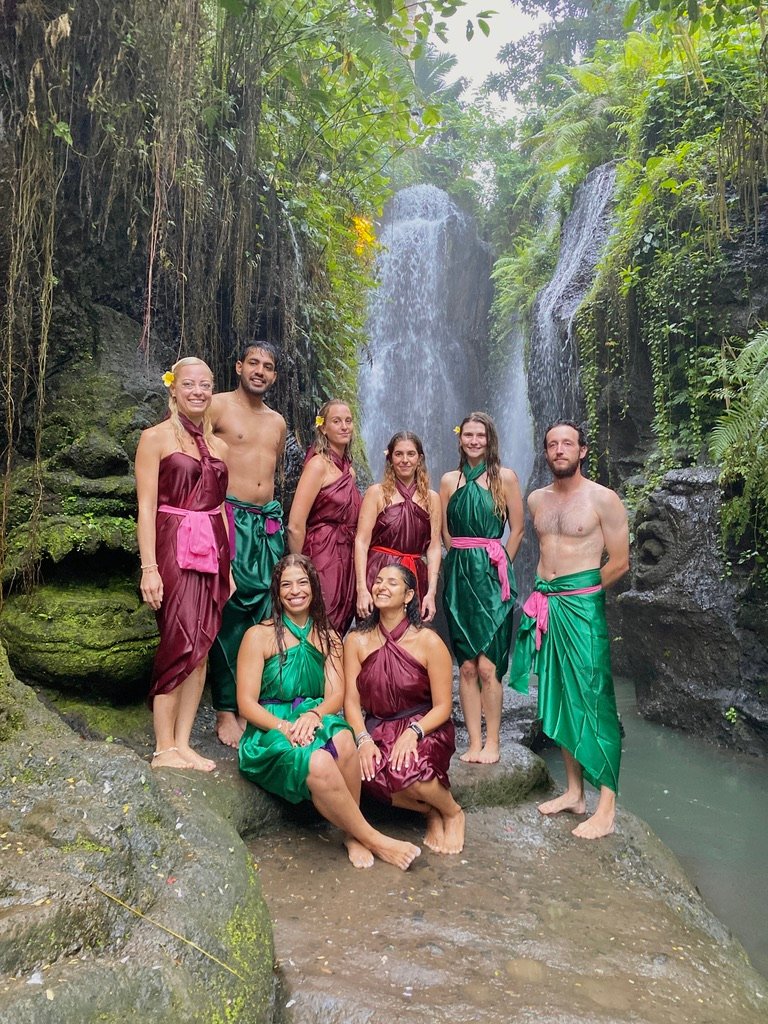
One Canggu detail that sounds trivial until you are three weeks in: the area is walkable and full of cafes, which matters when you need somewhere other than your room to sit with your anatomy notes. Whichever school you choose, look up the people teaching the course rather than only the school, and the Joga Yoga Training teachers page is where ours are listed.
Train for your own practice, teach only if you want to
Joga Yoga Training runs its 200-Hour Yoga Teacher Training in Canggu, Bali, with sauna and cold plunge recovery built into the schedule.
See dates and apply