

What most new graduates get wrong in the first week
You finish your YTT, you are buzzing with everything you learned, and then you get home and realize nobody is handing you a class schedule. Most new teachers spend the first two weeks doing nothing because they do not know where to start. Others send a handful of cold emails and wait.
This article covers what to do in the days right after graduation to give yourself the best shot at a paying class within 30 to 90 days. Not inspiration. Steps.
Sort the paperwork first
Before you approach a single studio, get three things done. They take a few hours combined and studios will ask for all of them.
Yoga Alliance registration. Most studios and gyms will not schedule you without an RYT-200 credential. Registration costs $50 up front plus $65 per year. Go to yogaalliance.org, create a profile, and submit your certificate details, your school’s RYS number, and your training dates. The whole thing takes about 15 minutes. Because Joga Yoga Training is a Registered Yoga School with Yoga Alliance, your registration process is clean: the school’s credentials are already in the system.
Liability insurance. Get this before you teach a single free class. A student gets injured and you have no cover: that is a problem no new teacher can absorb. Yoga Alliance’s TeachersPlus membership includes insurance. Independent providers like BeYogi also offer policies. Expect to pay around $150 to $200 per year.
First aid certification. Most gyms require it. Many studios prefer it. A one-day course covers the basics and costs between $50 and $120 depending on your country. It takes one day and removes a common reason studios pass you over.
The sub list is how most new teachers get their first class
New teachers go after regular class slots. Studio owners rarely give those to someone they do not know. The sub list is a roster of available cover teachers a studio calls when someone cancels. It is how most teachers actually get their first paid classes, and most new teachers ignore it in favor of asking for something studios are not ready to give.
How it works: go to the studio where you want to teach. Not to hand in a resume. To take classes. Attend multiple sessions over a few weeks. Talk to the front desk staff and other students. Once you know a few people by name, introduce yourself to the studio manager or owner, tell them you finished your YTT, and ask specifically about the sub list.
Studios need emergency cover all the time. Teachers get sick, travel, cancel. If you are on the sub list and you pick up every time they call, you get classes. You also get seen. Studio managers notice who shows up, who handles a room well, and who fits the culture. That is how a sub slot becomes a regular slot. The teachers who skip this and go straight to the cold email tend to wait a lot longer.
One thing studio owners say consistently: when you are covering a class, do not apologize for not being the regular teacher. You bring your own skills. Teach the class as if it is yours, because for that hour, it is.
Where to teach beyond yoga studios
Studios are the obvious target, but they are also the most competitive and the slowest to hire someone without a track record. These options are easier to get into as a new teacher and give you faster feedback on your teaching.
Gyms. Gyms have a built-in membership, hire RYT-200 graduates regularly, and the pressure is lower than at an established studio. You will teach a wider range of bodies and fitness levels, which builds adaptability fast. Smaller independent gyms are easier to approach than large chains.
Corporate yoga. Companies hire yoga teachers for lunchtime or after-work staff sessions. Pay is much higher than studio classes: often $75 to $200 per session in major markets, depending on the company and your location. You do not need a studio relationship to do this. Contact HR departments directly or look for corporate wellness platforms that match teachers with businesses.
Community centers, parks, beach classes. You can organize your own class with almost no overhead. Charge a small drop-in rate, invite people from your training cohort, and build a small regular group. This gives you real experience and a simple track record you can show studios.
Online teaching. Zoom lets you teach from anywhere with no venue costs. Even a class of three or four students from your training group gives you practice managing a session from start to finish. Some teachers build a full income this way. For most new graduates it is a fast way to get reps while pursuing studio and gym work at the same time.
The short version: do not spend two months waiting for a studio to say yes when you could be teaching at a gym, in a park, or online this week. Teaching experience is what makes studios say yes faster.
How to approach a studio properly
Cold emails with a resume attached rarely go anywhere. Studio managers receive a lot of them. Most go unanswered. Showing up first is what works.
Pick three to five studios you actually want to teach at. Not every studio in your city. Research each one. Attend the owner’s class if they teach regularly. Get to know the student community and how sessions are run. After a few weeks of that, you are not a stranger when you introduce yourself.
When you do reach out by email, keep it short. Three paragraphs: your training background and the name of your lead teacher, any teaching experience you have (free classes count), and your specific ask, which is to be considered for the sub list and to audition. Mention your availability, particularly mornings, evenings, and weekends. Those are the slots studios most need covered. Follow up once after two weeks if you hear nothing.
What not to include: limited availability, anything negative about other studios, and a paragraph about how much you love yoga. Studio managers already know you love yoga. They want to know what you can do for their students.
What actually happens at a studio audition
An audition is a 15 to 30 minute sample class, taught to two or three staff members rather than a full room. Studios are not looking for difficult sequences or impressive poses. They want to see whether you can hold a room, cue clearly for both a beginner and an experienced student at the same time, and show you understand basic anatomy. They want to know why you are building the sequence the way you are, not just that you can do it.
Pick a simple peak posture and build a straightforward flow toward it. Practice it three or four times with friends before the audition so the timing comes naturally. Bring notes if you want them. There is no rule against it. When the manager asks if you have questions at the end, “How can I help you here?” is the most useful thing to ask. It signals you are thinking about their students, not just yourself.
Studio managers say it plainly: the teachers who pack their audition with complex sequences to impress are not the ones who get hired. Simple, clear, and calm wins.
How to write a yoga teaching resume with no job history
A yoga teaching resume is not your general CV. It covers your YTT certification and school, any specializations from your training (anatomy focus, therapeutic yoga, specific styles), any experience teaching people in any context (informal free classes count), and complementary qualifications like personal training, nutrition, massage, or first aid.
If your training included practice teaching sessions, list them. Joga Yoga Training includes practice teaching as part of the 200-hour program, plus the option to continue practice teaching at the studio after graduation. Include those sessions with approximate class sizes and styles. That is teaching experience, full stop.
Marketing skills are worth adding if you have them. Small studio owners often handle their own promotion. A teacher who understands how to build an audience and manage social media is more useful to them than one who does not.
The feeling that you are not ready
Most new teachers feel they are not ready. This does not go away with more experience. It changes shape. What it signals is that you care about doing a good job. That is the right instinct. The mistake is letting it stop you from teaching.
The fix is not mantras. It is reps. Teach your first ten or twenty classes to anyone who will show up: friends, family, people from your training cohort, a park class you organize. By the time you walk into a studio audition, you have already handled a room. That matters more than feeling ready before you start.
If you are nervous in a class, it is fine to say so briefly and then teach anyway. Most students are not looking for a flawless performance. They want a teacher who is paying attention to them. You can do that from the first class.
Two hundred hours of training is the beginning, not the finish line. Every experienced teacher you respect started where you are. The difference between them and you right now is teaching hours.
What Joga graduates have going for them
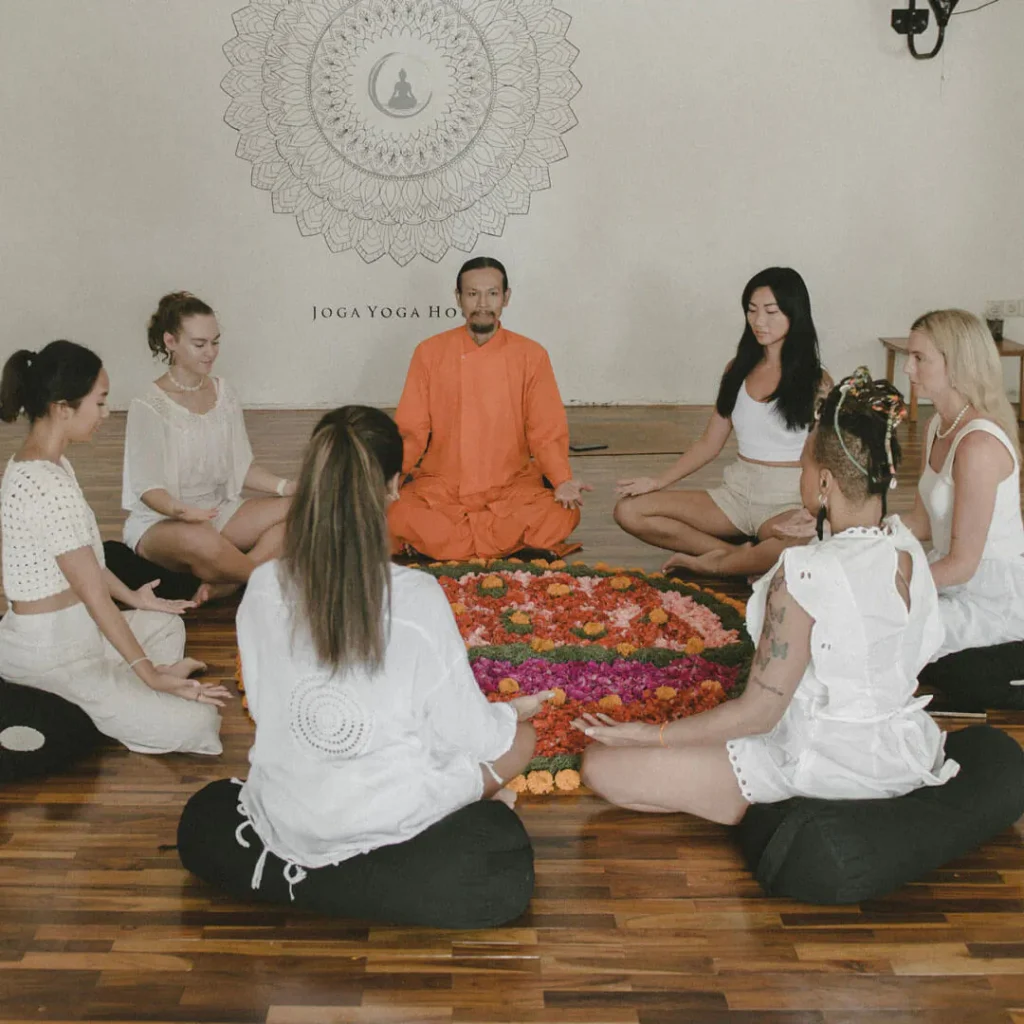
Joga Yoga Training offers graduates the option to practice teach at the Canggu studio after the program ends. Most schools do not do this. You get real students, a real space, and feedback from instructors before you apply for your first paid position. That is a concrete head start.
The 200-hour program covers teaching methodology across Hatha, Creative Vinyasa, Ashtanga Vinyasa, and Yin Yoga, plus anatomy, philosophy, and group dynamics. That range means you can apply to studios and gyms that run multiple styles. The teaching team holds E-RYT 200 and E-RYT 500 qualifications from Yoga Alliance, so the training behind your credential is easy for a studio manager to verify.
If you want to take your teaching further after your first job, the 300-hour advanced training builds on the 200-hour foundation. Most experienced teachers recommend waiting six to twelve months and accumulating real teaching hours before going back. The gaps in your knowledge become much clearer once you have been standing in front of a class regularly.
Your first-week action list
Register with Yoga Alliance and get your RYT-200 credential. Sort liability insurance. Get a first aid certificate if you do not have one. Update your social profiles and bio to reflect your new credential. Pick three studios you want to teach at and start attending their classes. Run one free or donation-based class with people from your training cohort to get your first session done. Contact the HR departments of two or three companies in your area about corporate yoga. Put together a one-page resume that lists your YTT, your training school, the styles you can teach, and any complementary skills.
Most of that takes two or three days. After that, you are not waiting. You are working.
If you are still deciding where to train, or considering a second program, the Joga Yoga program in Canggu runs monthly intakes across 100-hour, 200-hour, and 300-hour formats. The post-graduation practice teaching access is one of the more practical transitions into real teaching available.
Frequently asked questions
How long does it take to get your first yoga teaching job after YTT?
Most new graduates land a first paid class within one to three months when they are actively pursuing the sub list, free classes, and non-studio venues at the same time. Waiting for a studio to contact you rarely works.
Do you need to register with Yoga Alliance before applying for teaching jobs?
Yes, in most cases. The RYT-200 credential is what studios and gyms recognize as the baseline standard. Registration costs $115 in the first year and takes about 15 minutes online. Do it before you approach studios.
What is the sub list and why does it matter?
It is a roster of cover teachers a studio can call when a regular class needs covering. Getting on it is the fastest way to teach real classes without a permanent slot. It is how most new teachers get started.
Do you need experience to teach at a gym?
No. Gyms hire RYT-200 graduates and are easier to get into than studios for first-time teachers. The student base is broader, which builds adaptability faster.
What happens at a yoga teaching audition?
Typically 15 to 30 minutes, teaching a sample class to studio staff. They are watching for clear cueing, anatomical awareness, the ability to offer modifications, and whether you can hold the room calmly. Not impressive poses or complex flows.