

Introduction: Choosing Between Yoga and Tai Chi
Yoga and Tai Chi are both holistic mind-body practices that promote strength, flexibility, balance, and emotional well-being—but they differ significantly in origin, movement style, and philosophical foundation.
- Yoga emphasizes static postures, breath control, and meditation to unite the body, mind, and spirit.
- Tai Chi, on the other hand, uses fluid, martial arts-inspired movements to promote internal energy (qi) flow and external balance.
Whether you’re exploring these practices for stress relief, mobility, spiritual growth, or healthy aging, understanding their core differences is key to choosing the one that fits your goals, body type, and lifestyle. For those curious about other mind-body practices, you may also want to explore somatic movement for weight loss and emotional release.
Origins and Philosophies
Yoga: Self-Realization Through Union
Originating in ancient India over 5,000 years ago, yoga is both a spiritual path and a practical system for physical and mental well-being. Its name derives from the Sanskrit root “yuj,” meaning to yoke or unite, referring to the union of body, mind, and spirit.
Yoga is grounded in philosophies such as the Yoga Sutras of Patanjali and Bhagavad Gita, which guide practitioners toward inner peace and self-awareness through discipline (asana), breath (pranayama), and meditation (dhyana). While physical poses are central in modern yoga, the practice ultimately aims for spiritual awakening and liberation.
If you’re curious about the core texts and traditions that shaped yoga, read our overview on yoga philosophy and historical roots.
Tai Chi: Harmony Through Flow
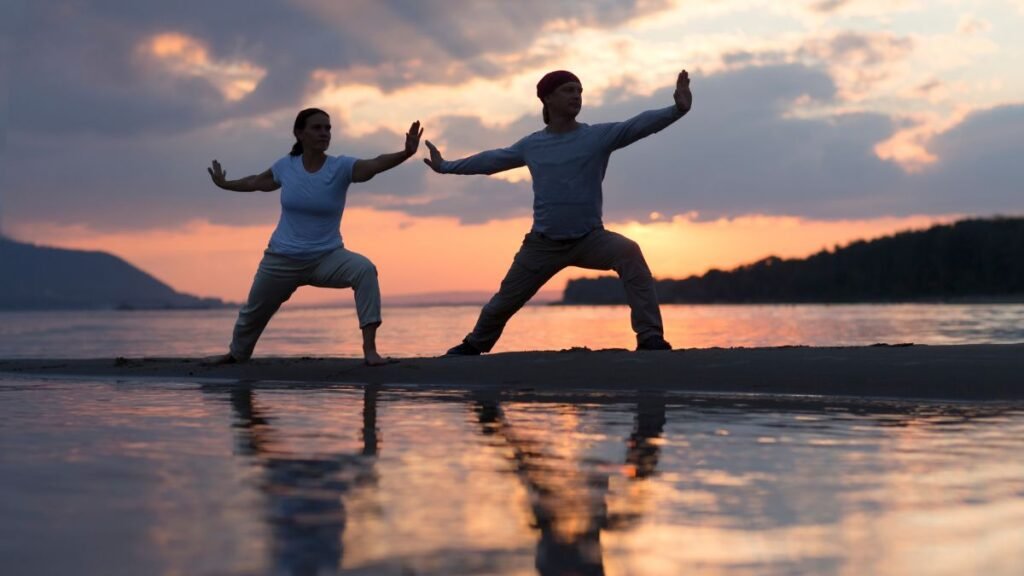
Tai Chi (Taijiquan) originated in ancient China, initially as a martial art. It evolved into a meditative movement practice rooted in Taoist philosophy, emphasizing balance, harmony, and the cultivation of qi, the body’s vital life force.
Instead of postures, Tai Chi uses continuous, flowing sequences that mirror natural elements like water or wind. Movements are performed slowly, often in a circular pattern, accompanied by breath control and focused attention. Tai Chi emphasizes effortless effort, aiming to rebalance internal energy and align with nature’s rhythms.
Physical Practices and Techniques
Yoga: Strength in Stillness
Yoga’s physical form is based on asanas—static or held poses that stretch and strengthen specific muscle groups. Common sequences (like Vinyasa or Hatha) are structured around breath cues, with sessions typically beginning and ending in meditative stillness.
Breath regulation (pranayama) plays a crucial role, calming the nervous system while enhancing lung capacity and mental focus. Some yoga styles, such as Yin or Restorative Yoga, offer deeper tissue release and parasympathetic activation—ideal for those managing anxiety or overthinking.
Practices may involve:
- Downward Dog, Warrior Pose, Tree Pose
- Guided breathwork like Ujjayi or Alternate Nostril Breathing
- Silent meditation or chanting (e.g., OM) to foster inner awareness
Tai Chi: Graceful Motion in Meditation
Tai Chi is characterized by seamless movement—a series of slow, deliberate gestures performed with precision and mindfulness. Each form transitions into the next without pause, creating a moving meditation that strengthens joints, improves coordination, and enhances internal awareness.
Tai Chi movements are based on martial forms but performed without force. Key elements include:
- Shifting weight slowly from foot to foot
- Circular arm movements that mirror natural flows
- Intentional, diaphragmatic breathing synced with movement
Rather than holding poses, Tai Chi practitioners stay in constant flow, which makes it especially supportive for joint health, balance, and cardiovascular fitness—an alternative many explore alongside low-impact practices like chair yoga.
Health Benefits Comparison
Both yoga and Tai Chi are known for their full-spectrum wellness benefits, but they each emphasize different aspects of physical and mental health.
Shared Benefits
Both practices contribute to:
- Improved balance and flexibility, supporting functional movement and fall prevention
- Mental clarity and emotional calm, through rhythmic movement and breath
- Stress relief, especially when practiced regularly with mindfulness and intention
These overlaps make either practice effective for individuals managing anxiety, overwhelm, or burnout. In fact, yoga’s impact on the nervous system is especially notable in practices that activate the vagus nerve, helping to regulate mood and tension.
Yoga-Specific Benefits
Yoga’s held poses and dynamic flows offer:
- Increased muscle strength and tone, particularly through standing postures and core engagement
- Improved posture and spinal alignment, essential for long-term joint health
- Deeper flexibility, especially in hamstrings, hips, and shoulders through sustained stretching
These benefits are especially emphasized in formats like hatha yoga or yin yoga, where poses are held for longer durations to promote fascia release and alignment.
Tai Chi-Specific Benefits
Tai Chi offers unique outcomes through continuous movement:
- Enhanced coordination and reflexes, important for fall prevention and neuromuscular balance
- Joint support without compression, making it ideal for individuals with arthritis or osteoporosis
- Improved cardiovascular health, especially in older adults or those returning to fitness after inactivity
Its gentle pacing and consistent movement pattern make it a meditative form of low-impact cardio, often compared to walking yoga or mindful mobility exercises for long-term sustainability.
Suitability for Different Populations
Yoga: Adaptable for All Life Stages
With its wide variety of styles—from gentle restorative to dynamic vinyasa—yoga is easily modified for:
- Beginners and seniors using props or chair-based adaptations
- Athletes seeking mobility or recovery
- People healing from injury, where slow, mindful movement helps rebuild strength safely
You can explore formats tailored to different needs in resources like our guide to beginner yoga or specialized formats like yoga for healthy aging.
Tai Chi: Especially Supportive for Older Adults
Tai Chi is often recommended for:
- Seniors seeking low-impact ways to build stamina and stability
- People with arthritis, Parkinson’s, or balance issues, due to its rhythmic movement and slow transitions
- Those who may not resonate with floor-based yoga but still want the mind-body connection
Its structure allows individuals to enter flow state without floor transitions or props, making it ideal for community centers, rehab settings, and outdoor classes.
Accessibility and Equipment
Yoga: A Few Tools Go a Long Way
Yoga typically requires:
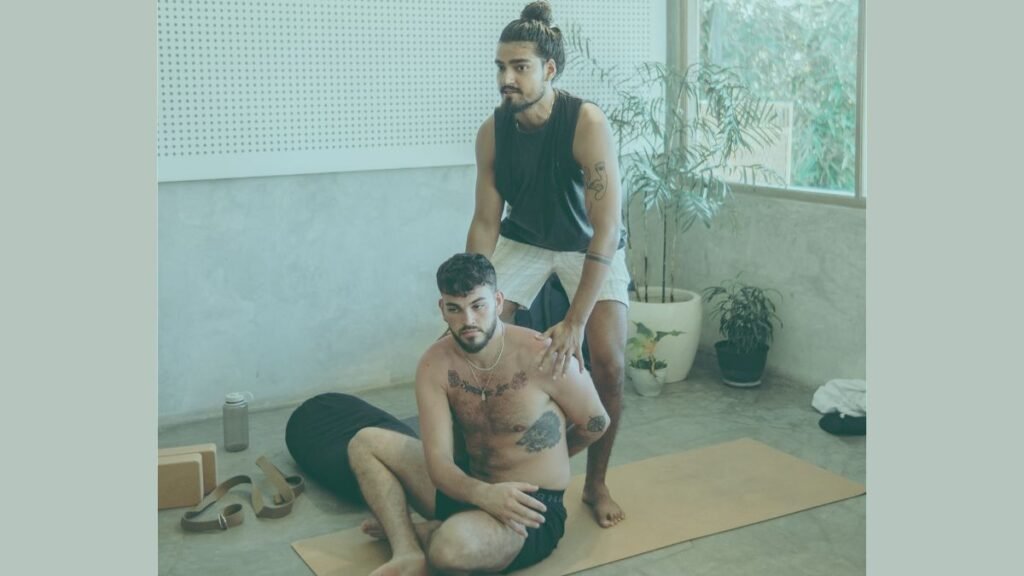
- A non-slip mat for grounding and comfort
- Optional props like blocks, straps, or bolsters to assist with alignment or flexibility
While minimal, these tools help create a safe, supportive environment, particularly in practices like restorative or chair yoga.
Tai Chi: Just You and Your Breath
Tai Chi is as accessible as it gets:
- No mat or equipment needed
- Can be practiced in any quiet space—indoors or outdoors
- Suitable for those with limited space, time, or mobility constraints
Its ease of entry makes Tai Chi a popular recommendation among holistic practitioners for seniors or people recovering from long-term illness.
Combining Practices
For those who don’t want to choose just one, the good news is: Yoga and Tai Chi complement each other beautifully.
A Balanced Weekly Routine
Practicing both can offer the best of both worlds:
- Yoga brings focus, flexibility, and internal strength through held postures and intentional breathwork
- Tai Chi introduces fluid movement, dynamic balance, and a gentler cardio rhythm that enhances circulation and proprioception
Together, they create a well-rounded routine that promotes physical longevity and mental clarity. It’s not uncommon to see practitioners begin with yoga and later explore Tai Chi as their bodies seek more flow and less strain, or vice versa.
If you’re already practicing gentle movement like chair yoga or looking to deepen your breath awareness, integrating Tai Chi may feel like a natural extension—and a graceful one at that.
Choosing Yoga? Start with Joga Yoga
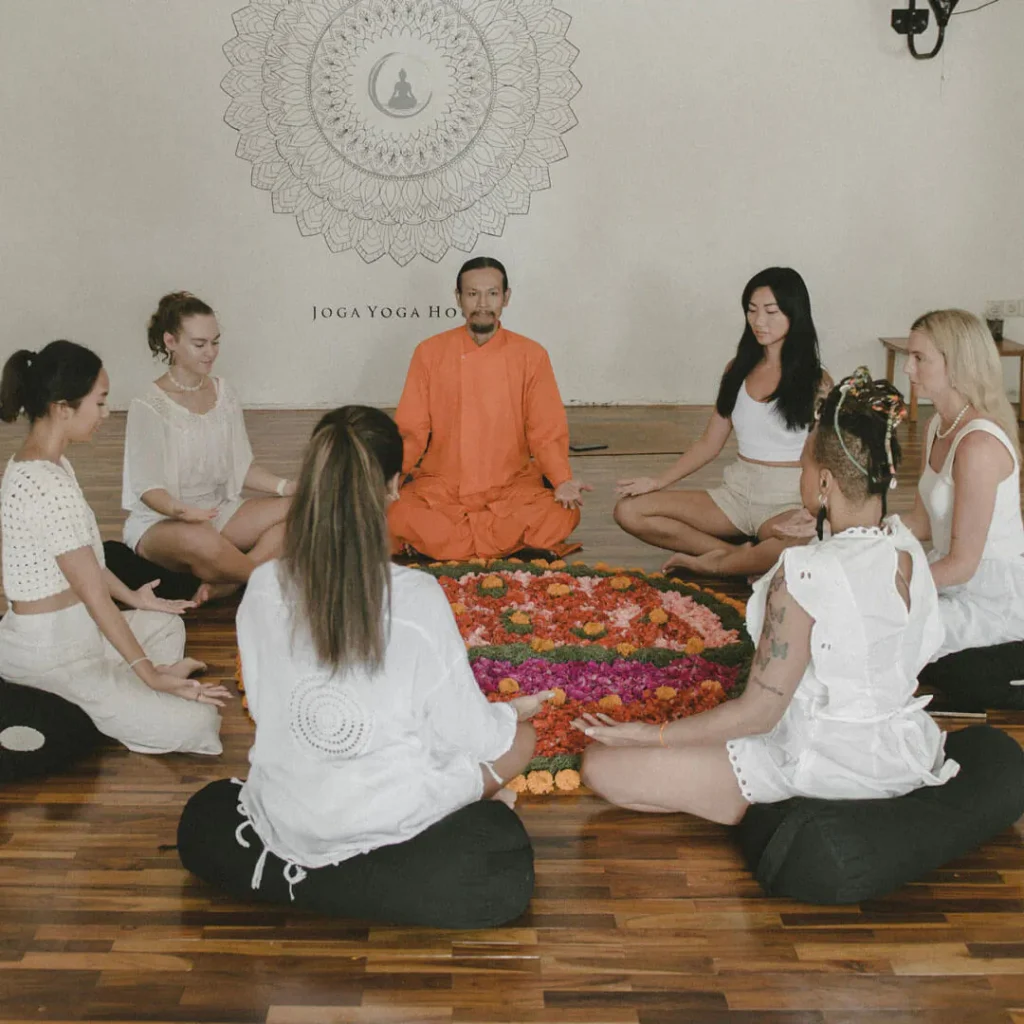
If your exploration leads you toward the path of yoga, consider beginning your journey with Joga Yoga’s 200-hour Teacher Training in Bali.
Our program is:
- Internationally recognized and multi-style, covering Hatha, Vinyasa, Yin, and Restorative practices
- Supportive for beginners while offering depth and challenge for aspiring instructors
- Led by experienced global teachers in one of the most serene, spiritually rich yoga destinations in the world
Whether your goal is to teach or simply deepen your personal practice, Joga Yoga offers a transformative foundation. It’s more than a course—it’s a journey toward self-awareness, confidence, and holistic health.
Conclusion: Making the Right Choice
Both yoga and Tai Chi are rooted in ancient wisdom and offer modern-day relevance. They help us slow down, reconnect, and move with intention. The key difference lies in their expression:
- Yoga leans toward structured stillness and internal exploration
- Tai Chi moves through flow and external energy balance
Your ideal practice depends on your body’s needs, your mind’s rhythms, and your long-term wellness goals. Whether you choose one, blend both, or begin with curiosity, each path has value, and each leads to deeper connection within.