What Does Kids Yoga Teacher Training Actually Cover?
Kids yoga teacher training covers three separate things: yoga poses adapted for smaller, less developed bodies, delivery methods built around games and storytelling instead of straight instruction, and a working understanding of how children behave at different ages. Most short courses cover the first two well and skip the third.
A weekend workshop can teach twenty kid-friendly poses and a dozen games in two days. What it usually cannot teach in that time is why a five-year-old cannot sit still through a five-minute meditation, or why the same poses need a completely different pace with a class of eight-year-olds than with teens. That gap is why training depth matters more than the certificate itself. Our broader guide on how to become a yoga trainer covers the adult-teaching path this specialism sits alongside.
Age Bands: What Actually Changes Between Toddlers, Kids, and Tweens
Three broad age bands drive most teaching decisions in kids yoga: preschoolers, early elementary children, and tweens. Session length, pose complexity, and how much a class leans on story versus instruction shift sharply between them.
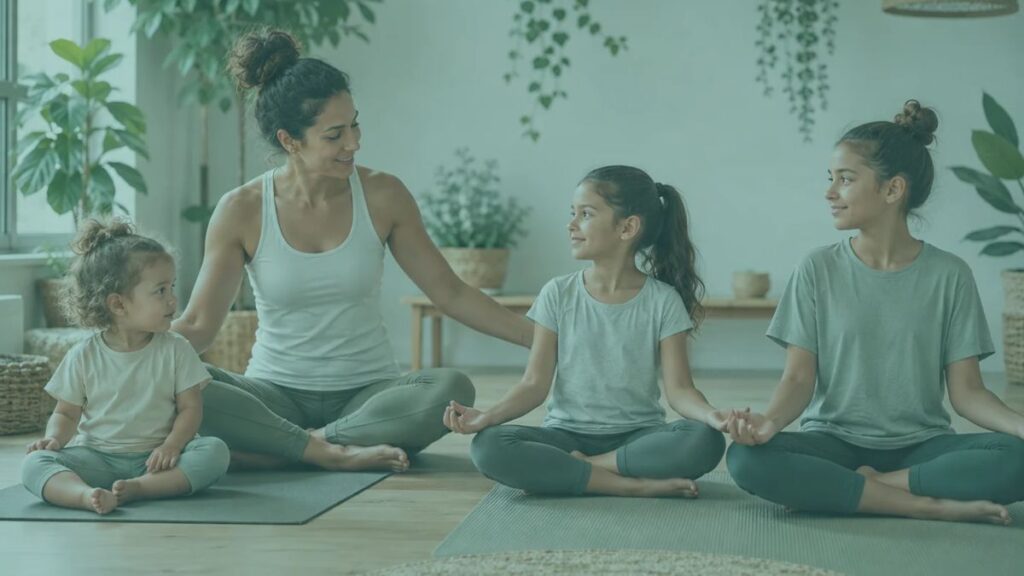
A preschool class runs on repetition and imagination, and sessions stay short because attention spans are short, with real time spent just getting shoes off and bodies onto mats. Early elementary children can hold a pose for a count and follow a two-step instruction, so games with rules start to work. Tweens can handle actual reflection and light philosophy, and they disengage fast if the material feels babyish.
Mixed-age classes are common, and they take more work to run than a single-band class. The usual fix is layering: the same pose or game gets a simpler version for younger kids and an added step for older ones, run side by side in the same room.
| Age band | Typical session length | What holds attention | Main teaching adjustment |
|---|---|---|---|
| Preschool (roughly 3-5) | 20-30 minutes | Repetition, animal poses, songs | Build in transition time and expect some kids to just watch |
| Early elementary (roughly 5-8) | 30-45 minutes | Games with rules, short stories | Two-step instructions, simple partner poses |
| Tweens (roughly 9-12) | 45-60 minutes | Choice, light reflection, challenge poses | Treat them as capable of holding a conversation, not just games |
Gear needs to match the age band too. A full-size adult mat overwhelms a four-year-old and makes it harder for them to find their own space in a group. A properly sized kids yoga mat solves that at the youngest end, though older kids generally do fine on a standard mat.
Classroom Management Is the Real Skill You’re Training For
Classroom management, not the pose list, decides whether a kids yoga class works. A teacher who knows fifty poses but cannot hold a room of eight-year-olds will struggle. One who knows fifteen poses and can read a room will not.
This shows up constantly in mixed-age or mixed-behavior groups. Younger kids get wiggly and distracted. Older kids test boundaries or check out if a game feels too young for them. Experienced children’s yoga teachers handle this the way experienced classroom teachers do: short, repeated rituals that mark the start and end of class, clear expectations stated in simple language and enforced consistently, and a plan for a child stepping back from the group that does not read as a punishment.
A practical fix for mixed-age groups: teach one pose or game at two difficulty levels at once. Younger children get the simple version, a shorter hold or a slower pace. Older children get an added step, a partner element or a longer count. Both groups do the same activity, so nobody feels singled out.
Joga Yoga Training lists Beth James, a paediatric nurse from the United Kingdom, among the graduates on its testimonials page. She describes the training as giving her “the knowledge, skills and confidence to begin teaching private and group classes.” Her clinical background gave her a head start on reading a room, which is most of what classroom management actually is.
What Is RCYT and Do You Need It?
RCYT stands for Registered Children’s Yoga Teacher, the Yoga Alliance credential for kids yoga. It is an add-on to an existing yoga teacher registration, not a starting point, and Yoga Alliance will not register anyone as an RCYT without an active 200-hour or 500-hour registration in place already.
To register as an RCYT, Yoga Alliance requires three things in order: an active Registered Yoga Teacher designation from a 200-hour Registered Yoga School, a minimum of 95 hours of children’s yoga teacher training completed at one Registered Children’s Yoga School, and at least 30 hours of children’s yoga classes taught after finishing that 95-hour training. All three have to be in place before Yoga Alliance issues the designation.
The confusion most people hit first: a “kids yoga certificate” from a training provider is not automatically the same as RCYT registration. Plenty of short kids-yoga courses issue their own certificate of completion with no prerequisite at all, which is useful and legitimate, but it only counts toward Yoga Alliance’s RCYT if the provider is an accredited Registered Children’s Yoga School and the teacher already holds RYT status. Check both before paying for a course expecting it to lead somewhere specific.
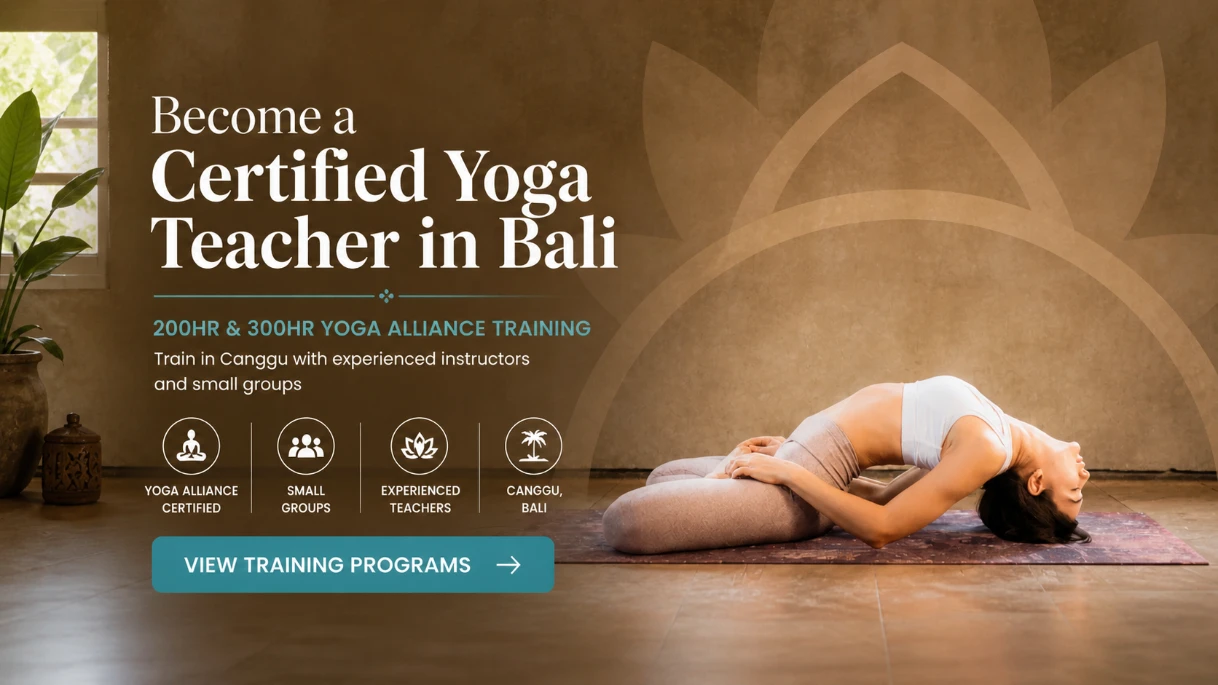
Joga Yoga Training is a Yoga Alliance Registered Yoga School based in Canggu, Bali, and runs 100-hour, 200-hour, and 300-hour Yoga Alliance-certified teacher trainings. Its 200-Hour Yoga Teacher Training is the RYT-200 foundation that most Registered Children’s Yoga Schools require before accepting a teacher into their 95-hour specialty track. Our Yoga Alliance certification guide covers what registering with Yoga Alliance actually involves, step by step.
Most Registered Children’s Yoga Schools run the 95-hour specialty online, so completing the 200-hour foundation in person and the specialty online afterward is a normal path, not a compromise.
Background Checks and Safeguarding: Check Your Local Requirements
Background check and safeguarding rules for anyone teaching yoga to children depend on the country, the state or province, and the venue, not on any single yoga credential. Yoga itself remains an unregulated industry almost everywhere, but venues that host children are not, and their rules apply regardless of what certificate a teacher holds.
In the United Kingdom, teachers leading children’s or youth classes typically need a current DBS check, renewed or reverified roughly every three years. In the United States, requirements vary by state and by venue, with no single federal standard for yoga teachers specifically. Check your local requirements directly with the venue and your regional regulator before committing to a class, since this is exactly the kind of detail that goes stale fast in a generic guide.
Insurance is a separate layer from safeguarding checks, not a substitute for one. A background check clears a teacher to be in a room with children. Liability insurance covers them financially if something goes wrong once they’re there. Most venues expect both.
Before your first paid kids class, confirm:
- Whether the venue requires its own background or safeguarding check, and how long that process takes
- Whether professional liability insurance is required, and whether it specifically covers teaching minors
- Whether the venue has a written safeguarding or code of conduct policy you are expected to follow
- Whether any local or national “working with children” register applies to the role
Where Kids Yoga Teachers Actually Work
Kids yoga teachers find paid work in four main places: schools and preschools, studios running dedicated kids programs, after-school and holiday camps, and private bookings such as family sessions or birthday parties. Most teachers combine two or three of these.
Schools and preschools offer the steadiest income, contracting by term rather than by class, but they also carry the strictest safeguarding requirements and the least flexibility on timing. Studios pay per class like any studio job and bring a built-in audience through existing members. Camp and after-school work is seasonal and often short-notice, better suited to teachers who want variety over stability. Private bookings, especially birthday parties, pay well per session but take more selling and scheduling effort than the other three.
Studios and schools rarely advertise kids yoga roles the way they advertise general studio openings. Most kids yoga teachers land their first booking through a direct pitch to a school, preschool, or studio they already know. Our guide on landing your first yoga teaching job after YTT covers that outreach approach in more depth.
What Kids Yoga Teachers Actually Earn
Kids yoga pay generally tracks general yoga instructor pay in the same market, with the venue type changing the payment structure more than the headline rate. Group classes typically pay $25 to $75 per session depending on location and experience, and private sessions typically pay $75 to $150 or more per hour.
| Venue type | Typical payment structure | What affects the rate |
|---|---|---|
| School or preschool contract | Fixed rate per term or semester, not per class | Contract length, number of classes per week |
| Studio kids program | Flat rate per class, similar to adult studio pay | Studio location, experience, class size |
| Private or birthday party booking | Flat fee per session, set by the teacher | Session length, group size, travel |
| After-school or camp program | Hourly or per-session, often seasonal | Program length, number of weeks booked |
Specific kids-yoga pay benchmarks are thinner than general yoga instructor pay data, so treat these as a starting range and check current rates in your own market before setting prices.
FAQ
Do I need a 200-hour yoga teacher training before I can teach kids yoga?
Not to teach informally or through a standalone kids yoga certificate. An active 200-hour Registered Yoga Teacher designation is required before Yoga Alliance allows registration as an RCYT.
What is the actual difference between a kids yoga certificate and RCYT?
A kids yoga certificate proves you completed a specific course, issued by whichever provider ran it. RCYT is a Yoga Alliance registration requiring an existing RYT-200, 95 hours at an accredited Registered Children’s Yoga School, and 30 hours of teaching afterward.
Can I teach kids yoga with no certification at all?
In most places, yes, since yoga teaching is unregulated. Most schools, studios, and camps still require some training and insurance before hiring, regardless of what the law technically permits.
How long does it realistically take to become a kids yoga teacher?
A standalone certificate can take a weekend to a few weeks. The full RCYT path, including an existing RYT-200, the 95-hour specialty, and 30 teaching hours afterward, typically takes several months to a year.
Ready to build the RYT-200 foundation your kids yoga specialty needs?
Joga Yoga Training runs Yoga Alliance-certified 100-hour, 200-hour, and 300-hour teacher trainings in Canggu, Bali.
Apply Now