


The short answer: which visa for which course
Most students coming to Joga Yoga for teacher training can enter Bali on a Visa on Arrival (VOA) or its online version, the e-VOA. It costs IDR 500,000 (around USD 35) and gives you 30 days from the day you land.
Here is how that maps to each program:
- 100-hour course (10 days): VOA or e-VOA is more than enough. You will not get near the 30-day limit.
- 200-hour course (21 days): VOA works. Read the math section below before you book flights.
- 300-hour course (29 days): VOA covers the course, but only just. One delayed flight or an extra night in Bali and you are close to the limit. Get the e-VOA so extending is an option if you need it.
If you plan to stay after graduation to travel or rest, plan your extension before you arrive, not after.
One thing that catches almost everyone: the day you land in Bali counts as day one of your visa. Not the day the course starts. Not the morning after you arrive. The clock starts when you clear immigration.
Is it legal to do a yoga teacher training on a tourist visa?
Yes, for students. Attending a yoga teacher training as a participant is permitted on an Indonesian tourist visa. You are there to learn, not to work. The VOA prohibits employment, but studying as a course participant is tourist activity under Indonesian immigration rules.
The boundary is teaching for pay. If you stay in Bali after your certification and want to teach paid classes at a studio, that is classified as work and requires a KITAS (Temporary Residence Permit). For anyone completing the training and then leaving or traveling, a tourist visa is fine.
Joga Yoga students arrive from more than 40 countries on tourist visas. There are no issues.
The 30-day math: why it matters for the 200-hour course
The 200-hour program at Joga Yoga runs for 21 days. That fits easily inside a 30-day VOA. But only if you land on the first day of the course and leave on the last.
Almost nobody does that. Most students arrive one or two days early. Joga asks you to arrive the Sunday before the course starts so you can join the traditional Balinese opening ceremony. Many students also stay a few days after graduation to rest, see more of Bali, or catch a cheaper connecting flight. Add that up and a typical stay runs 25 to 28 days.
That still fits in 30 days. But only if nothing goes wrong. A two-day flight delay. A fever that keeps you horizontal for an extra day before you fly. Suddenly you are at day 30 with no room.
For 200-hour students: get the e-VOA online at evisa.imigrasi.go.id before you travel. If you decide mid-course that you want to extend your stay, the e-VOA is easier to extend than the airport sticker version. With an airport sticker, you have to visit an immigration office in person three separate times. With the e-VOA, one visit for biometrics covers it.
The 300-hour course: the timing problem nobody explains
The 300-hour program runs for 29 days. A VOA gives you 30. That is a one-day margin.
In practice: you land, the course starts Monday, it ends 29 days later, and you need to be out of Bali by day 30. No early arrival to recover from the flight. No staying an extra night after graduation. One delayed connection and you are technically in overstay, which runs IDR 1,000,000 (about USD 65) per day in fines.
For 300-hour students, pick one of these two approaches before you travel:
- Extend your VOA while the course is running. Apply about 10 days before the 30-day mark at an immigration office in Canggu, Denpasar, or Jimbaran. Your passport is held for five to seven working days. Keep a digital copy of your ID. The extension fee is around IDR 500,000 to 600,000.
- Apply for a C1 Visit Visa (B211A) before you travel. This is a 60-day visa applied for before departure through an Indonesian embassy or licensed agent. It can be extended twice, each for another 60 days, up to 180 days total. It costs around USD 100 to 150 depending on the agent. It removes all the timing pressure and is the right call if you plan to stay in Bali after the course ends.
What changed in 2026: the All Indonesia arrival card
Since October 2025, every international traveler arriving in Indonesia must complete the All Indonesia digital arrival card before their flight. This is not a visa. Your visa and this card are separate requirements. Skip the card and you face delays at immigration.
What you need to do:
- Complete the form at allindonesia.imigrasi.go.id — free, no agent required.
- Do it within 72 hours before your flight. Earlier submissions are rejected by the system.
- You receive a QR code by email. Screenshot it before you board. Airport Wi-Fi after landing is unreliable.
- The form combines customs declaration, health information, and immigration details in one submission.
- Every traveler needs their own form, including children.
There are scam websites charging fees for this. The real portal is free and the URL ends in .go.id (the official Indonesian government domain). Use only that link.
You also need to pay the Bali Tourist Levy of IDR 150,000 (around USD 10). This is a separate charge managed by the Balinese provincial government, not central immigration. Pay it at lovebali.baliprov.go.id before you land to skip the airport queue.
How the visa extension actually works
If you need to stay beyond 30 days, here is what the process involves.
If you applied for the e-VOA online before travel: extensions can be processed with one visit to an immigration office for biometrics (photo and fingerprints). Cost is around IDR 500,000 to 600,000. Start the process 10 days before your visa expires.
If you got the airport VOA sticker: you cannot extend online. You visit an immigration office three times: once to submit documents, once for biometrics, once to collect your passport. Your passport is held for five to seven working days. Many students in Canggu use a local visa agent for a small service fee to avoid those multiple trips.
Start 10 days before expiry, not the day before. If processing hits a snag and your visa expires in the meantime, the overstay fine starts from the expiry date regardless of where you are in the queue.
Overstay fines are IDR 1,000,000 per day, collected at the departure counter before the duty-free zone. Miscalculations happen more often than people expect.
What to list as your reason for visiting
On the arrival card and visa application, put tourism as your purpose of visit. You are a tourist attending an intensive yoga program. You are not working, not employed, and not earning income in Indonesia.
Some students worry that listing “yoga teacher training” sounds like work. It does not. Indonesian immigration separates student-participants (permitted on tourist visas) from working instructors (who need a KITAS). Attending a training course as a student is tourist activity.
Joga Yoga can provide an enrollment letter if you want documentation to support your student status. Contact us before your trip and we will sort it.
Pre-arrival checklist for Joga Yoga students
- Passport valid for at least six months past your arrival date
- Return or onward flight ticket within your visa period
- Joga Yoga registration confirmation (your booking letter)
- e-VOA applied for at evisa.imigrasi.go.id (recommended over airport VOA)
- All Indonesia arrival card completed within 72 hours before your flight at allindonesia.imigrasi.go.id
- Bali Tourist Levy paid at lovebali.baliprov.go.id
- Travel insurance that covers intensive physical activity
- For 300-hour students: extension plan confirmed and started before the 30-day mark
Joga Yoga handles airport pickup, accommodation, meals, and your Yoga Alliance certification process. The visa side is on you, but it runs to maybe an hour of total admin if you do it in order.
After the course: can you stay and teach?
You graduate Yoga Alliance certified and qualified to teach worldwide. Teaching paid classes in Bali on a tourist visa is a different matter.
To teach paid classes in Bali, you need a KITAS under the business classification for Sports and Recreation Education Services, sponsored by an Indonesian company. The process takes several weeks and costs roughly IDR 12.5 to 17.5 million depending on whether you apply offshore or in-country. Most graduates who want a teaching role in Bali return home first and handle the KITAS application from there.
For students who want to stay after graduation to explore the island, a VOA extension or a C1 visa is enough. You can practice, take classes, and surf. You cannot take paid teaching work on that visa.
Joga Yoga offers post-training teaching practice at the Canggu studio. This is part of the program, not paid employment, so it does not require a work visa. If that interests you, mention it when you register.
Common questions from students
Do ASEAN nationals need a visa? Citizens of most ASEAN countries (Malaysia, Singapore, Thailand, Vietnam, Philippines) enter Indonesia visa-free for 30 days. No VOA fee applies. The All Indonesia arrival card is still required.
Can I do a visa run to reset my time? Yes. Flying to Singapore or Kuala Lumpur for a weekend and re-entering on a fresh 30-day VOA is legal and common. Budget airlines make this practical from Bali. Immigration may ask questions if you are doing multiple consecutive visa runs over several months.
My nationality is not eligible for VOA. What do I do? Apply for a C1 Visit Visa (B211A) before travel. It is a 60-day visa available to all nationalities, applied for through an Indonesian embassy or licensed agent. It covers both the 200-hour and 300-hour courses with room to spare.
Can Joga provide a letter for my visa application? Yes. Registered students can request an enrollment letter. Email info@jogayogatraining.com or WhatsApp +6281229875331.
Has enforcement tightened recently? The digital arrival card and biometric verification for extensions are stricter than they were two years ago. The rules for short-stay tourists have not changed much. What changed is that the process is more digital and missing documentation is more likely to cause an airport delay. Completing the arrival card and tourist levy before your flight removes that risk entirely.
The bottom line for Joga Yoga students
For the 200-hour course: get the e-VOA online. Build a few days of buffer into your departure date. Do not cut it to exactly 21 days when you factor in early arrival and post-course time.
For the 300-hour course: either extend your VOA about 10 days before the 30-day mark, or apply for a C1 visa before you travel. A one-day margin is not a margin.
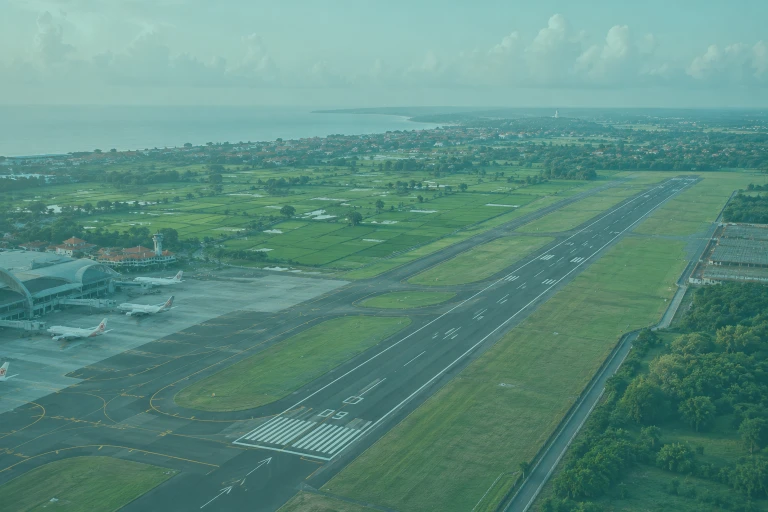
For all students: complete the All Indonesia arrival card within 72 hours before your flight and pay the Bali Tourist Levy before you land. Both are free, both are digital, and both save you real time at Ngurah Rai Airport.
If your visa situation has anything unusual (dual nationality, a prior overstay, a restricted passport), contact us before booking. Joga Yoga has had students from over 40 countries complete the program, and we can point you toward the right approach.