

You Don’t Need to Know Anyone to Do a YTT in Bali
Almost everyone who books a yoga teacher training in Bali books it alone. That’s not a minority experience or a brave exception. It is the norm. The people you’ll share a shala, three meals a day, and 21 days of intense practice with? Most of them booked solo too.
And yet the question “is it okay to go alone?” still makes solo travelers hesitate. Some wonder if they’ll feel out of place. Others worry about logistics: who picks them up at the airport, where they eat, what happens on days off when everyone else seems to already have plans.
Those are real concerns. They deserve real answers, not just a line that says “Bali is welcoming.”
This article is specifically for solo travelers, especially solo women, who are seriously considering a YTT at Joga Yoga in Canggu and want to know what the experience actually looks like before they commit.
Why Most YTT Students Travel Solo
YTT attracts people at transition points. Career changes. Burnout recoveries. A desire to go deeper in their practice. People at these moments usually don’t have a friend who is in the exact same place and wants to go to Bali for 21 days.
The solo travel rate at most Bali YTT programs is high. By most accounts, the large majority of students arrive without knowing a single person in the group. At Joga Yoga, graduates consistently mention that the cohort itself became the community. One Tripadvisor reviewer described her fellow students as “a tribe of open minded and wonderful girls that supports each other during and even after the YTT is over.” Another noted that “these people quickly became more than classmates — they became a community and friendships I will carry long after the training ended.”
The structure of residential YTT makes this almost inevitable. You live together, eat together, practice together, and go through the same physically and emotionally demanding experience side by side. It produces friendships faster than most other environments.
What Joga’s Residential Setup Actually Means for Solo Travelers
There is a real difference between a YTT where you source your own accommodation, food, and transport and one where all of it is handled before you land. For a solo traveler, that difference matters a lot.
Joga Yoga’s 200-hour YTT is fully residential. Here is what is included in the price regardless of accommodation tier:
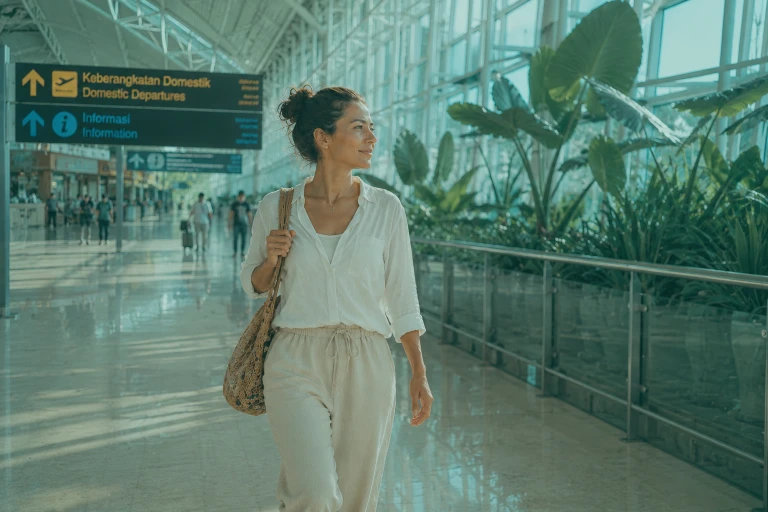
- Airport pickup: someone from Joga collects you directly. You don’t land in Denpasar and figure out transport alone.
- Accommodation on-site: dorm rooms or standard private rooms, both with AC, hot water, Wi-Fi, and access to the garden and pool. 22 nights included for residential options.
- Daily breakfasts and lunches: plant-based meals prepared at the shala. You eat with your cohort every day.
- Bali temple excursion: a group visit to a sacred water temple, followed by a sauna and cold plunge.
- Traditional Balinese massage: included as part of the program.
- All books and training materials: no scrambling for resources once you arrive.
For someone arriving alone to a new country, this is not a small thing. You step off the plane and someone is there. You don’t eat dinner by yourself wondering if you should try to find somewhere. You have a room, a schedule, and people around you from day one.
The residential model eliminates the logistical isolation that makes solo travel feel stressful. The cohort model eliminates the social isolation. Most Bali travel articles never explain this distinction clearly when discussing YTT for solo travelers.
Is Bali Safe for Solo Women?
Yes, and the evidence backs this up. Bali is consistently ranked among the safest destinations in Asia for solo female travelers. Violent crime is rare. Canggu, where Joga is based, is an established international community with a strong wellness infrastructure, good transport options via Grab and Gojek, and a large population of women traveling independently.
The specific concerns most solo women have before a YTT tend to be:
- Getting from the airport to the school safely on arrival
- Not knowing the area and feeling disoriented
- What to do on free time if the group disperses
- Whether the school environment itself is safe and well-run
The airport pickup handles the first two. Joga’s small class sizes, capped at 25 students, handle the fourth. Sunday free days, the one consistent day off per week, almost always end up as group activities by natural cohort momentum. The Bali temple excursion is a group event built into the schedule. By the time the first Sunday free day arrives, most solo travelers have already made plans with their cohort without needing to try very hard.
Canggu itself sits 1.4 km from Batu Bolong Beach and has everything accessible within a short walk or a quick Grab ride: cafes, co-working spaces, shops, and a lively wellness scene. It is not an isolated location.
What Day One Actually Looks Like
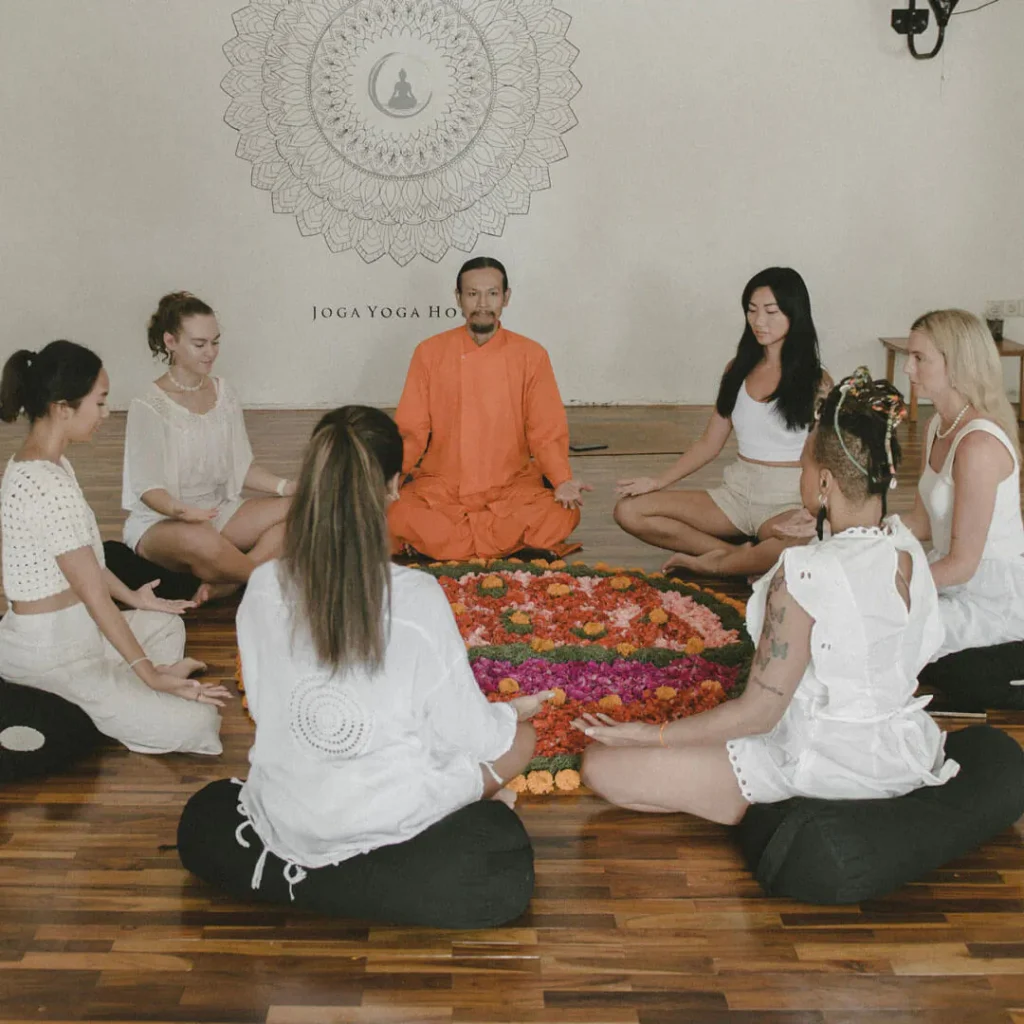
Joga asks students to arrive the day before the course starts. All students are invited to attend a traditional Balinese opening ceremony on the Sunday before training begins. For solo travelers, this matters: the first social moment happens before the training even starts, in a ceremonial context, not an awkward “introduce yourself” circle.
From the course start date, the daily schedule is structured and shared. Practice, lectures, meals, and practicum sessions all happen as a group. There is no day where you wake up and need to fill your own time from scratch.
The 200-hour program runs for 21 days. Saturdays are half days. Sundays are free. The rest of the week follows a full schedule from early morning through the afternoon. By week two, cohorts have typically formed real bonds, not just polite small talk, but people who spot each other in postures, debrief philosophy sessions together, and know each other’s yoga history.
Accommodation Options for Solo Travelers
Joga offers three tiers relevant to solo travelers. All residential options include 22 nights:
- Dorm room: shared accommodation with shower, AC, hot water, and Wi-Fi. Access to gardens and pool. Current price: IDR 36 million (approximately €1,799). This is the most social option and the best choice for solo travelers who want maximum contact with the cohort outside training hours.
- Standard private room: king-sized bed, private space, same facilities. Current price: IDR 52 million (approximately €2,599). Better for solo travelers who need recovery time alone between sessions but still want to be on-site.
- Non-accommodation: for solo travelers already based in Bali or staying nearby. Still includes breakfast, lunch, training materials, and the massage. Current price: IDR 33 million (approximately €1,650).
For first-time solo travelers to Bali, the dorm option does something the private room doesn’t: it extends the cohort experience into evenings and mornings. People talk. Plans form. The social layer builds faster when you’re physically sharing the same space.
A deposit of IDR 5 million (€260) secures your spot. If your dates change, Joga allows transfers to other dates within a year of payment.
The Cohort Is Not a Bonus. It’s the Point.
The cohort experience at a residential YTT is not just a pleasant side effect. For solo travelers, it is often the thing they remember most.
A 21-day intensive creates conditions that are hard to replicate in normal life. Everyone is going through the same physical demands, the same philosophical questions, the same moments of doubt and breakthrough. This shared experience does something to group dynamics quickly.
Joga’s reviews reflect this consistently. Students mention “the community and new yoga family” in review after review. One graduate described it plainly: “The friendship I gained is a tribe of wonderful girls that supports each other during and even after the YTT.” Another noted feeling “like a completely new person” specifically because the school made everyone feel at home, including those far from their families.
The cohort is capped at 25 students. That is small enough that everyone knows everyone by the end of week one. There is no back row to disappear into.
What to Do Before You Arrive
Sort your visa before you go. Indonesian visa regulations change periodically, and Joga’s FAQ page notes they have helped students navigate visa questions, so contact them directly if you have specific concerns. Arrive with travel insurance that covers the training period. The course is physically demanding. Injury is possible and a good policy is not optional.
Bring comfortable, breathable training clothes for multiple sessions per day. The shala has AC but Bali is hot and you will sweat through your kit. Light layers for evenings and the temple excursion are worth packing. A good notebook matters more than you might think. The philosophy and anatomy content is dense and worth recording.
Download Grab and Gojek before landing. They are the standard transport apps in Bali and far safer than negotiating with unmetered taxis. Joga handles the airport pickup, but having the apps installed means you can move independently on Sundays and free hours without needing to ask anyone.
The opening ceremony is Sunday evening before training starts. Arrive by Saturday at the latest. Some solo travelers arrive a day or two early to explore Canggu before the intensity begins. Batu Bolong Beach is a ten-minute walk. The surf breaks are good. The cafes are excellent. There are far worse ways to spend a Saturday.
Joga’s Instructors and What They Bring
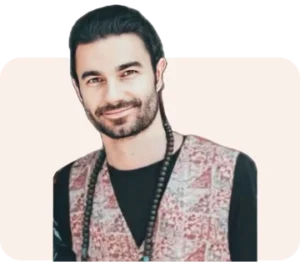
The teaching team at Joga is mixed in background and approach. Based on the live teachers page, the team includes Michelle (650-hour certified teacher, Vinyasa focus), Lena (gymnastics and stretching specialist), Dr. Sharma (Ayurveda and naturopathy), Gus Wira (Balinese teacher with yoga therapy focus), and Marylene (PhD in Osteopathy, yoga anatomy specialist). Joe, the founder, has studied yoga, music, and Chinese medicine for over a decade.
The mix of Indonesian, Indian, Western, and Ayurvedic perspectives is an advantage for solo travelers using the YTT to connect with something beyond their home practice. The local knowledge of teachers like Gus Wira, who grew up with yoga as part of family life in Bali, grounds the training in context that a studio back home simply cannot offer.
All instructors hold E-200hr or E-RYT 500hr Yoga Alliance certifications. The certification you earn is internationally valid. You can register as an RYT-200 and teach anywhere.
Common Questions from Solo Travelers
Will I feel left out if everyone else seems to know each other? Unlikely. Most students arrive not knowing anyone. The structure of residential training creates group dynamics fast. By day three, the cohort is usually functioning as a unit.
What if I’m the only solo traveler? There is no meaningful category of “solo traveler” once training starts. Everyone is in the same experience. Whether you arrived with a friend or alone stops mattering within a day or two.
Is the area around the school safe at night? Canggu is a well-established international area with active streets, good lighting on main roads, and a large expat and traveler population. Use Grab rather than unmetered taxis at night. Don’t walk alone on very quiet streets late. These are the same precautions you’d take in any unfamiliar city.
What if I find the training too intense and need to step back? The FAQ page indicates the team is responsive to student needs. Small class sizes mean instructors notice when someone is struggling. This is not a large anonymous program.
Can I arrive without any yoga teaching experience? Yes. Many students join for personal growth, not to immediately start teaching. Around 50% of Joga graduates join for self-development rather than certification. The training is challenging regardless of entry level, but it is not designed to exclude beginners.
The Case for Going Alone
Arriving alone to a YTT in Bali is not the harder path. In some ways it is the easier one. You are fully available to the experience. You don’t have a pre-existing social orbit that insulates you from the cohort. You don’t have a travel companion to retreat to when things get difficult. You have to be present with the group, and the group tends to make that easy.
Joga Yoga has been running programs in Canggu since 2017. Over 2,000 students have graduated. The reviews consistently describe the same thing: a tight cohort, good food, demanding training, and friendships that continue after the course ends. Solo travelers are not the exception to that experience. They are often the ones who describe it most vividly.
If you are ready to go, check the 200-hour YTT page for upcoming 2026 dates. Several months already have limited spots remaining. The registration page is where you secure your spot with a deposit.