


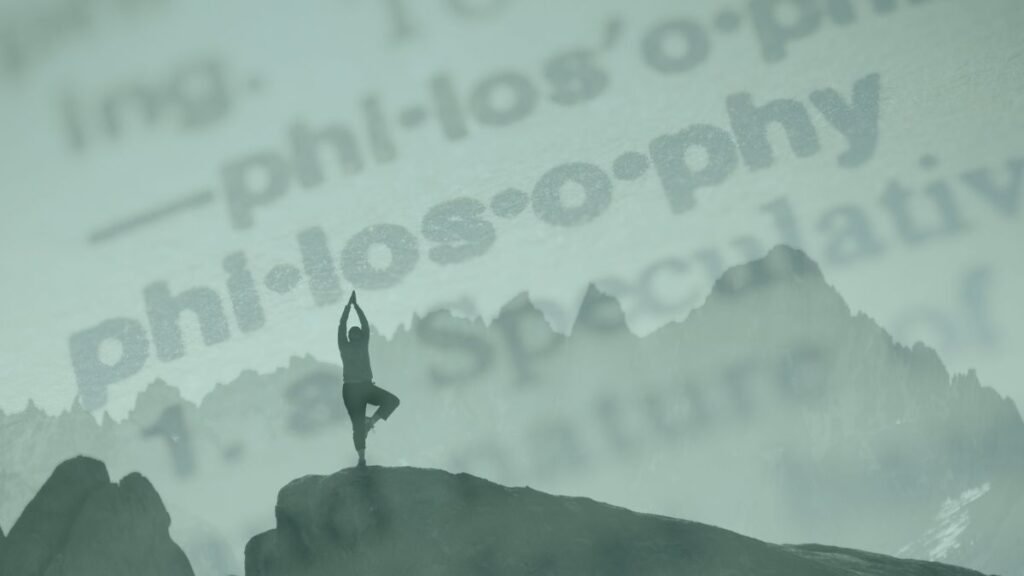
Yoga philosophy is a 5,000-year-old system of ethical and mental disciplines designed to control the mind and reduce human suffering. This guide covers the ancient history of yoga, the four key texts (including the Sutras), and how to apply the Yamas and Niyamas for mental clarity.
What is Yoga Philosophy?
Yoga philosophy is a framework of spiritual and practical rules from ancient India that aligns the mind and body. It focuses on removing mental distractions through ethical restraints (Yamas), physical discipline (Asana), and meditation (Dhyana).
Unlike modern exercise classes, traditional yoga is not just about stretching. It is a psychological system. The goal is to stop the chaos of the mind—known in Sanskrit as Chitta Vritti Nirodha—to achieve a state of pure awareness.
If you want to teach these principles, you need to understand the roots first. (Check our Yoga Teacher Training program for practical certification).
When Did Yoga Originate?
Yoga originated in Northern India over 5,000 years ago, around 2700 BCE. The earliest evidence of yoga appears in the Indus-Sarasvati civilization, where archaeological seals depict figures in meditative positions.
The practice wasn’t written down immediately. It was an oral tradition passed between teachers and students (Gurus and Shishyas) for centuries before being recorded in sacred texts (The Vedas, Upanishads, and Bhagavad Gita).
The Evolution of Yoga (Timeline)
Yoga changed drastically over three main eras.
| Era | Approximate Date | Key Characteristics |
| Pre-Classical | 2700 BCE – 500 BCE | Focused on rituals and sacrifices. First mentioned in the Rig Veda. |
| Classical | 500 BCE – 800 CE | Defined by Patanjali’s Yoga Sutras. Systematized into the “Eight Limbs.” |
| Modern Yoga | 1893 – Present | Introduced to the West by Swami Vivekananda. Focus shifts to Hatha yoga and physical fitness. |
Where Do the Ancient Roots of Yoga Come From?
The roots of yoga come from the Vedas, a collection of four ancient sacred texts used by Vedic priests.
The Rig Veda contains the oldest known mention of the word “yoga.” However, early yoga was different from what we see in studios today. It was focused on ritual sacrifice and controlling the senses, not handstands.
Sages (Rishis) developed these practices to answer tough questions about existence. They recorded their findings in the Upanishads, a collection of over 200 scriptures that explain three core concepts:
- Brahman: The universal consciousness.
- Atman: The individual self.
- Karma: The law of cause and effect.
Understanding this history proves that yoga is a mental discipline first, and a physical practice second.
What Are the Key Philosophical Texts?
The three most important texts in yoga philosophy are the Yoga Sutras of Patanjali, the Bhagavad Gita, and the Upanishads. These books provide the logic, ethics, and techniques required to master the mind.
While there are dozens of ancient manuscripts (Vedas, Puranas, Hatha Yoga Pradipika), these three form the “Great Trilogy” of yoga theory.
- The Yoga Sutras: The psychology manual. It explains how the mind works and how to control it.
- The Bhagavad Gita: The emotional guide. It explains why we suffer and how to act with duty (Dharma).
- The Upanishads: The metaphysical foundation. They explain the relationship between the self (Atman) and the universe (Brahman).
What Do the Yoga Sutras Teach?
The Yoga Sutras teach that yoga is the cessation of the fluctuations of the mind (Chitta Vritti Nirodha). Written by the sage Patanjali around 400 CE, this text organizes yoga into 196 specific aphorisms (short statements).
Patanjali didn’t write poetry; he wrote a technical manual. He breaks the practice down into four specific chapters (Padas):
- Samadhi Pada (Concentration): Defines yoga and the goal of enlightenment.
- Sadhana Pada (Practice): Outlines the tools you need, including the Eight Limbs.
- Vibhuti Pada (Powers): Describes the mental powers gained from intense focus.
- Kaivalya Pada (Liberation): Explains total freedom from the cycle of rebirth.
Most modern yoga classes focus solely on Asana (posture), but Patanjali mentions postures only three times in the entire text. His focus was the mind.
Why Is the Bhagavad Gita Important?
The Bhagavad Gita is important because it offers practical advice on how to live ethically in a chaotic world. It is a 700-verse conversation between Prince Arjuna and Lord Krishna set on a battlefield.
Arjuna doesn’t want to fight. He is paralyzed by doubt. Krishna teaches him three specific paths (Yogas) to overcome his fear and do his duty:
- Karma Yoga: The yoga of action. Do your job without attachment to the reward.
- Bhakti Yoga: The yoga of devotion. Surrender your ego to a higher power.
- Jnana Yoga: The yoga of knowledge. Use intellect to distinguish between reality and illusion.
If the Sutras are the “how-to” manual, the Gita is the motivation.
What Are the Eight Limbs of Yoga?
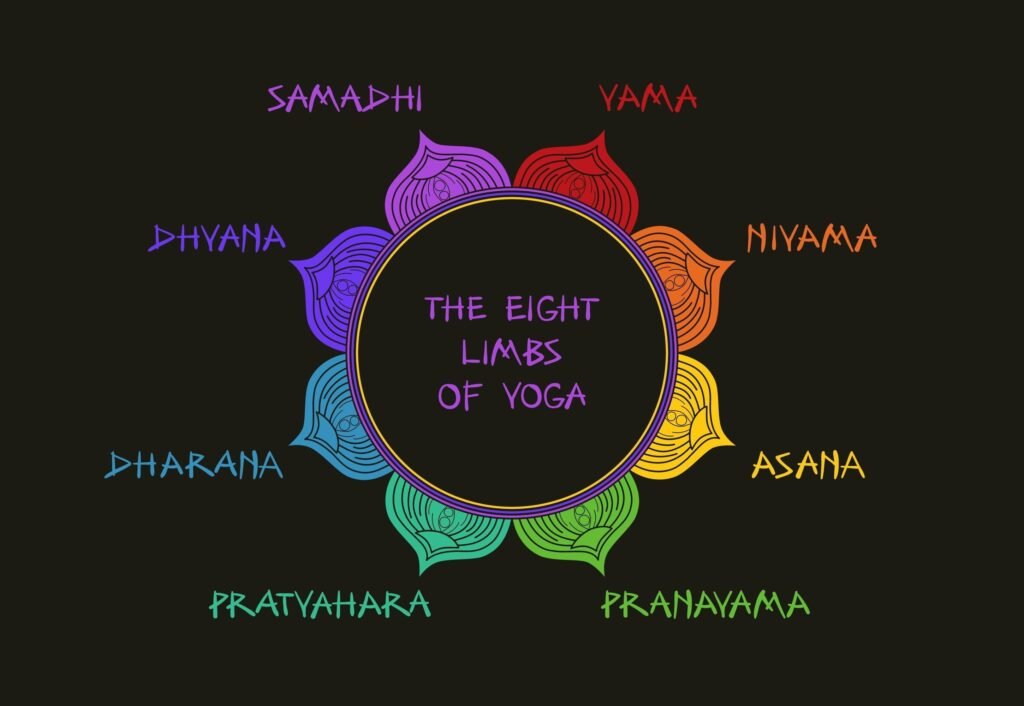
The Eight Limbs of Yoga (Ashtanga) are a step-by-step system outlined in the Sutras to move from distraction to enlightenment. You cannot skip steps; ethical behavior (Yamas) must come before physical practice (Asana).
Most people think yoga is just exercise. That is incorrect. Asana is only one-eighth of the system.
The 8 Limbs Breakdown
| Limb (Sanskrit) | Translation | Actionable Definition |
| 1. Yamas | Ethical Restraints | Rules for how you treat others (e.g., Don’t harm, don’t steal). |
| 2. Niyamas | Personal Observances | Rules for how you treat yourself (e.g., Cleanliness, discipline). |
| 3. Asana | Posture | Physical shapes to prepare the body for long periods of sitting. |
| 4. Pranayama | Breath Control | Regulating the breath to calm the nervous system. |
| 5. Pratyahara | Withdrawal | Shutting out sensory input (like closing your eyes) to look inward. |
| 6. Dharana | Concentration | Focusing the mind on one single point (a candle, a mantra). |
| 7. Dhyana | Meditation | Unbroken flow of concentration; the state of “being” aware. |
| 8. Samadhi | Absorption | Total merger with the object of meditation; pure bliss. |
Beginners should start with the Yamas and Niyamas. You can’t meditate effectively if your conscience is guilty or your life is chaotic.
What Are the Yamas and Niyamas?
The Yamas and Niyamas are the ten ethical commandments of yoga that dictate how you interact with the world and yourself. Think of them as the “Dos and Don’ts” of the practice.
Before you ever step on a yoga mat, Patanjali suggests you master these behaviors. If you can do a handstand but you lie to your boss, you aren’t practicing yoga; you’re just doing gymnastics.
There are 5 Yamas (Restraints) and 5 Niyamas (Observances).
The 5 Yamas (Social Ethics)
These rules control your interactions with others.
| Yama (Sanskrit) | English | Definition | Real-World Application |
| Ahimsa | Non-Violence | Do not harm any living thing in thought, word, or deed. | Stop negative self-talk or gossiping about coworkers. |
| Satya | Truthfulness | Speak the truth, but do it with kindness. | Admit when you make a mistake instead of covering it up. |
| Asteya | Non-Stealing | Do not take what isn’t yours (including time or credit). | Don’t take credit for a team member’s idea. |
| Brahmacharya | Moderation | Manage your energy and impulses. | Put the phone away an hour before bed; don’t binge-eat. |
| Aparigraha | Non-Greed | Do not hoard or possess more than you need. | Declutter your closet; stop buying things to impress others. |
The 5 Niyamas (Personal Ethics)
These rules control your relationship with yourself.
| Niyama (Sanskrit) | English | Definition | Real-World Application |
| Saucha | Purity | Cleanliness of the body and mind. | Eat clean food and keep your living space tidy. |
| Santosha | Contentment | Being happy with what you have right now. | Stop comparing your life to Instagram influencers. |
| Tapas | Discipline | The “heat” built through difficult practice. | Do the hard work even when you don’t feel like it. |
| Svadhyaya | Self-Study | Analyzing your own motives and thoughts. | Journaling or reading sacred texts (Gita, Sutras, Bible). |
| Ishvara Pranidhana | Surrender | Letting go of the ego and trusting the outcome. | Do your best work, then let go of the result. |
How Do I Practice Yoga Philosophy Daily?
You practice yoga philosophy daily by applying the Yamas and Niyamas to small decisions, not just during meditation.
You don’t need a cave in the Himalayas. You need awareness. Here is how to apply these concepts using simple “If/Then” logic:
- Traffic: If someone cuts you off, and you want to scream, practice Ahimsa. Take a breath and let it go.
- Work: If you are tempted to lie to a client to save face, practice Satya. Tell the truth immediately.
- Anxiety: If you are worried about the future, practice Ishvara Pranidhana. Focus on what you can control and surrender the rest.
- Impulses: If you want to scroll social media for 3 hours, practice Brahmacharya. Set a timer and stop.
Yoga is 99% practice and 1% theory.
Conclusion
Yoga philosophy is a practical system for mental control, not just a workout. By understanding the history, studying the key texts (Sutras, Gita), and applying the 8 Limbs, you build a life of purpose rather than reaction.
Key Takeaways:
- It’s Old: Roots go back 5,000+ years to the Indus Valley.
- It’s Structured: The 8 Limbs provide a clear roadmap from ethics to enlightenment.
- It’s Ethical: The Yamas and Niyamas are the foundation of all practice.
Start with the ethics. Be kind (Ahimsa) and be honest (Satya). The rest will follow.
Frequently Asked Questions (FAQs)
What are the main books of yoga philosophy?
The main books are the Yoga Sutras of Patanjali, the Bhagavad Gita, and the Upanishads. The Sutras provide the method (8 Limbs), the Gita provides the motivation (Karma Yoga), and the Upanishads provide the metaphysical theory (Atman/Brahman).
What are the 8 limbs of yoga in order?
The 8 limbs are Yamas, Niyamas, Asana, Pranayama, Pratyahara, Dharana, Dhyana, and Samadhi. They move from external ethics (Yamas) to physical discipline (Asana) and finally to internal mental absorption (Samadhi).
Is yoga a religion?
No, yoga is not a religion; it is a philosophy and psychological system. While it has roots in Hinduism and Vedic tradition, the practices of ethics, breathwork, and concentration can be applied by anyone, regardless of their religious beliefs.
What is the goal of yoga?
The goal of yoga is Kaivalya (liberation) or Samadhi (enlightenment). It aims to stop the fluctuations of the mind (Chitta Vritti Nirodha) so the practitioner can see reality clearly without the distortion of the ego.