



Generic YTT packing lists read the same regardless of destination. Yoga clothes, sunscreen, a notebook. That’s fine as a starting point. It’s useless as a guide to Canggu specifically.
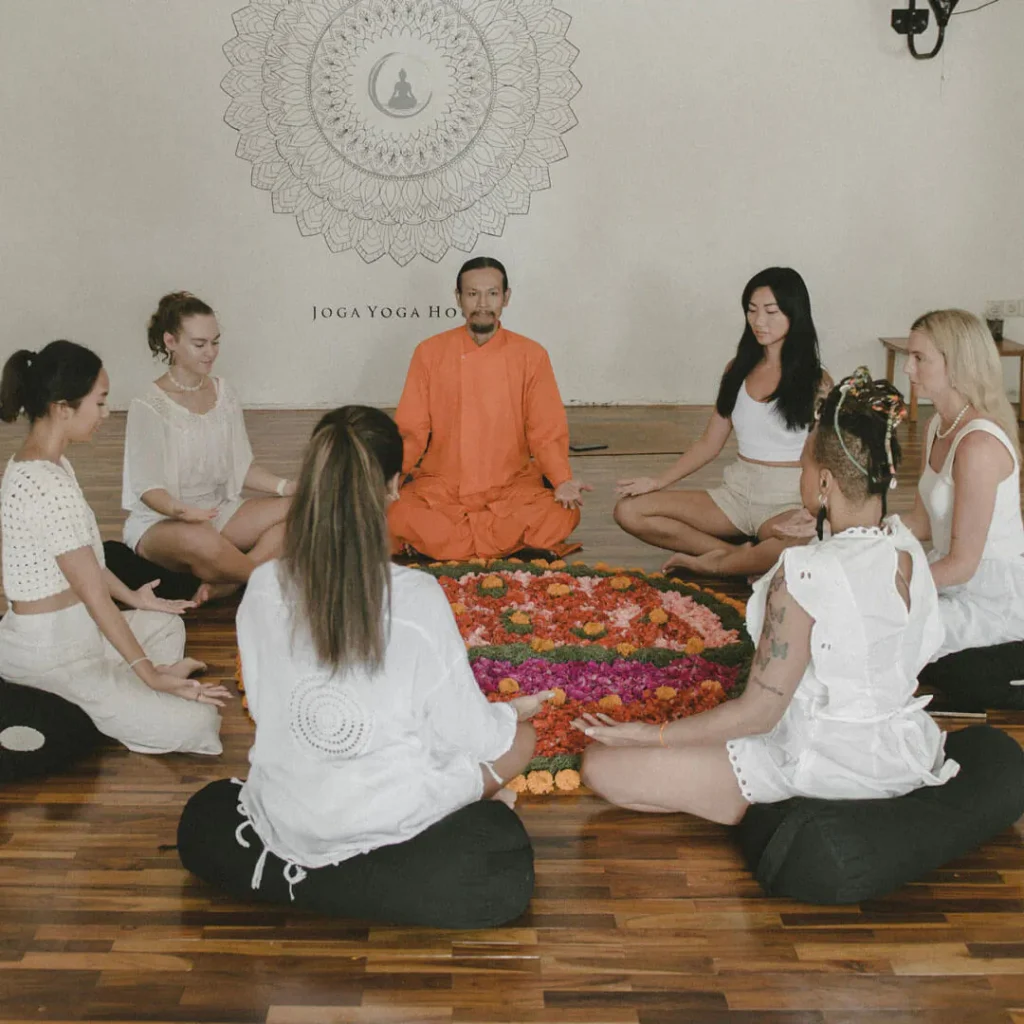
This guide comes from three weeks living and training at Joga Yoga Training, a Yoga Alliance Registered Yoga School in Canggu, Bali. The tap water near the coast affects your hair and skin in ways nobody mentions. Some things you’d assume are hard to find are actually everywhere, under local brand names you just need to know. And there are a handful of things worth bringing from home that no other list covers.
It’s organised by what to bring from home, what to buy locally (with exact brand names), and what not to bother packing at all.
Before you pack: the humidity reality
Canggu’s average relative humidity ranges from about 83 to 87 percent across the year, staying high whether you land in dry season or wet. At that level, moisture-wicking fabric doesn’t wick. It just holds sweat slightly better than cotton. Joga Yoga Training’s 200-hour course runs two to three practice sessions a day, and by the end of the first block your clothes are soaked. By the second, they’re saturated. On a normal training day you’ll go through two full outfits before lunch.
Drying time depends on how you wash. Machine-washed clothes hung in direct sun during the dry season (April to September) dry in under a day. Hand-washed items take a full day in sun. During the wet season (October to March), when cloud cover is less predictable, add more time. Joga Yoga Training runs six practice days a week, with Saturday as a half day and Sunday free. That’s your real laundry window, not a squeezed hour after a full day of practice. The “pack seven outfits and wash twice a week” approach that works in Europe needs recalibrating here. Ten to twelve sets of activewear is the right number, not the five or six most lists suggest.
The 200-hour program runs 21 days, with accommodation packages covering 22 nights when you book a room. That’s the number to plan your packing around, not the “three-week trip” shorthand you’ll see elsewhere.
Bring from home
These are items either unavailable or hard to source in Canggu, or things where timing matters and you need them before you arrive.
Probiotics
Bali Belly hits roughly 30 to 40 percent of first-time visitors to Indonesia, according to BIMC Hospital Bali. A systematic review of randomised trials found that Saccharomyces boulardii (SB) is among the probiotic strains with real evidence behind it for preventing traveller’s diarrhoea, unlike many probiotics sold as general gut-health supplements. Starting a course in the days before you fly, rather than waiting until you land, is the more common approach among travellers who use it. It’s not a guarantee, and it’s not interchangeable with any other probiotic strain. Check with your own doctor if you’re on other medication.
For daily gut support once you arrive, Yakult is sold in every minimart and small local warung in Canggu. It’s cheap, widely available, and worth adding to your routine alongside whatever you brought from home.
Conditioner and specific hair products
Shampoo is everywhere in Bali. Conditioner, particularly anything formulated for colour-treated, blonde, or fine hair, is much harder to find. The local apotek (pharmacy) stocks basic variants but nothing specialised. Bring enough for the full three weeks.
There’s a Canggu-specific reason this matters more than it would elsewhere. The tap water is high in minerals and, being close to the coast, carries more salt content than areas further inland. Washing your hair in it regularly makes it noticeably drier. Some people also find it triggers breakouts, particularly on the face. If your accommodation doesn’t use a filtered water system, ask when you arrive, and use bottled water for face washing in the meantime. Bring your regular conditioner and any leave-in treatment you rely on.
Tampons
Sanitary pads are widely available across Canggu. Tampons exist but are hard to find in the sizes and brands you might be used to. If you use tampons, bring more than you think you need for the full three weeks.
A dedicated journal
Different from your class notes notebook. Training surfaces things. The philosophy content, the Balinese ceremonies, meditation led by Dada, a practising monk on the Joga Yoga Training teaching team: students consistently report experiences they want to process on paper rather than a phone screen. A quality journal earns its space. It won’t feel necessary until day four, and then it will feel essential.
A rain poncho
If you’re training during the wet season (October to March), pack one. Bali’s rain is heavy, appears suddenly, and lasts 30 to 90 minutes. It doesn’t affect the training schedule, but it does affect weekend activities and any temple excursion. A packable poncho weighs almost nothing.
Buy in Bali (don’t pack these)
These items are well-stocked in Canggu, often under local brand names that are just as effective as what you’d bring from home, and cheaper.
Antifungal products
This is the item no packing list mentions, and the one most likely to matter by week two. Bali’s heat and humidity create ideal conditions for fungal skin infections, particularly in skin folds and anywhere activewear sits against the body for hours. Medical clinics in Bali treat this routinely.
The good news is that antifungal products are easy to find at any apotek in Canggu. Local brands to look for: Canesten, Fungiderm, and Neo Ultrasiline (all clotrimazole), and Daktarin (miconazole). Any of these work. Pick one up on arrival and use a small amount on high-sweat areas before practice during the first two weeks.
Muscle rub
Your body will be doing things it hasn’t done at this volume before. Hip flexors, hamstrings, and wrists take the most load in week one. You don’t need to pack Tiger Balm from home. Indonesian equivalents are available at every apotek and most minimarts: Counterpain (cool variant for acute pain, hot variant for deeper soreness), Salonpas gel or heat patches, Balsem Geliga (a classic Indonesian muscle balm), and Vicks VapoRub if you want an aromatherapy effect. Balsem Lang is another option with warming and calming properties. Buy on arrival.
Electrolyte drinks
You don’t need to pack ORS sachets. Pocari Sweat, the most widely recognised electrolyte drink in Indonesia, is in every minimart, Circle K, and local warung in Canggu. Fresh coconut water is also everywhere and works well. This is one category where your luggage space is better used elsewhere.
Sarong
You’ll need one for the Sacred Water Temple excursion and for any temple visit during your stay. Don’t pack one from home. Krisna Oleh-Oleh, a chain of Balinese souvenir and textile shops with several outlets across Bali, is the best place to buy. Prices are fixed and displayed, the selection is wide, and quality is reliable. Beach sarongs run roughly 40,000 to 80,000 IDR (about €2 to €5). Small street stalls also sell them but require negotiating on price.
Mosquito repellent
Available at every minimart and Circle K in Canggu, significantly cheaper than at home. DEET-based sprays work best against Bali’s mosquitoes. Buy on arrival.
Casual clothes
Canggu has excellent, inexpensive clothing. Linen trousers, loose dresses, and easy daywear cost half what you’d pay for equivalent quality at home. Pack two or three casual outfits for evenings and free Sundays. You’ll likely add to them locally anyway. As Anna Michelle Kapstad, a designer from Norway who graduated in December 2023, put it in her Joga Yoga Training review, much of her month outside class time went to “surfing on the weekends.”
Sort out connectivity, cash, and getting around before you land
eSIM (best option)
Buy a Bali or Indonesia eSIM through Klook before your flight. You activate it on the plane and have connectivity the moment you land, without hunting for a SIM booth at the airport. Options on Klook start from around €5 to €8 for 30 days of data. Your cohort will use WhatsApp for everything from day one, so being connected immediately matters.
Physical SIM (alternative)
Telkomsel and XL Axiata SIM booths are at Ngurah Rai Airport if you prefer a physical card. A 30GB prepaid SIM runs roughly 100,000 to 120,000 IDR (about €6). Fine option if your phone doesn’t support eSIM.
Cash and cards
Bring some rupiah cash for warungs, small purchases, and scooter rentals. Many ATMs charge a withdrawal fee for foreign cards, roughly 20,000 to 75,000 IDR depending on the bank, though BCA and BNI machines are usually fee-free. A no-foreign-transaction-fee card is worth having for larger purchases either way. Tell your bank you’re travelling before you leave. An unexpected card block on day two of training is a bad way to start.
Getting around
Download Gojek and Grab before you land. Both work like ride-hailing apps and are widely used across Bali, including Canggu. A few local pickup and drop-off spots are restricted because of agreements with traditional ojek and taxi drivers, so don’t be surprised if a driver asks you to walk a short distance to a main road. A scooter rental is common among longer-stay students, but factor in Bali’s traffic and left-hand-side driving if you haven’t ridden one before.
The yoga kit
Check with Joga Yoga Training before you fly to confirm what’s supplied for your specific package.
Activewear: 10 to 12 sets minimum
Shorts over leggings: full-length leggings in 30°C heat and 85 percent humidity are uncomfortable for a five-hour practice day. Built-in bra tops reduce layers. This number sounds excessive until you’re on day three with no dry kit.
Yoga mat
Many Bali YTTs supply mats, blocks, and straps, but confirm with Joga Yoga Training directly rather than assuming. If you have a mat you’re attached to, bring it. Otherwise, don’t carry the weight. A lightweight travel mat makes more sense than a full-size mat for a three-week trip either way.
Two microfibre towels
One for the mat, essential during morning Vinyasa. One for yourself. Microfibre dries faster than cotton in humid conditions, which matters when you’re practising more than once a day.
Water bottle (1 litre minimum)
Joga Yoga Training provides purified drinking water on site. A refillable stainless steel or BPA-free bottle is the right call. Single-use plastic bottles over three weeks is expensive and wasteful.
Shawl or thin blanket
For candlelight Yin Yoga, Savasana, and early morning meditation sessions. A lightweight cotton shawl packs flat and gets used daily.
Two notebooks and multiple pens
One for class notes: anatomy, philosophy, sequencing, Sanskrit terms. You’ll cover a lot of ground. One for personal reflection, or use the dedicated journal above for this. Humidity warps cheap notebook covers and ink bleeds on low-quality paper. Use something decent.
Portable charger
You’ll want a charged phone for sequencing playlists during practicum and for photos on excursion days. A portable charger covers you when an outlet isn’t nearby.
What Joga Yoga Training includes
Joga Yoga Training’s 200-hour package includes 22 nights of accommodation when you book a room, daily vegetarian or vegan breakfast and lunch, a traditional Balinese massage, the excursion to the sacred water temple, sauna and cold plunge access, and community extras such as bonfire nights and kirtan music. You don’t need to pack books, yoga props, or bath towels for the shala. The accommodation guide breaks down all five room options, from non-accommodation to a private villa room, if you’re still deciding what to book.
Leave at home
Extra shoes. People arrive with two or three pairs and use one. Flip flops get you from villa to shala. Sandals cover evenings and weekend activities. Trainers sit in the bag for three weeks, take up space, and leather ones grow mould. One pair of flip flops and one pair of supportive sandals is the complete footwear requirement for a Canggu YTT.
Also skip: a yoga mat if you haven’t confirmed you need one, heavy toiletries available everywhere in Bali, and anything packed “just in case” with no specific scenario in mind.
Quick-reference checklist
Bring from home
- SB probiotics, started a few days before you leave
- Conditioner and any specific hair products
- Tampons, if you use them
- A dedicated journal
- Rain poncho, if arriving October to March
Yoga kit from home
- 10 to 12 activewear sets, shorts-heavy
- Two microfibre towels
- 1-litre water bottle
- Shawl or thin blanket
- Two notebooks and multiple pens
- Portable charger
Sort before you land
- eSIM via Klook
- A no-foreign-transaction-fee card
- Gojek and Grab apps installed
Buy on arrival in Bali
- Antifungal cream (Canesten, Fungiderm, Neo Ultrasiline, or Daktarin)
- Muscle rub (Counterpain, Salonpas, or Balsem Geliga)
- Sarong from Krisna Oleh-Oleh
- Mosquito repellent
- Pocari Sweat for daily electrolytes
- Yakult for gut support
- Any casual clothes you still need
Don’t pack
- Extra shoes
- A yoga mat, until confirmed with Joga Yoga Training
- ORS sachets
- Tiger Balm
- Sunscreen
Frequently asked questions
Do I need to bring my own yoga mat to Joga Yoga Training?
Confirm with Joga Yoga Training directly before you fly, since this depends on your package. If you’re attached to a specific mat, a lightweight travel mat makes more sense than a full-size mat for a three-week trip.
How many yoga outfits should I pack for a 21-day Bali YTT?
Ten to twelve sets minimum. You’ll go through two outfits a day in the heat. Machine-washed clothes dry in under a day in direct sun during the dry season, but hand-washed items take longer, and the wet season is less predictable. Saturday’s half day and Sunday’s free day are your real laundry windows.
Can I buy toiletries and health products in Canggu?
Yes, more than most guides suggest. Antifungal creams, muscle rubs, electrolyte drinks, mosquito repellent, and basic toiletries are all well-stocked at local apotek and minimarts, often under Indonesian brand names. The things that are actually harder to find: conditioner for specific hair types, tampons, and any medication or supplement with a specific formulation.
Should I bring cash or use cards in Bali?
Both. Rupiah cash is needed at local warungs, markets, and for scooter rentals. Many ATMs charge a fee for foreign cards, though this varies by bank. Bring some EUR or USD to exchange at a reputable money changer, and use a no-foreign-transaction-fee card for larger purchases.
What do I wear for the Sacred Water Temple ceremony?
Modest clothing plus a sarong wrapped over it. You’ll be briefed before the excursion. Buy the sarong in Bali when you arrive, ideally from Krisna Oleh-Oleh for fixed pricing and good selection. Don’t pack one from home.
For the full picture of what a training day looks like, read what to expect at Joga Yoga Training. If you’re still working through the rest of your pre-arrival checklist, the pre-arrival preparation guide covers what this one doesn’t.
Ready to train in Bali?
Join Joga Yoga Training’s Yoga Alliance certified 200-hour course in Canggu.
Apply Now