

For yoga instructors in Shanghai and Beijing, the local market is saturated. To stand out in 2026, you don’t just need a certificate; you need an international edge.
The domestic fitness industry in China is facing a period of “Neijuan” (involution)—intense competition where instructors work harder for diminishing returns. In Tier 1 cities, hundreds of new teachers graduate every month from local studios, all competing for the same jobs.
This is why a new wave of forward-thinking students is choosing Bali not just for a holiday, but for a strategic career upgrade. By training overseas, you gain a unique selling point that local graduates lack: Global Perspective.
A 200-Hour Yoga Teacher Training in Bali is no longer just a retreat; it is a vocational investment. It separates you from the “factory-style” certifications common in the domestic market and positions you as a premium instructor capable of bridging Eastern tradition with Western teaching methodologies.

The “Yoga English” Advantage: Double Your Teaching Value
The single biggest differentiator for a yoga teacher in China today is the ability to teach in English.
High-end studios in Shanghai (such as Pure Yoga) and international hotel gyms often require bilingual capabilities. Instructors who can confidently cue in English command rates that are higher than their monolingual peers. This skill allows you to tap into the lucrative expat market in China, which is often untouched by local teachers.
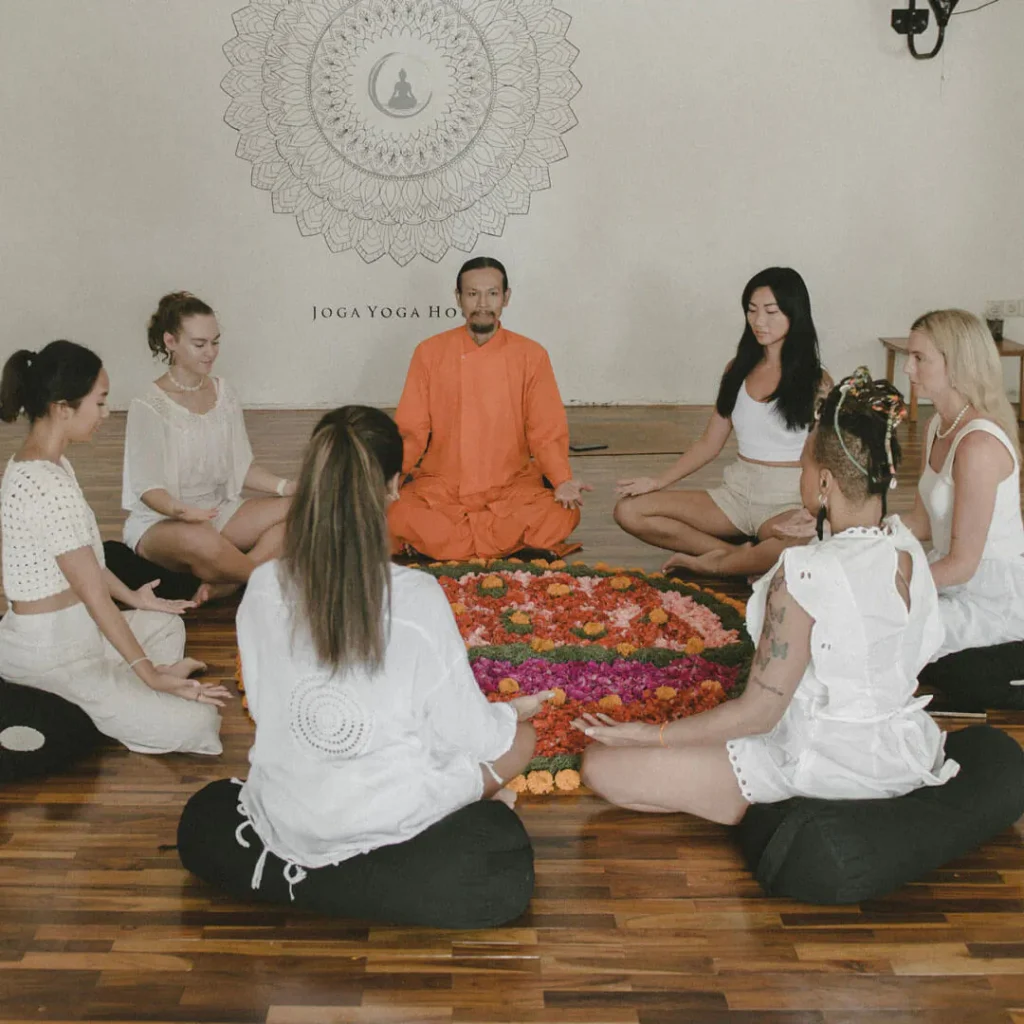
At Joga Yoga, our curriculum is designed to make you bilingual. We don’t just teach you the poses; we teach you the precise Sanskrit and English cues used in top studios worldwide.
Why this matters for your career:
- Escape the “Neijuan”: While others compete on price, you compete on quality and language skills.
- Global Validity: A Yoga Alliance certification obtained in English is universally accepted, whereas many domestic Chinese certificates are difficult to verify abroad.
- Market Growth: The demand for wellness is growing, but the opportunities for teachers are shifting toward those who can serve a global clientele.
Bali vs. Domestic Chinese Training: A Reality Check
Many students assume that staying in China is the “safer” or cheaper option. However, when you analyze the cost of yoga teacher training and the value provided, the reality is often the opposite.
In Tier 1 cities like Shanghai or Beijing, high rental costs drive up tuition fees, yet students often still have to commute from their own apartments, dealing with daily traffic and pollution. In contrast, a destination training in Bali offers an all-inclusive immersion where your living costs are significantly lower, and your environment supports your practice.
Here is how a standard domestic certification compares to the Joga Yoga experience:
| Feature | Domestic Training (Beijing/Shanghai) | Joga Yoga Training (Bali) |
| Certification | Often studio-specific or local association (Hard to verify abroad). | Yoga Alliance (USA) International RYT-200 Designation. |
| Language | Mandarin only (limits career to China). | English Immersion (Bi-lingual cues open global career paths). |
| Environment | Indoor studios, AC, urban pollution (High AQI). | Open-air shalas, Canggu’s tropical nature, fresh ocean air. |
| Living Mode | Commuter: You go home to daily stress/distractions. | Residential: You live on-site, eating Sattvic food and focusing 100% on yoga. |
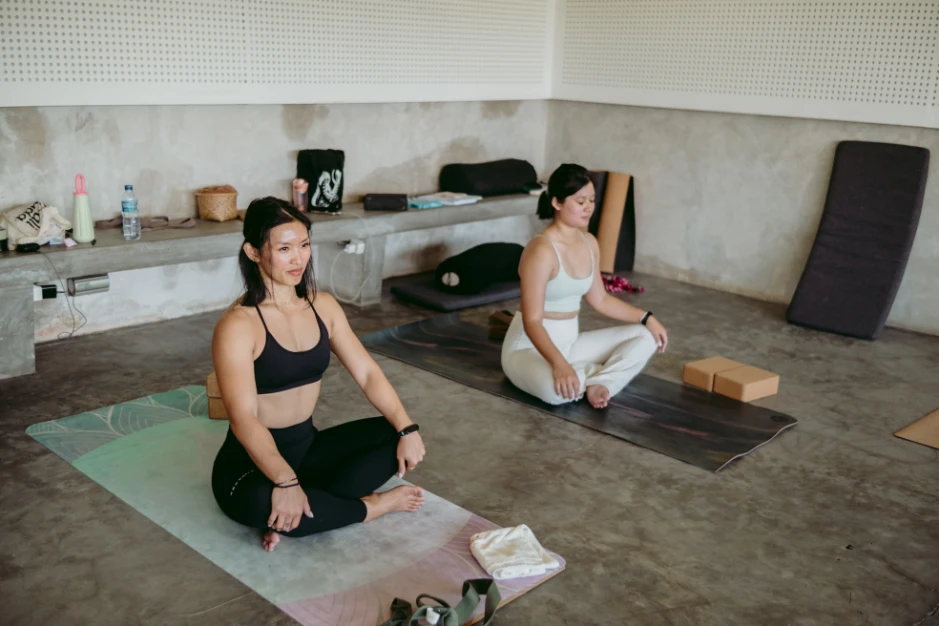
| Class Size | Large groups (30-50 students) are common to maximize profit. | Intimate: Small groups (Max 16) for personalized adjustments. |
| Total Value | High tuition + high city living costs. | Affordable tuition + low cost of living = Higher ROI. |
From “Studio Apartment” to “Tropical Sanctuary”
The most significant difference isn’t just the certificate; it is the state of mind. In a domestic training, you are often rushing from the subway to the studio, still entangled in the “996” energy of the city.
At Joga Yoga, the “commute” is a walk through a tropical garden. This shift from a high-stress environment to a nervous system reset allows you to absorb complex philosophy and anatomy much faster. You aren’t just memorizing poses; you are living the lifestyle that your future students will want to learn from you.
The “Detox” Factor: Escaping the 996 Grind
In the high-pressure work culture of Tier 1 Chinese cities, “996” (working 9am to 9pm, 6 days a week) has become the norm. This relentless pace depletes your Prana (life force), leaving many aspiring teachers in a state of chronic burnout.
You cannot heal others if you are depleted yourself.
A crucial part of becoming a yoga teacher is learning how to regulate your own nervous system. It is difficult to learn stress relief techniques when you are breathing air with a high PM2.5 index and hearing city traffic during Savasana.
Bali offers the Spiritual Infrastructure that modern metropolises lack. The island operates on the philosophy of Tri Hita Karana (harmony with God, nature, and people). This isn’t just a backdrop; it’s a teaching tool.
- Nature Immersion: Instead of a studio mirror, you practice facing rice fields or the ocean, which naturally lowers cortisol levels and deepens your focus.
- Mental Clarity: The separation from your daily grind allows you to process anxiety and depression through your practice, giving you the authentic experience needed to guide future students through their own mental health battles.
Visa & Travel Logistics for Chinese Citizens (2026 Update)
Traveling to Bali is significantly easier than obtaining a visa for Europe or the USA. Indonesia actively welcomes Chinese tourists and students with streamlined entry policies.
1. Visa on Arrival (VoA) – Fast & Easy
Chinese citizens do not need to apply for a visa at an embassy beforehand. You can obtain a Visa on Arrival (VoA) immediately upon landing at Ngurah Rai International Airport (DPS).
- Cost: IDR 500,000 (approx. 230 RMB).
- Validity: 30 days initial stay + one-time extension for another 30 days (Total 60 days).
- Tip: You can now apply for the Electronic Visa on Arrival (e-VoA) online 14 days before your flight to skip the queue at the airport.
2. Direct Flights from Major Hubs
You can fly directly to Denpasar (DPS) without long layovers. Major carriers like China Eastern and China Southern operate frequent routes:
- Shanghai (PVG) to Bali: ~6.5 hours direct flight.
- Guangzhou (CAN) to Bali: ~5.5 hours direct flight.
3. Zero Jet Lag (Same Timezone)
One of the biggest hidden advantages of choosing Bali over India or Europe is the timezone. Bali (WITA) shares the exact same timezone as Beijing (GMT+8).
- Benefit: You land and immediately start your training the next morning without fatigue or sleep disruption.
- Productivity: You remain in sync with your family or business contacts back in China, making it easier to manage your life while you study.
Will My Certification Be Recognized in China?
The short answer is: Yes.
In fact, an international certification is often more valuable than a domestic one.
The Yoga Alliance (USA) is the global gold standard for yoga credentialing. In 2025, Yoga Alliance officially established its presence in the Chinese market to combat piracy and standardize education. This means your RYT-200 status is not only verifiable globally but is now easily searchable by Chinese studio owners on the official Chinese-language interface.
Why Chinese Studio Owners Prefer “Bali Graduates”
- Verification Trust: Unlike some local certificates that can be printed without regulation, a Joga Yoga certificate requires you to complete a rigorous 200-hour curriculum verified by an RYS (Registered Yoga School).
- The “Master” Status: In the Chinese fitness market, teachers who have trained abroad are perceived as having closer ties to the “source” of yoga.
- Career Flexibility: With an RYT-200, you are not tied to one studio’s lineage. You can teach freelance, open your own shala, or teach online to international clients.
Pro Tip: Upon graduation, you can register your profile immediately on the Yoga Alliance website. This “Digital Badge” is your passport to teaching at premium chains like Pure Yoga or high-end hotel wellness centers in Shanghai and Shenzhen.
How to Join Our Next Intake
The transition from a “Yoga Enthusiast” to a “Global Yoga Teacher” begins with a single decision.
We deliberately keep our class sizes small (maximum 16 students) to ensure every student receives personalized attention—especially those learning in their second language. Because of this, our upcoming 2026 intakes fill up months in advance, particularly around Chinese New Year and Golden Week.
Don’t let the “Neijuan” define your future. Escape the competition and build a career that offers freedom.
- Step 1: Check your dates and secure your spot with a deposit.
- Step 2: Book your flight to Denpasar (DPS).
- Step 3: Pack your bags—we handle the accommodation, food, and training.