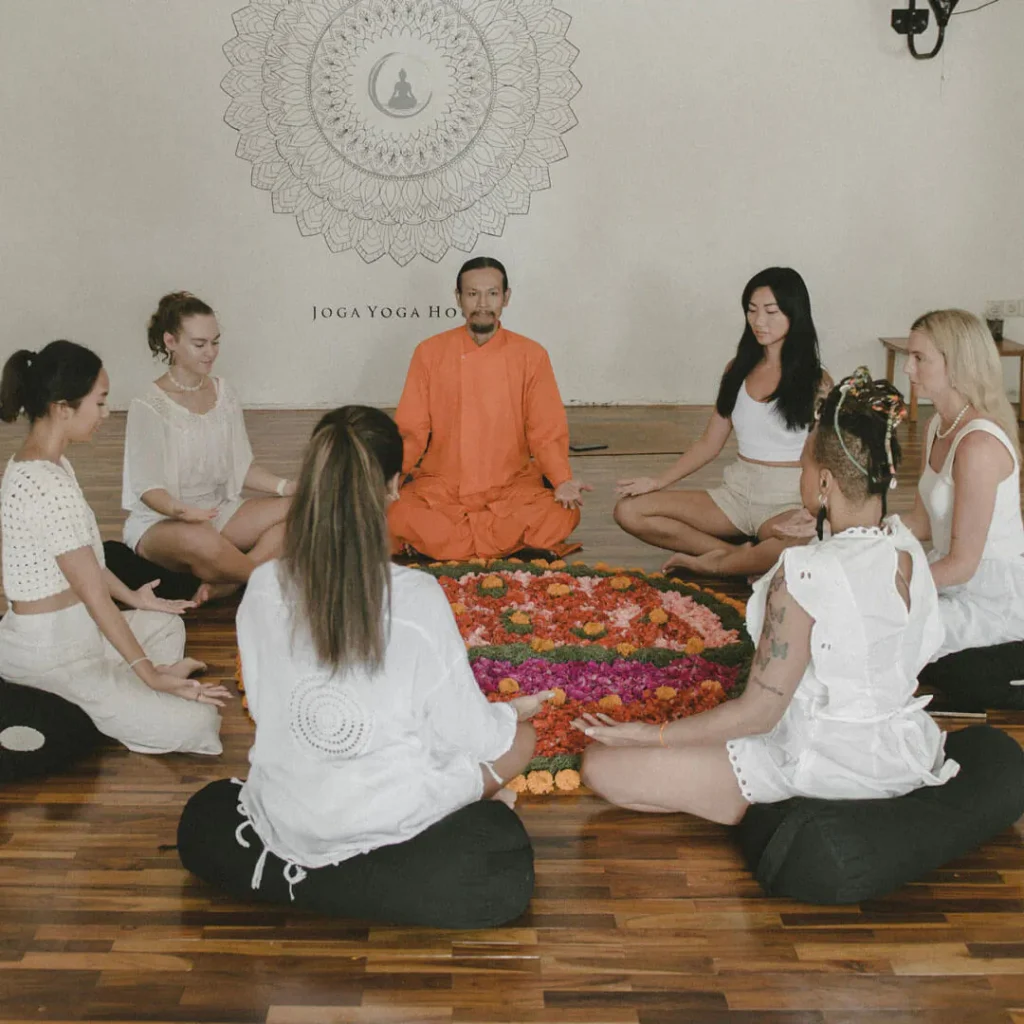




Yoga Teacher Training, or YTT, is a structured program that helps you deepen your practice, understand yoga beyond poses, and build the skills to teach if that is your goal. If you have seen terms like 200-hour YTT, RYT 200, or Yoga Alliance certification and wondered what they actually mean, this guide breaks it down clearly.

What does YTT mean in yoga?
YTT stands for Yoga Teacher Training, a guided course that teaches postures, breathwork, anatomy, philosophy, and teaching skills so students can either become yoga teachers or deepen their own practice in a more serious way.
YTT is not just about learning how to cue a class. A strong training gives you a wider understanding of how yoga works in the body, how it is rooted in philosophy, and how to practise with more awareness. According to Yoga Alliance’s school directory, most students first encounter YTT through a registered 200-hour training, which is the standard foundation for new teachers.
A typical YTT includes:
- asana and alignment
- pranayama and breath awareness
- meditation
- anatomy and safe movement
- philosophy and ethics
- sequencing and teaching practice
Why do people do YTT if they do not want to teach?
Many people join YTT for personal growth, self-discipline, and deeper understanding because the experience offers far more structure and depth than regular yoga classes, even if they never plan to teach a single class afterward.
That is one of the biggest misconceptions around YTT. Plenty of students join because they want clarity, confidence, and a stronger connection to yoga, not because they want a job title. Joga sees this often, and the article on the benefits of yoga teacher training explains why so many students treat the training as a turning point in their personal life first and a professional qualification second.
Students often choose YTT because they want to:
- understand yoga beyond movement
- improve their own practice safely
- build routine and focus
- explore philosophy in a practical way
- spend time in a supportive wellness community
How is YTT different from a yoga retreat or regular class?
YTT is a structured educational training, while a retreat is usually focused on rest and experience, and a regular class is designed for ongoing practice rather than deep study or certification.
The difference comes down to purpose. A weekly class helps you maintain practice. A retreat gives you space to pause. YTT asks you to study, reflect, practise, and often teach.
| Format | Main purpose | Typical length | Main outcome |
|---|---|---|---|
| YTT | Study and teacher development | 3 to 4 weeks intensive or longer part-time | Knowledge, skills, and possible certification |
| Yoga retreat | Rest and renewal | A few days to 1 week | Recovery and inspiration |
| Regular yoga class | Ongoing practice | 60 to 90 minutes | Consistency and fitness |
If you are deciding between those paths, Joga’s guide to yoga retreat vs yoga teacher training is useful because it compares them by real intent rather than by marketing language.
How does yoga teacher training work in 2026?
In 2026, most yoga teacher trainings still follow the same core study areas, but students now have more format choices, including immersive in-person programs, flexible online options, and hybrid models that blend both.
The structure is still familiar across most credible schools. The usual pillars are techniques and practice, teaching methodology, anatomy, philosophy, and practicum. Yoga Alliance’s standards for registered schools also show that registered programs are expected to assess skills and competency, not simply log hours.
That matters when you compare courses. A good YTT should not feel like a stack of prerecorded lessons and a certificate at the end. It should give you correction, feedback, and enough practice teaching to actually build confidence. If you are leaning toward immersion, Joga’s in-person yoga teacher training in Bali page gives a practical sense of what full-time study looks like in a residential setting.
What should you look for when choosing a YTT program?
The right YTT should match your goals, experience level, budget, and preferred learning style while also giving you strong teachers, clear curriculum, small enough groups for feedback, and a setting that supports real focus.
This is where many people rush. It is easy to get distracted by location photos and broad promises. What matters more is whether the course is well taught and whether the structure helps you learn.
Before enrolling, compare:
- accreditation or registration
- teacher credentials and experience
- class size
- amount of teaching practice
- curriculum depth
- accommodation and meal details
- community support after graduation
- total cost, including extras
If you are comparing entry-level and advanced options, Joga’s article on 200-hour vs 300-hour yoga teacher training helps clarify which track makes sense for your stage.
What is the difference between 200-hour and 300-hour YTT?
A 200-hour YTT is the standard starting point for new teachers and serious students, while a 300-hour YTT is an advanced training designed for people who have already completed a recognized 200-hour course.
The simplest way to think about it is that 200 hours builds your foundation and 300 hours builds on it. Yoga Alliance’s explanation of registered schools reflects this same structure through RYS 200 and RYS 300 categories.
| Program | Best for | Focus |
|---|---|---|
| 100-hour YTT | Beginners wanting a shorter immersion | Personal growth and foundations |
| 200-hour YTT | New teachers and committed practitioners | Core teaching skills, anatomy, philosophy, and practice |
| 300-hour YTT | Graduates of 200-hour YTT | Advanced sequencing, deeper study, and teaching refinement |
For most people, a 200-hour course is the right first step. Joga’s 200 Hours Yoga Teacher Training page is a solid example of what that level usually includes, from curriculum and practicum to community support.
Why do so many students choose Bali for YTT?
Many students choose Bali for YTT because it combines focused study, a strong yoga community, warm climate, and a setting that helps people step out of normal routines and give their attention fully to the training.
Bali’s appeal is not only aesthetic. It is practical too. Students often want a destination where training feels immersive, supportive, and calm enough for reflection. That is one reason Bali stays central in conversations about teacher training. If you are weighing timing and planning, Joga’s guide on how to prepare for your upcoming yoga teacher training in Bali is helpful because it covers the practical side, not just the dreamy side.
Still, location alone is not enough. A beautiful place cannot fix a weak curriculum. The training itself has to hold up.
What happens after you finish YTT?
After YTT, some graduates begin teaching right away, while others use the training to deepen their own practice, continue studying, or slowly build experience before teaching in public or professional settings.
There is no single correct next step. Some people teach in studios, some offer private sessions, some move into advanced training, and some simply carry the discipline and insight into daily life. That flexibility is part of the value.
If you want to explore what a full Bali-based path can look like after the initial decision stage, Joga’s Yoga Teacher Training in Bali complete guide connects the bigger picture, from choosing a program to understanding the student experience on the ground.

FAQ
What does YTT stand for?
YTT stands for Yoga Teacher Training.
Is YTT only for future yoga teachers?
No. Many students take YTT to deepen their own understanding of yoga, build discipline, and learn philosophy, anatomy, and breathwork in a more complete way.
How long does a YTT usually take?
A 200-hour intensive YTT often takes around 21 to 28 days, although some part-time courses are spread over several weeks or months.
Is online YTT recognized?
Some online and hybrid programs are recognized, but it depends on the school and its registration status, so checking a provider through the Yoga Alliance directory is a sensible step.
How do I know which YTT is right for me?
Start with your goal. If you want a strong foundation, choose a 200-hour training. If you already have that base, a 300-hour course may be the better next move.