

Prarabdha karma and its relationship to yoga is an important topic in Hindu philosophy. Many people want to know how past actions affect their present life and spiritual growth. In yoga philosophy, prarabdha karma explains why we are born in certain conditions and why we experience certain events. To understand yoga deeply, we must first understand prarabdha karma.
What Is Prarabdha Karma?
Prarabdha karma is the part of our past karma that is already active in this life. It comes from the total store of karma we have collected from previous actions. This type of karma has already started to show its results, so it cannot be stopped or avoided.
Prarabdha karma determines the body we are born into, our family, and many life situations. Even great yogis must experience their prarabdha karma. Yoga may change how we react to it, but it does not cancel it.
Clear Definition of Prarabdha Karma
Prarabdha karma is the portion of accumulated past karma (sanchita karma) that has begun to bear fruit in the present lifetime. According to Hindu philosophy, it determines the circumstances of one’s birth and must be experienced, even by advanced spiritual practitioners.
The Three Types of Karma in Hindu Philosophy
To understand prarabdha karma and its relationship to yoga, we must first understand the three types of karma described in Hindu philosophy.
Sanchita Karma
Sanchita karma is the total collection of all past actions from previous lives. It includes all good and bad karma that has not yet given results. It is like a large storehouse of actions waiting to take effect.
Prarabdha Karma
Prarabdha karma is the part of sanchita karma that has already begun to fructify, or give results. It affects our current birth and life experiences. This karma cannot be destroyed once it has started.
Agami Karma
Agami karma is the new karma we create in this life through our present actions. It will give results in the future. Agami karma can be influenced by conscious actions and spiritual practice.
Comparison of the Three Types of Karma
| Type of Karma | Meaning | Can Be Destroyed? | Affects Current Life? |
| Sanchita Karma | Total accumulated past karma from previous lives | Yes, through spiritual knowledge | Not directly |
| Prarabdha Karma | Portion of accumulated karma already active | No, must be experienced | Yes |
| Agami Karma | New karma created by present actions | Yes, can be changed | Affects future lives |
What Is Yoga in Classical Philosophy?
To understand prarabdha karma and its relationship to yoga, we must first understand what yoga really means in classical philosophy.
Yoga is not just physical exercise. In classical Hindu philosophy, yoga is a spiritual system that helps a person reach liberation.
The Yoga Sutras of Patanjali define yoga as:
“Yoga is chitta-vritti-nirodha.”
This means yoga is the stopping of the movements of the mind.
- Chitta means the mind.
- Vritti means thoughts or mental changes.
- Nirodha means control or stillness.
So, yoga is the practice of calming the mind so a person can see their true self clearly.
The main goal of yoga is Kaivalya.
Kaivalya means complete freedom. It is the state where the soul (Purusha) is no longer affected by suffering, karma, or rebirth. In this state, the yogi realizes their true nature and becomes free from attachment.
In classical philosophy, yoga is about self-realization and liberation, not fitness or body shape.
How Prarabdha Karma Operates in a Yogi’s Life
Now we connect prarabdha karma and its relationship to yoga.
Even a serious yogi must experience prarabdha karma. This is because prarabdha karma has already begun to give results. It is the karma responsible for the current body and life situation.
Why Do Yogis Still Experience Suffering?
Yogis may still feel pain, sickness, or difficulty. This happens because prarabdha karma determines life events. Yoga does not stop these events from happening.
However, yoga changes how the yogi responds.
A regular person identifies with pain and thinks:
“I am suffering.”
A realized yogi understands:
“Suffering is happening to the body and mind, but I am not the body or mind.”
This is the key difference.
Why Enlightenment Does Not Cancel Prarabdha Karma
Enlightenment gives knowledge, but it does not cancel prarabdha karma.
Prarabdha karma must be exhausted. This means it must finish naturally through life experience.
Even after realization, the body continues to live because of prarabdha karma. When that karma is fully exhausted, the body dies, and there is no more rebirth.
Experience vs. Identification
This is very important in understanding prarabdha karma and its relationship to yoga.
- Experience means events still happen.
- Identification means thinking “This is happening to me.”
A realized yogi still experiences events. But they do not identify with them. They remain peaceful inside.
Yoga removes ignorance, not prarabdha karma.
Can Yoga Destroy Prarabdha Karma?
No.
According to Advaita Vedanta and classical Yoga philosophy, prarabdha karma must be exhausted through lived experience. However, through self-realization, the yogi ceases to identify with the body-mind complex and is no longer bound by karmic suffering.
Yoga can destroy sanchita karma (stored karma) through knowledge. It can also stop new agami karma from forming. But prarabdha karma must run its course.
This is why even enlightened beings continue to live until their prarabdha karma is finished.
Prarabdha Karma in the Yoga Sutras
To understand prarabdha karma and its relationship to yoga, we must look at the Yoga Sutras of Patanjali.
The Yoga Sutras do not always use the exact word “prarabdha,” but they clearly explain how karma works.
In Yoga Sutra II.12–14, Patanjali speaks about:
- Kleshas (mental afflictions)
- Karma-ashaya (storehouse of karma)
Kleshas
Kleshas are the root causes of suffering. They include:
- Ignorance (Avidya)
- Ego (Asmita)
- Attachment (Raga)
- Aversion (Dvesha)
- Fear of death (Abhinivesha)
These kleshas lead to actions. Actions create karma.
Karma-Ashaya
Karma-ashaya means the “storehouse of karma.” It is the collection of karmic impressions stored in the mind.
In Yoga Sutra II.12, Patanjali says:
“Karma-ashaya, rooted in the kleshas, is experienced in present or future births.”
This shows that karma affects both current and future lives.
Prarabdha karma is the portion of this karma-ashaya that has already begun to give results in the present birth.
In Sutra II.13–14, Patanjali explains that karma leads to:
- Type of birth
- Length of life
- Life experiences
This matches the idea of prarabdha karma. It determines our present life situation and must be experienced.
Prarabdha Karma in Advaita Vedanta
Advaita Vedanta also explains prarabdha karma and its relationship to yoga and liberation.
In Advaita Vedanta, a realized person is called a Jivanmukta.
What Is a Jivanmukta?
A Jivanmukta is someone who has achieved enlightenment while still living in the body. This person knows their true Self (Atman) and understands that they are not the body or mind.
However, even a Jivanmukta continues to live. Why?
Because of prarabdha karma.
The Burnt Rope Analogy
Advaita Vedanta uses the example of a burnt rope.
A burnt rope still looks like a rope, but it cannot bind anything. It has lost its power.
In the same way:
- Karma loses its power to bind the enlightened person.
- But the body continues to exist because of prarabdha karma.
The Jivanmukta may still experience hunger, illness, or pain. But they are not mentally disturbed by it.
Why the Body Continues
Advaita teaches that:
- Sanchita karma is destroyed by knowledge.
- Agami karma does not affect the realized person.
- But prarabdha karma must continue until it is finished.
When prarabdha karma is exhausted, the body dies, and there is no rebirth.
Does Enlightenment Remove Prarabdha Karma?
This is an important question in understanding prarabdha karma and its relationship to yoga.
The answer depends on the philosophical school.
| School | View on Prarabdha After Realization |
| Classical Yoga | Prarabdha continues until the body dies |
| Advaita Vedanta | Prarabdha remains for the body, but does not bind the Self |
| Some Bhakti Traditions | God’s grace may reduce karmic effects |
Most major schools agree that prarabdha karma must be experienced, even after enlightenment.
However, enlightenment removes identification with suffering.
The body may experience pain, but the realized person remains free inside.
Scriptural References
The idea of prarabdha karma and its relationship to yoga is supported in many Hindu scriptures.
Bhagavad Gita
The Bhagavad Gita teaches that:
- Actions create karma.
- Wise people act without attachment.
- A realized person is not bound by actions.
In Chapter 4 and Chapter 5, Krishna explains how knowledge burns karma, but the body continues to act.
Upanishads
The Upanishads explain that:
- The Self (Atman) is beyond karma.
- Ignorance causes bondage.
- Knowledge leads to freedom.
They teach that realization frees the soul, even while the body lives.
Yoga Sutras
In Yoga Sutras II.12–14, Patanjali explains how karma affects birth, lifespan, and life experiences.
These teachings support the idea that prarabdha karma determines present life conditions.
Conclusion: Understanding Prarabdha Karma and Its Relationship to Yoga
Prarabdha karma and its relationship to yoga teaches us an important truth: we cannot always control what happens in life, but we can control how we respond. Prarabdha karma determines the body we are born into and many life experiences. It must be experienced, even by enlightened beings. However, yoga helps us rise above suffering by changing our understanding.
Classical yoga does not promise to erase prarabdha karma. Instead, it teaches self-realization. Through practices like meditation, discipline, and self-inquiry, a yogi learns to stop identifying with the body and mind. This inner shift is the true goal of yoga — Kaivalya, or complete freedom.
When we understand prarabdha karma deeply, yoga practice becomes more meaningful. Difficult experiences are no longer seen as punishment, but as part of a larger karmic process. This understanding builds patience, compassion, and strength.
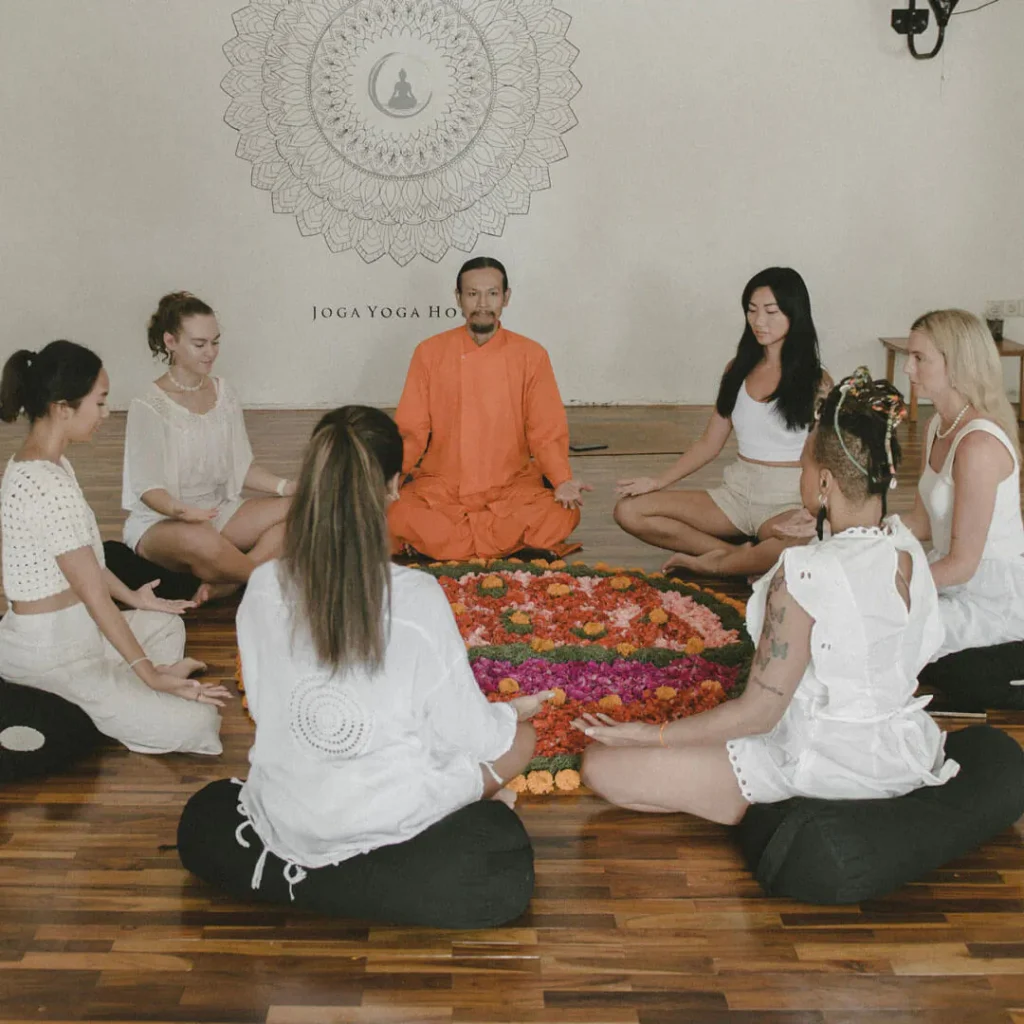
For those studying yoga more seriously, such as in a Joga Yoga Teacher Training, learning about prarabdha karma adds depth to both personal practice and teaching. A yoga teacher who understands karma philosophy can guide students beyond physical postures and into true self-awareness. This knowledge helps teachers explain why yoga is not just exercise, but a path to freedom.
In the end, prarabdha karma may shape the outer journey, but yoga shapes the inner one. And it is the inner journey that leads to lasting peace.